.avif)
.jpg)
U.S. crude oil futures fell 3% to close at $101.94 per barrel while international Brent lost nearly 2% to settle at $108.17 as Pakistani officials confirmed to media that mediators received an updated proposal from Iran to end the war. But this immediate price relief ignores the fundamental equation: US and Iranian blockades have effectively shut the Strait of Hormuz, cutting off a major share of global oil flows and roughly 20 million barrels per day that can pass through the strait remain stranded. The 21 day minimum for any meaningful diplomatic breakthrough creates an unbridgeable timing gap versus the 5-7 day typical crude delivery schedules for current month obligations.
For large integrated traders Trafigura, Vitol, or a national oil company's trading arm this volatility represents both risk and opportunity. WTI crude futures fell to almost $101 per barrel on Friday, trimming weekly gains but these operators can hedge exposure through derivatives markets, buying protective puts against further diplomatic surprises while maintaining core long positions on the physical shortage. The margin anatomy shows why: with oil production collectively dropped by at least 10 million barrels per day as of 12 March and around 850m barrels of supply lost over two months, any real reopening will take weeks to restore normal flows. For smaller regional operators independent refiners, fuel distributors, cooperative buying groups without derivatives access, the practical equivalent means fixing bilateral crude purchase agreements at current levels and diversifying supplier relationships away from Gulf dependence.
The risk premium (the extra payment for political uncertainty) is the story traders are actually trading. Consider a European refiner taking delivery of a 1 million barrel crude cargo from the North Sea versus Middle East alternatives. Before the Iran conflict, the Brent-Dubai spread the price difference between North Sea and Middle East crude typically traded at $2-4 per barrel, reflecting quality differentials and transportation costs. "Oil is now part of the negotiating toolkit, which changes everything. Prices are no longer reacting only to events; they're reflecting intent. This introduces a persistent premium, which will, we expect, keep a floor under the market." That same cargo today carries an additional $15-20/barrel geopolitical premium the market's estimate of supply disruption risk. Friday's 3% decline temporarily reduced that premium but left the core disruption unchanged.
On the buy side, Asian refiners face the starkest impact. In 2024, more than 80 percent of crude oil and LNG transiting through Hormuz was destined for Asian markets, with China, as the world's largest crude importer, remaining heavily reliant on Gulf producers such as Saudi Arabia, Iraq, and Iran. A Japanese refinery typically secured 60-70% of crude requirements from Gulf producers at delivered costs around $95-98/barrel pre-conflict. Today, the same volumes cost $108-112/barrel delivered, assuming alternative supply routes through the Red Sea or pipeline diversions. The additional $13-17/barrel translates directly to refined product costs diesel, gasoline, jet fuel that cannot be immediately passed through to consumers.
On the sell side, U.S. shale producers capture windfall margins but face production capacity constraints. US crude exports surged to record levels last week, with global buyers increasingly turning to American producers to offset disrupted Middle Eastern supply, yet existing infrastructure limits how quickly production can scale to fill the 10 million barrel per day supply gap.
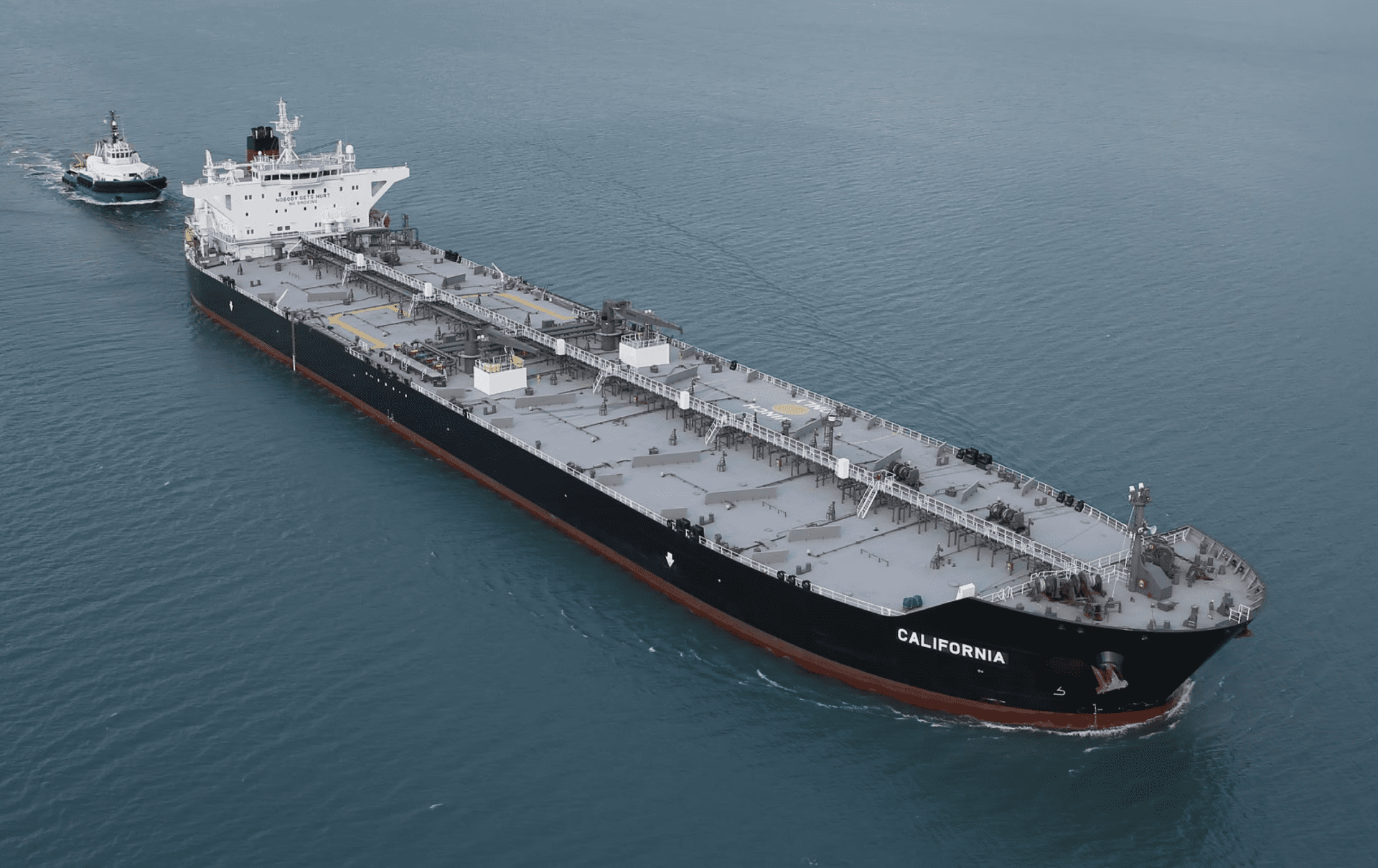
Freight rates tell the margin concentration story more precisely than headline oil prices. A Very Large Crude Carrier (VLCC) capable of carrying 2 million barrels typically earns $15,000-25,000 per day in normal markets for a Persian Gulf to Asia route. Ship transit through Hormuz dropped from around 130 a day in February to just six in March, a collapse of about 95 percent. Today, the few vessels attempting Gulf loadings command $80,000-120,000 per day, assuming insurance coverage is available at all. This freight explosion concentrates massive margins with shipowners and charterers while creating additional headwinds for refiners already paying oil price premiums. The total delivered cost equation crude price plus freight plus insurance shows why small regional refiners cannot compete for the limited available barrels.
Financing structures determine who can actually access crude in this environment, not just who can afford headline prices. Letters of credit (LC) bank guarantees that payment will be made once shipping documents are presented are the instruments that make international commodity trade possible. Major trading houses maintain $2-5 billion credit lines with multiple banks, allowing them to finance 20-50 cargoes simultaneously. A typical Iranian crude cargo financing required a 90 day LC at 200-300 basis points over LIBOR before the conflict. Today, banks will not issue LCs for Iranian cargoes at any price due to sanctions risk, while Gulf state cargoes require 400-600 basis points over benchmark rates and additional war risk insurance. Regional operators lacking massive credit facilities cannot compete in this financing environment, concentrating available supply among the largest players.
The offer focuses on reopening the strategic Strait of Hormuz while postponing a deal on Iran's nuclear programme, arguably the most contentious issue between Tehran and Washington. But diplomatic headlines matter less for physical markets than actual barrel flows. One Iranian source told CNN that Tehran could see talks restarting if the US lifts its blockade of Iranian ports and Iran fully reopens the Strait of Hormuz. The US has made it clear that Iran should let any ships pass through the strait unconditionally. This creates a circular dependence: neither side will move first, and any eventual agreement requires 2-3 weeks minimum implementation time for naval force repositioning, mine-clearing operations, and insurance market confidence restoration. Current month crude contracts cannot wait for diplomatic breakthroughs.
The inventory arithmetic reveals why prices remain elevated despite diplomatic optimism. Goldman Sachs released a report saying that global oil inventories plummeted by 85 million barrels in March despite a few regional build-ups, while Vitol CEO Russell Hardy said on April 21 that one billion barrels of oil production will be lost because of the war, and that the current loss was between 600 and 700 million barrels. These are not temporary disruptions but cumulative supply losses that will require months to rebuild even after normal flows resume. Strategic Petroleum Reserve releases can provide short-term relief the US holds approximately 370 million barrels but this inventory is designed for emergency cushioning, not structural supply replacement. Commercial inventories in key consuming regions fell below 5 year averages in April and continue declining.
Alternative supply routes face physical bottlenecks that limit substitution possibilities. Saudi Arabia increasingly diverted oil to the Red Sea port of Yanbu via the East–West Crude Oil Pipeline while the UAE diverted oil via the Abu Dhabi Crude Oil Pipeline to the port of Fujairah. Iraq has an alternative route in the form of the Kirkuk–Ceyhan Oil Pipeline. The combined capacity of these pipelines is about 9 million barrels per day, less than the roughly 20 million barrels per day that can pass through the strait. These diversions require 7-10 additional days transit time and face their own chokepoint risks. The Red Sea route remains vulnerable to Houthi attacks, while the Iraq-Turkey pipeline has a history of technical and political disruptions. Even at maximum utilization, alternative routes cannot replace Hormuz capacity.
Refined product markets show the downstream impact more clearly than crude prices. ULSD (Ultra Low Sulfur Diesel) futures fell approximately 2.5% and RBOB (Reformulated Blendstock for Oxygenate Blending) gasoline futures declined 1.4% on the diplomatic news, but fertilizer prices in the U.S. have surged 30-40%, nitrogen prices are up more than 35%, and US gas averages reached $4.018. U.S. gasoline retailers gain margin relief as wholesale costs decline while pump prices lag adjustments, but this relief proves temporary if crude prices resume climbing. Asian diesel markets remain severely constrained due to reduced refining runs and limited import availability, keeping diesel premiums elevated despite crude price declines.
For observers tracking this evolving situation, monitor Brent futures backwardation where near-term prices exceed forward prices as the clearest signal of physical market tightness versus diplomatic optimism. Current backwardation of $6-8/barrel between prompt month and six-month contracts indicates severe near-term supply constraints despite diplomatic progress hopes. Any sustained weakening of this backwardation below $3/barrel would signal genuine physical market relief, requiring actual barrel flows rather than negotiation headlines. Secondary indicators include VLCC rates from alternative loading ports and the Dubai-Brent spread, which widens when Middle East supply remains constrained despite North Sea availability.


.jpg)

'%3e%3cg id='Final-Copy-2_2_' transform='translate(1275.000000, 200.000000)'%3e%3cpath class='st0' d='M7.4,12.8h6.8l3.1-11.6H7.4C4.2,1.2,1.6,3.8,1.6,7S4.2,12.8,7.4,12.8z'/%3e%3c/g%3e%3c/g%3e%3c/g%3e%3cg id='final---dec.11-2020'%3e%3cg id='_x30_208-our-toggle' transform='translate(-1275.000000, -200.000000)'%3e%3cg id='Final-Copy-2' transform='translate(1275.000000, 200.000000)'%3e%3cpath class='st1' d='M22.6,0H7.4c-3.9,0-7,3.1-7,7s3.1,7,7,7h15.2c3.9,0,7-3.1,7-7S26.4,0,22.6,0z M1.6,7c0-3.2,2.6-5.8,5.8-5.8 h9.9l-3.1,11.6H7.4C4.2,12.8,1.6,10.2,1.6,7z'/%3e%3cpath id='x' class='st2' d='M24.6,4c0.2,0.2,0.2,0.6,0,0.8l0,0L22.5,7l2.2,2.2c0.2,0.2,0.2,0.6,0,0.8c-0.2,0.2-0.6,0.2-0.8,0 l0,0l-2.2-2.2L19.5,10c-0.2,0.2-0.6,0.2-0.8,0c-0.2-0.2-0.2-0.6,0-0.8l0,0L20.8,7l-2.2-2.2c-0.2-0.2-0.2-0.6,0-0.8 c0.2-0.2,0.6-0.2,0.8,0l0,0l2.2,2.2L23.8,4C24,3.8,24.4,3.8,24.6,4z'/%3e%3cpath id='y' class='st3' d='M12.7,4.1c0.2,0.2,0.3,0.6,0.1,0.8l0,0L8.6,9.8C8.5,9.9,8.4,10,8.3,10c-0.2,0.1-0.5,0.1-0.7-0.1l0,0 L5.4,7.7c-0.2-0.2-0.2-0.6,0-0.8c0.2-0.2,0.6-0.2,0.8,0l0,0L8,8.6l3.8-4.5C12,3.9,12.4,3.9,12.7,4.1z'/%3e%3c/g%3e%3c/g%3e%3c/g%3e%3c/g%3e%3c/svg%3e) Privacy Choices
Privacy Choices