.avif)

Crude oil traders are recalibrating positions as Brent crude fell 3.4% to $87.33 and WTI dropped 3.2% to $84.88 per barrel following European signals of sanctions relief for Iran. The UK, France, Germany, and Italy announced readiness to lift relevant sanctions if Tehran takes verifiable nuclear program steps, while reports indicate a US-Iran framework includes reopening the Strait of Hormuz. For crude oil traders managing multi million barrel positions, the immediate question is not whether Iranian supply returns, but when and in what volumes and how existing OPEC+ production quotas accommodate an additional 1.5-2 million barrels per day.
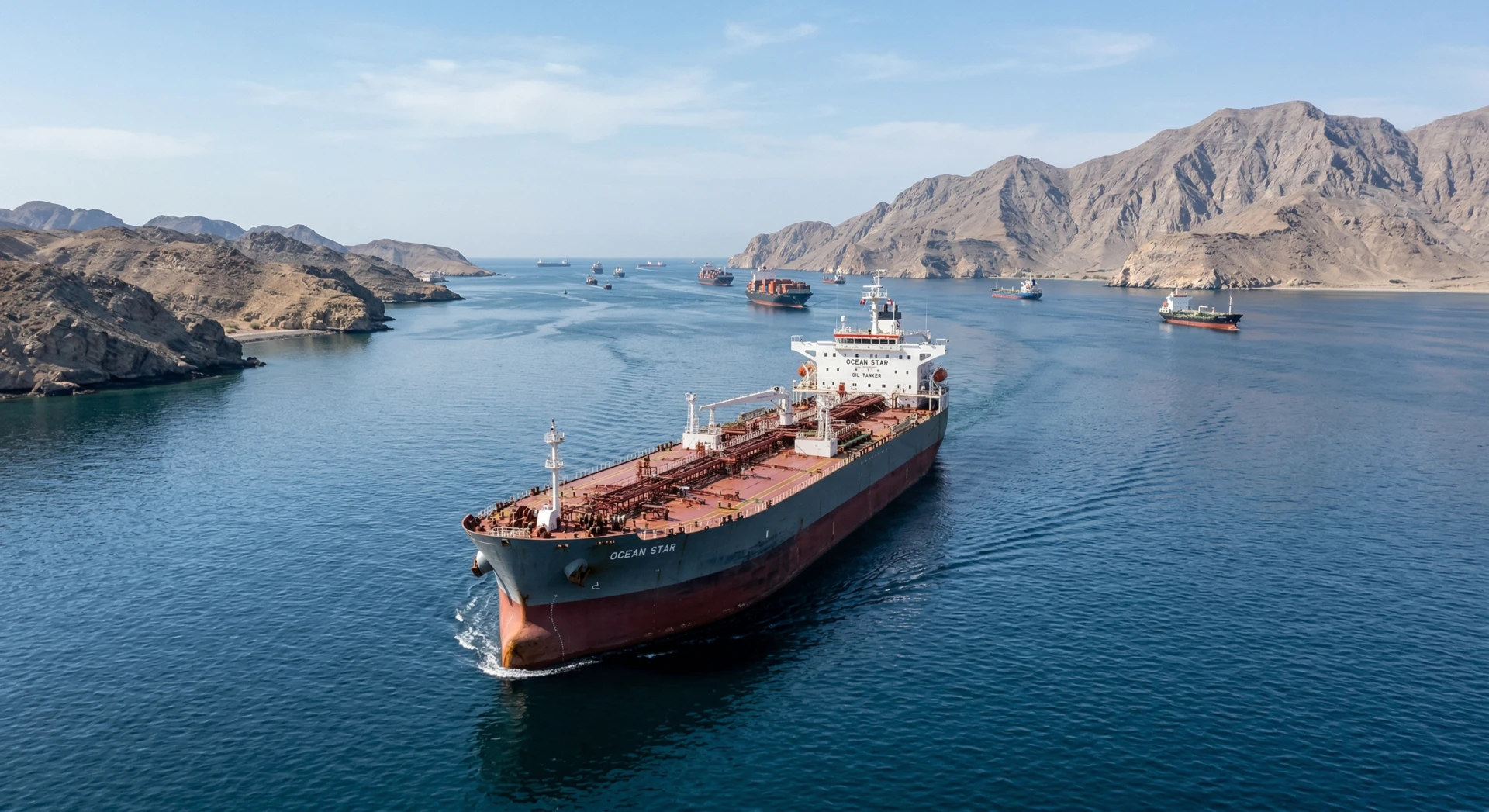
The framework reportedly includes reopening shipping through the Strait of Hormuz and Iranian commitments to forgo developing nuclear weapons, addressing the chokepoint disruption that has affected global energy flows since early 2026. The Strait of Hormuz, through which an average of 20 million barrels per day of crude oil and oil products were shipped in 2025, handles around 25% of the world's seaborne oil trade. A letter of credit (LC) a bank guarantee that payment will be made once shipping documents are presented becomes viable again for Iranian crude once sanctions lift, but the timeline depends on IAEA verification protocols that remain undefined.
On the buy side: Asian refiners, particularly Chinese independent refineries (teapots), gain immediate access to discounted Iranian crude that has traded $3-8 per barrel below comparable Middle East grades during sanctions periods. A typical 300,000 barrel cargo delivers $900,000-2.4 million in additional margin compared to Saudi Arabian Light or UAE Murban crude. Chinese refiners processed approximately 1.25 million barrels per day of Iranian crude during March 2026 despite partial Hormuz disruption, demonstrating established logistics and financing channels.
On the sell side: Traditional Middle East crude suppliers Saudi Aramco, ADNOC, Kuwait Petroleum Corporation face margin compression as war-risk premiums that added $2-5 per barrel to term contracts evaporate. A VLCC (Very Large Crude Carrier) carrying 2 million barrels from the Persian Gulf to Asia previously earned an additional $4-10 million per voyage from crisis driven freight premiums. As Hormuz normalizes, that premium disappears entirely, reverting to standard $25-35 per barrel freight rates.
For large integrated traders (Vitol, Trafigura, Shell Trading): The arbitrage opportunity concentrates in the Brent-Dubai spread the price difference between North Sea crude and Middle East crude which typically widens when Iranian supply is constrained. Before sanctions, this spread averaged $1-2 per barrel; during disruption periods, it reached $4-6 per barrel. Iranian supply normalization compresses this spread back toward $1-2 per barrel, eliminating West Africa to Asia arbitrage routes that required $3+ per barrel spreads to cover the additional shipping costs via the Cape of Good Hope.
For smaller regional operators independent fuel distributors, regional cooperatives, mid-sized importers without derivatives access: The path forward requires bilateral term agreements with Iranian suppliers or their intermediaries. These operators cannot hedge price risk through futures markets but can negotiate fixed-price supply contracts spanning 3-6 months to capture Iranian crude discounts before market normalization erodes them. The financing challenge remains significant: traditional trade finance banks remain cautious until sanctions relief is formally implemented.
The timing mismatch creates immediate commercial pressure. Traders remained cautious, as even a breakthrough would face significant obstacles before oil flows fully normalize, including clearing mines from Hormuz, restarting idled production fields, and repairing energy facilities damaged by drone and missile attacks. Iran's current production capacity after months of disruption versus the 1.5-2 million barrels per day the market expects remains genuinely unknown. Pre-conflict estimates suggested Iranian fields could restart 1 million barrels per day within 30-60 days, with full capacity requiring 4-6 months.
The OPEC+ allocation conflict emerges immediately. Current OPEC+ quotas, established without Iranian participation, allocate approximately 28.8 million barrels per day among participating members. Iranian production returning at 1.5-2 million barrels per day either requires quota increases politically difficult given current members' compliance challenges or production cuts from existing members. Saudi Arabia, as the swing producer, faces the largest burden of accommodation, potentially reducing output by 500,000-1 million barrels per day to make room for Iranian volumes.
Vessel availability presents a structural bottleneck that crude oil traders must navigate immediately. About 90 ships, including oil tankers, have crossed the Strait of Hormuz since the start of the conflict, with many vessels engaged in so called "dark" transits, evading Western sanctions and oversight. These vessels primarily older VLCCs and Suezmaxes flagged in Liberia or Panama require technical inspections and insurance renewals before returning to conventional trade. The global VLCC fleet includes approximately 800 vessels; Iranian crude normalization requires 15-20 dedicated VLCCs to handle 1.5-2 million barrels per day of exports.
Freight rates face immediate pressure from Hormuz reopening. During the crisis, VLCC day rates from Persian Gulf to Asia reached $65,000-85,000 per day, compared to typical rates of $25,000-40,000 per day. Current WTI crude futures trade between $83.20 and $87.23, reflecting the market's expectation of supply normalization. Freight operators primarily Greek and Chinese shipowners lose the crisis premium that generated an additional $1-2 million per voyage during peak disruption.
The financing structure determines which traders benefit most from Iranian crude's return. Traditional commodity trade finance revolving credit facilities secured by cargo ownership becomes available once sanctions lift, but pricing remains elevated. Iranian crude purchases require standby letters of credit or cash against documents payment terms, adding 50-100 basis points to financing costs compared to Saudi or UAE crude purchases that qualify for standard trade finance terms.
Backwardation where near-term prices are higher than forward prices currently characterizes both Brent and WTI curves, signaling immediate supply tightness despite Iranian supply expectations. Brent's July 2026 contract trades approximately $2-3 per barrel above December 2026, indicating markets expect supply normalization by year-end. This structure rewards immediate crude purchases over forward purchases, benefiting traders with available storage capacity and financing.
For observers monitoring this transition, the key signal is the Brent-Dubai spread convergence timeline. If sanctions relief proceeds as indicated, this spread should compress from current levels of $3-4 per barrel toward $1-2 per barrel within 60-90 days of formal implementation. The Baltic Dirty Tanker Index, which tracks VLCC freight rates, should decline 30-50% as Persian Gulf routes normalize and vessel supply increases.
The regional security component adds complexity that extends beyond pure commercial considerations. Reports indicate the framework addresses "immediate and permanent termination of military operations on all fronts, including Lebanon," suggesting broader Middle East stability implications. For crude oil traders, this reduces geopolitical risk premiums across all Middle East crude grades not just Iranian potentially compressing margins on competing suppliers' spot sales by $1-3 per barrel.
Implementation remains contingent on IAEA verification and the June 19 signing ceremony in Switzerland. Until formal sanctions relief, Iranian crude continues trading through "gray market" channels typically Chinese intermediaries using non-standard financing at discounts of $5-12 per barrel to benchmarks. Once sanctions lift, this discount should narrow to $2-4 per barrel, representing the final arbitrage opportunity before full market integration.
.jpg)
.jpg)

'%3e%3cg id='Final-Copy-2_2_' transform='translate(1275.000000, 200.000000)'%3e%3cpath class='st0' d='M7.4,12.8h6.8l3.1-11.6H7.4C4.2,1.2,1.6,3.8,1.6,7S4.2,12.8,7.4,12.8z'/%3e%3c/g%3e%3c/g%3e%3c/g%3e%3cg id='final---dec.11-2020'%3e%3cg id='_x30_208-our-toggle' transform='translate(-1275.000000, -200.000000)'%3e%3cg id='Final-Copy-2' transform='translate(1275.000000, 200.000000)'%3e%3cpath class='st1' d='M22.6,0H7.4c-3.9,0-7,3.1-7,7s3.1,7,7,7h15.2c3.9,0,7-3.1,7-7S26.4,0,22.6,0z M1.6,7c0-3.2,2.6-5.8,5.8-5.8 h9.9l-3.1,11.6H7.4C4.2,12.8,1.6,10.2,1.6,7z'/%3e%3cpath id='x' class='st2' d='M24.6,4c0.2,0.2,0.2,0.6,0,0.8l0,0L22.5,7l2.2,2.2c0.2,0.2,0.2,0.6,0,0.8c-0.2,0.2-0.6,0.2-0.8,0 l0,0l-2.2-2.2L19.5,10c-0.2,0.2-0.6,0.2-0.8,0c-0.2-0.2-0.2-0.6,0-0.8l0,0L20.8,7l-2.2-2.2c-0.2-0.2-0.2-0.6,0-0.8 c0.2-0.2,0.6-0.2,0.8,0l0,0l2.2,2.2L23.8,4C24,3.8,24.4,3.8,24.6,4z'/%3e%3cpath id='y' class='st3' d='M12.7,4.1c0.2,0.2,0.3,0.6,0.1,0.8l0,0L8.6,9.8C8.5,9.9,8.4,10,8.3,10c-0.2,0.1-0.5,0.1-0.7-0.1l0,0 L5.4,7.7c-0.2-0.2-0.2-0.6,0-0.8c0.2-0.2,0.6-0.2,0.8,0l0,0L8,8.6l3.8-4.5C12,3.9,12.4,3.9,12.7,4.1z'/%3e%3c/g%3e%3c/g%3e%3c/g%3e%3c/g%3e%3c/svg%3e) Privacy Choices
Privacy Choices