.avif)
Crude oil traders long Hormuz-dependent positions face an immediate repricing of strategic optionality not because bypass pipelines will be built tomorrow, but because TotalEnergies CEO Patrick Pouyanne's public declaration at a Paris energy conference on 23 June 2026 has shifted the terms of the conversation. The world's most Hormuz exposed oil major has named pipeline diversification as its "absolute priority," and that signal from an operator with production stakes across Abu Dhabi, Iraq, and the broader Gulf will move contract negotiations, tariff expectations, and freight positioning before a single metre of new pipe is laid.
The Strait of Hormuz is a 33 kilometre wide chokepoint through which roughly one-fifth of globally traded oil passes every day. It is the narrowest point of the Persian Gulf and the sole maritime exit for crude exports from Saudi Arabia, Iraq, Kuwait, the UAE, and Iran. Three months of Iran related disruption, according to reports circulating across energy markets, have already elevated war-risk premiums the additional insurance surcharge applied to vessels transiting conflict adjacent zones on tanker voyages through the strait. Pouyanne's intervention is not abstract lobbying. It is a CEO of a major integrated oil company putting his balance sheet logic on the table: the Hormuz risk, in his view, is no longer hedgeable by financial instruments alone. Only physical redundancy removes it.
Here is where the gap between rhetoric and infrastructure becomes commercially critical. The bypass route the market already has and which is systematically underdeployed is Abu Dhabi's Habshan-Fujairah pipeline, operated by ADNOC (the Abu Dhabi National Oil Company). This 380 kilometre pipeline connects the Habshan oil fields inland to the port of Fujairah on the Gulf of Oman coast, entirely bypassing the Strait of Hormuz. Its nameplate capacity is approximately 1.5 million barrels per day (b/d) enough to carry more than the UAE's entire current export volume. It is not running at full utilisation. The bypass infrastructure the market most urgently needs is partly already built. That structural fact is almost entirely absent from Pouyanne's framing and its absence matters for how traders should interpret the investment case.
The other routes Pouyanne invoked carry far heavier political freight. The Iraq-Turkey Kirkuk-Ceyhan pipeline which once carried Kurdish regional crude from northern Iraq overland through Turkey to the Mediterranean port of Ceyhan has been shut since March 2023 following an International Chamber of Commerce arbitration ruling and unresolved disputes between Ankara and the Kurdistan Regional Government. No restart date is credible. The Syria corridor faces compounding obstacles: after more than a decade of conflict, pipeline infrastructure across Syrian territory is severely degraded, and the country remains under post-Assad transition governance with institutional capacity far below what would be required for a major energy transit agreement. Pouyanne's historical parallel Iraq's oil discovery in 1928 and the rapid construction of the Iraq-Syria pipeline that reached the Mediterranean is evocative but imprecise. That pipeline was built by a colonial-era concession with no competing sovereignty constraints. The current landscape is categorically different.
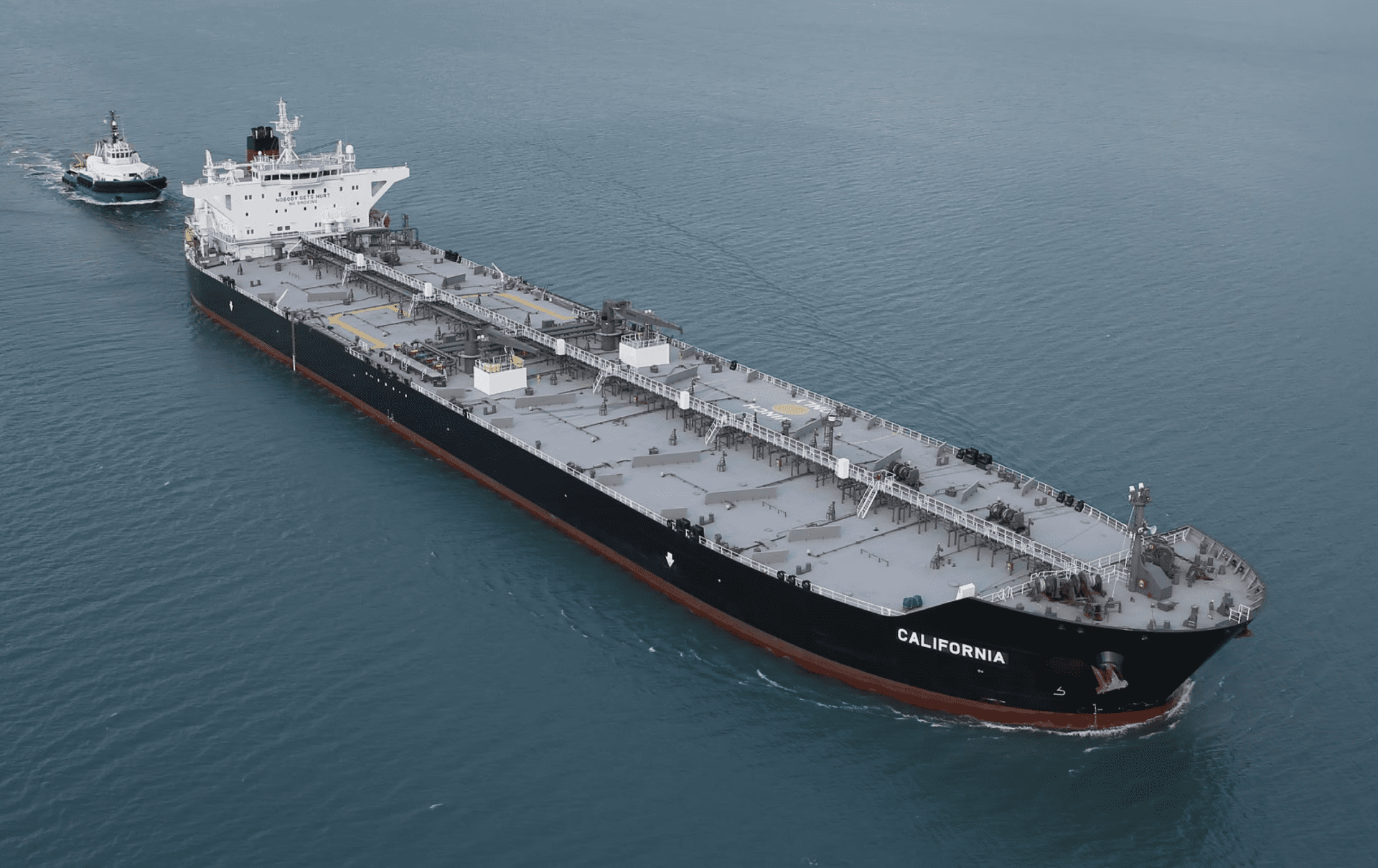
Consider the margin anatomy for a concrete case. A VLCC (Very Large Crude Carrier, a supertanker capable of loading approximately 2 million barrels) loading Murban crude at Jebel Ali the deep-water terminal serving Abu Dhabi for delivery to a South Korean refinery currently faces a voyage of approximately 20–22 days through Hormuz. At current war-risk insurance rates, that insurance surcharge alone adds an estimated $0.50–$1.20 per barrel, or roughly $1–2.4 million per voyage. Now compare the pipeline alternative: routing the same volume through Habshan-Fujairah, loading at Fujairah onto a vessel already in the Gulf of Oman, eliminates both the Hormuz transit and the war-risk surcharge. If ADNOC sets a pipeline tariff of $1–3 per barrel the premium range implied by current infrastructure economics the net economics are roughly breakeven with Hormuz routing at the low end and modestly more expensive at the high end. At elevated war-risk premiums, Fujairah origin barrels become cheaper in delivered terms. That arbitrage is now live and widening.
On the buy side, Asian refinery procurement desks particularly South Korean, Japanese, and Chinese state refiners are already reassessing their crude sourcing contracts. For a mid-sized South Korean refiner importing 200,000 b/d (a typical throughput for a single integrated refinery complex), a $1/bbl increase in delivered cost adds approximately $200,000 per day, or $73 million annually. The question for procurement is not whether to engage alternative routes but how quickly spot Fujairah origin barrels can be contracted and whether term contracts with ADNOC can be amended to specify Fujairah loading rather than Hormuz-dependent Jebel Ali. On the sell side, ADNOC and Saudi Aramco which operates the East-West Pipeline, also known as the Petroline, running from the Eastern Province fields to Yanbu on the Red Sea coast hold the tariff-setting power on the only functioning bypass corridors. If Hormuz disruption persists, they can charge for that optionality. The market is beginning to price this.
For large integrated traders a Vitol, a Trafigura, or a national oil company trading arm with derivatives access the near-term instrument is a long position in Murban FOB (free on board, meaning the seller loads the cargo onto the vessel at the named port) Fujairah versus short Oman or Dubai crude priced on Hormuz-dependent routes. This spread the differential between Fujairah origin and Hormuz-route barrels will widen if disruption persists. For smaller regional operators an independent fuel importer serving the Indian west coast or a mid-sized Japanese trading house without listed derivatives access the practical equivalent is fixing term purchase agreements that specify Fujairah loading, accepting a modest tariff premium now to lock out war-risk surcharge exposure later. Paying $0.50/bbl more today to remove a $1.20/bbl insurance tail risk is straightforward insurance logic.
The freight dimension deserves its own reckoning. VLCC owners operating on the MEG-China route (Middle East Gulf to China, the world's highest volume crude trade lane) have benefited from elevated war-risk charter premiums across the three month disruption period. A VLCC earning $14/MT at current freight rates on a 2 million barrel cargo generates approximately $28 million per voyage compared with $16 million at the $8/MT rates of twelve months ago. That additional $12 million per voyage accrues entirely to the vessel operator. Pouyanne's public intervention has introduced a structural narrative that bypass pipelines are coming which caps the long-term upside of those elevated freight rates even if near-term rates stay high. Vessel owners and period charter desks should treat this as a signal that the structural support for sustained freight elevation is contested, not confirmed. The last comparable Hormuz disruption was the Iran-Iraq tanker war of the 1980s, when freight rates tripled within weeks of each major attack. That episode resolved, and freight collapsed. The structural argument for pipelines was made then too. It took forty years for Habshan-Fujairah to be built.
For observers tracking when the bypass optionality becomes real rather than rhetorical, two specific signals deserve monitoring before the end of Q3 2026. First, watch ADNOC's published Murban official selling price (OSP) for Fujairah loaded cargoes relative to Jebel Ali cargoes any narrowing of the discount that Fujairah historically carries (due to its smaller terminal and lighter vessel restrictions) will confirm that pipeline throughput is increasing and tariff power is being exercised. Second, watch the Kirkuk-Ceyhan pipeline restart negotiations: if the Iraqi federal government and Ankara announce a formal arbitration settlement before September 2026, the medium-term bypass map changes materially, adding approximately 400,000 b/d of potential Mediterranean-route capacity. Until either signal fires, the trade is long existing Fujairah infrastructure optionality not long greenfield pipeline promises.
.jpg)
'%3e%3cg id='Final-Copy-2_2_' transform='translate(1275.000000, 200.000000)'%3e%3cpath class='st0' d='M7.4,12.8h6.8l3.1-11.6H7.4C4.2,1.2,1.6,3.8,1.6,7S4.2,12.8,7.4,12.8z'/%3e%3c/g%3e%3c/g%3e%3c/g%3e%3cg id='final---dec.11-2020'%3e%3cg id='_x30_208-our-toggle' transform='translate(-1275.000000, -200.000000)'%3e%3cg id='Final-Copy-2' transform='translate(1275.000000, 200.000000)'%3e%3cpath class='st1' d='M22.6,0H7.4c-3.9,0-7,3.1-7,7s3.1,7,7,7h15.2c3.9,0,7-3.1,7-7S26.4,0,22.6,0z M1.6,7c0-3.2,2.6-5.8,5.8-5.8 h9.9l-3.1,11.6H7.4C4.2,12.8,1.6,10.2,1.6,7z'/%3e%3cpath id='x' class='st2' d='M24.6,4c0.2,0.2,0.2,0.6,0,0.8l0,0L22.5,7l2.2,2.2c0.2,0.2,0.2,0.6,0,0.8c-0.2,0.2-0.6,0.2-0.8,0 l0,0l-2.2-2.2L19.5,10c-0.2,0.2-0.6,0.2-0.8,0c-0.2-0.2-0.2-0.6,0-0.8l0,0L20.8,7l-2.2-2.2c-0.2-0.2-0.2-0.6,0-0.8 c0.2-0.2,0.6-0.2,0.8,0l0,0l2.2,2.2L23.8,4C24,3.8,24.4,3.8,24.6,4z'/%3e%3cpath id='y' class='st3' d='M12.7,4.1c0.2,0.2,0.3,0.6,0.1,0.8l0,0L8.6,9.8C8.5,9.9,8.4,10,8.3,10c-0.2,0.1-0.5,0.1-0.7-0.1l0,0 L5.4,7.7c-0.2-0.2-0.2-0.6,0-0.8c0.2-0.2,0.6-0.2,0.8,0l0,0L8,8.6l3.8-4.5C12,3.9,12.4,3.9,12.7,4.1z'/%3e%3c/g%3e%3c/g%3e%3c/g%3e%3c/g%3e%3c/svg%3e) Privacy Choices
Privacy Choices