.avif)
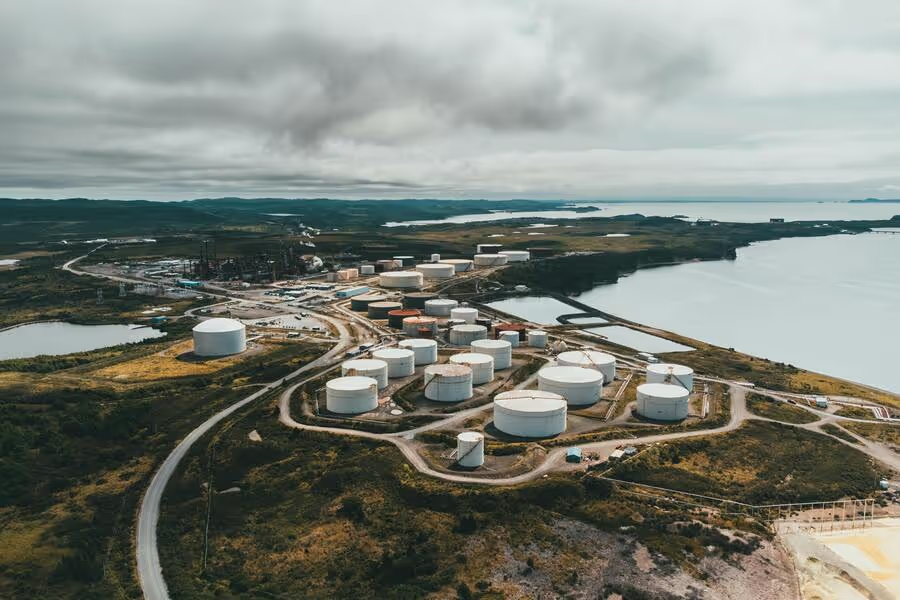
U.S. consumer prices accelerated 3.8% year-over-year in April 2026, the highest reading since May 2023, with gasoline driving 40% of the monthly CPI increase. But beneath the inflation headlines lies a structural profit shift: U.S. refiners are capturing exceptional margins as the spread between crude input costs and refined product revenues the crack spread has widened dramatically during the Iran crisis. With gasoline at $4.50 per gallon nationally, up from $3.14 a year ago, and crude prices at approximately $102-106 per barrel, refiners are earning estimated margins of $20-25 per barrel processed. This represents a margin expansion of roughly 60-80% compared to pre-crisis levels, meaning a significant portion of consumer gasoline inflation is accruing to refinery operators rather than flowing purely from higher crude costs.
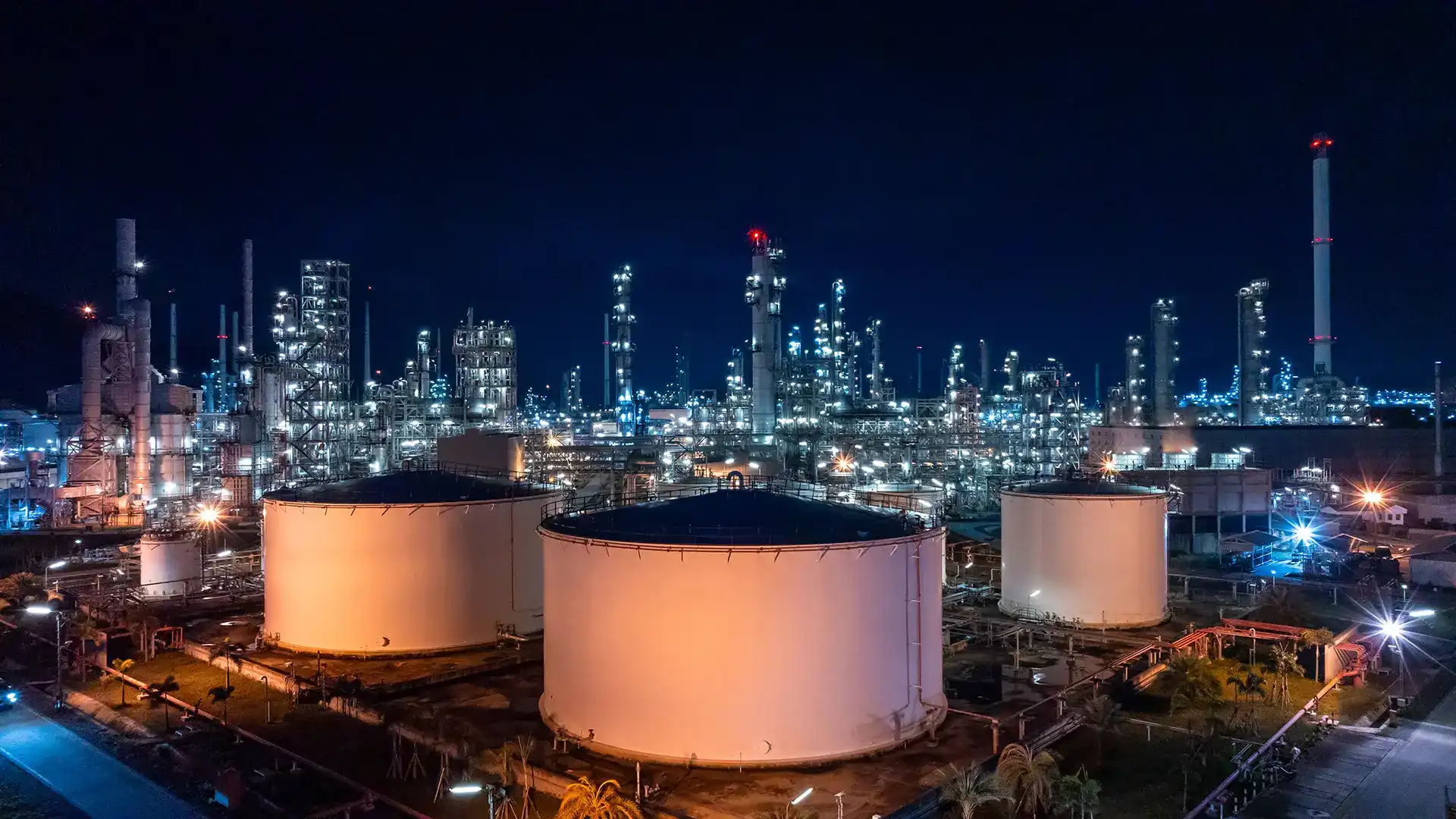
The crack spread the difference between product revenue and crude cost represents the refinery's gross margin per barrel processed. The standard 3-2-1 crack spread calculation shows refiners earning the equivalent of converting three barrels of crude into two barrels of gasoline and one barrel of distillate. Consider Valero Energy, operating major Gulf Coast refineries: before the Iran conflict, a typical 3-2-1 crack spread might yield $12-15 per barrel. At current levels with Brent near $106 and WTI at $102 while gasoline trades around $3.00-3.20 per gallon wholesale (42 gallons per barrel equals $126-134 per barrel), the margin expansion is substantial. This creates a temporary window where crude price surges with lagged product response, though sustained high gasoline prices risk demand destruction.
The Iran conflict has created an oil price environment that is simultaneously challenging for consumers and structurally favorable for certain refinery operators, particularly those on the US Gulf Coast with access to domestic WTI crude feedstock. The Brent-WTI spread widened to an average of $12 per barrel in March, compared with $6 per barrel in February, as disrupted navigation through the Strait of Hormuz reduced shipping capacity to move crude between markets. This means Gulf Coast refiners (Marathon Petroleum, Phillips 66, Valero) can purchase cheaper domestic WTI crude while selling refined products into global markets priced off the higher Brent benchmark. U.S. crude oil production averaged a record 13.6 million barrels per day in 2025, but crude export volumes remained stable near 4.1 million barrels per day until the Iran-related surge.
On the buy side: Major fuel distributors and retailers face margin compression as wholesale gasoline costs have increased faster than their ability to pass through price increases to consumers. A regional fuel distributor purchasing 500,000 gallons weekly now pays approximately $125,000 more per week than in February roughly $6.5 million annually for the same volume. Independent gas station operators cannot absorb these cost increases and must raise pump prices, creating consumer resistance and potential volume declines.
On the sell side: US Gulf Coast refiners are among the best positioned beneficiaries of the current oil price environment, with WTI-Brent spread widening allowing US refiners to buy cheaper WTI feedstock while selling into global product markets priced off Brent. High utilization rates are pushing refined product crack spreads to elevated levels, supporting strong refinery margins globally, with very high diesel crack spreads in Europe and the US likely to persist through most of 2026. However, sustained demand drops could compress product prices while crude remains high, and a rapid ceasefire settlement could cause crude prices to retrace quickly, leaving refiners who locked in crude purchases at elevated prices facing margin compression.
For large integrated operators like ExxonMobil or Chevron with derivatives access: Industry participants use crack spread futures traded on the CME Group to hedge margin exposure, though the hedge is rarely perfect. A major refiner processing 400,000 barrels per day could hedge 50-75% of expected crack spread exposure using NYMEX crack spread futures, locking in margins near current levels of $20-22 per barrel. The cost of this hedge protection runs approximately $0.50-1.00 per barrel, but provides protection against margin collapse if geopolitical tensions resolve rapidly.
For smaller regional operators without derivatives access: Independent refiners like CVR Energy or Par Pacific face the full volatility of margin expansion and potential compression without sophisticated hedging tools. These operators typically rely on bilateral long-term supply contracts with crude suppliers and product purchasers, adjusting inventory levels tactically. A sustained demand drop of 0.3% for every $0.10 gasoline price increase, according to EIA price elasticity models, creates directional volume risk that smaller operators cannot hedge effectively. Regional cooperative refiners may reduce processing runs if crack spreads compress below $8-10 per barrel the level needed to cover operating costs and maintenance capital expenditure.
For observers: The EIA forecasts U.S. retail gasoline prices to average $3.70 per gallon in 2026, suggesting current $4.50 levels represent a temporary spike. The Brent-WTI spread is expected to fall to $9 per barrel on average in Q3 2026 and $4 per barrel by Q4 2026, when most disruptions to global crude oil production and trade are assumed to dissipate. Monitor the weekly EIA Petroleum Status Report for U.S. gasoline demand data any sustained decline below 8.8 million barrels per day (the 2025 average) signals demand destruction is taking hold. Watch NYMEX crack spread futures for June and July delivery: if the 3-2-1 crack falls below $15 per barrel on a sustained basis, the refinery margin windfall is ending.

.jpg)

'%3e%3cg id='Final-Copy-2_2_' transform='translate(1275.000000, 200.000000)'%3e%3cpath class='st0' d='M7.4,12.8h6.8l3.1-11.6H7.4C4.2,1.2,1.6,3.8,1.6,7S4.2,12.8,7.4,12.8z'/%3e%3c/g%3e%3c/g%3e%3c/g%3e%3cg id='final---dec.11-2020'%3e%3cg id='_x30_208-our-toggle' transform='translate(-1275.000000, -200.000000)'%3e%3cg id='Final-Copy-2' transform='translate(1275.000000, 200.000000)'%3e%3cpath class='st1' d='M22.6,0H7.4c-3.9,0-7,3.1-7,7s3.1,7,7,7h15.2c3.9,0,7-3.1,7-7S26.4,0,22.6,0z M1.6,7c0-3.2,2.6-5.8,5.8-5.8 h9.9l-3.1,11.6H7.4C4.2,12.8,1.6,10.2,1.6,7z'/%3e%3cpath id='x' class='st2' d='M24.6,4c0.2,0.2,0.2,0.6,0,0.8l0,0L22.5,7l2.2,2.2c0.2,0.2,0.2,0.6,0,0.8c-0.2,0.2-0.6,0.2-0.8,0 l0,0l-2.2-2.2L19.5,10c-0.2,0.2-0.6,0.2-0.8,0c-0.2-0.2-0.2-0.6,0-0.8l0,0L20.8,7l-2.2-2.2c-0.2-0.2-0.2-0.6,0-0.8 c0.2-0.2,0.6-0.2,0.8,0l0,0l2.2,2.2L23.8,4C24,3.8,24.4,3.8,24.6,4z'/%3e%3cpath id='y' class='st3' d='M12.7,4.1c0.2,0.2,0.3,0.6,0.1,0.8l0,0L8.6,9.8C8.5,9.9,8.4,10,8.3,10c-0.2,0.1-0.5,0.1-0.7-0.1l0,0 L5.4,7.7c-0.2-0.2-0.2-0.6,0-0.8c0.2-0.2,0.6-0.2,0.8,0l0,0L8,8.6l3.8-4.5C12,3.9,12.4,3.9,12.7,4.1z'/%3e%3c/g%3e%3c/g%3e%3c/g%3e%3c/g%3e%3c/svg%3e) Privacy Choices
Privacy Choices