.avif)

Asian refiners face immediate $15–25/barrel cost increases on forced Atlantic crude substitution as US strikes on Iran's Qeshm Island and Bandar Abbas shatter a 48 hour diplomatic pause. Only 4-6 vessels daily are transiting the Strait of Hormuz versus a historical average of 138, with 230 loaded tankers trapped inside the Gulf and 23,000 seafarers stranded. The timing of strikes immediately after Saudi Arabia and Kuwait lifting restrictions on US military use of their bases signals Project Freedom naval escort operations will restart within days. War risk insurance premiums surge 300-500 basis points, but the real margin shift concentrates in the selection mechanism: early movers under escort capture spot premiums while hundreds more ships queue for transit.
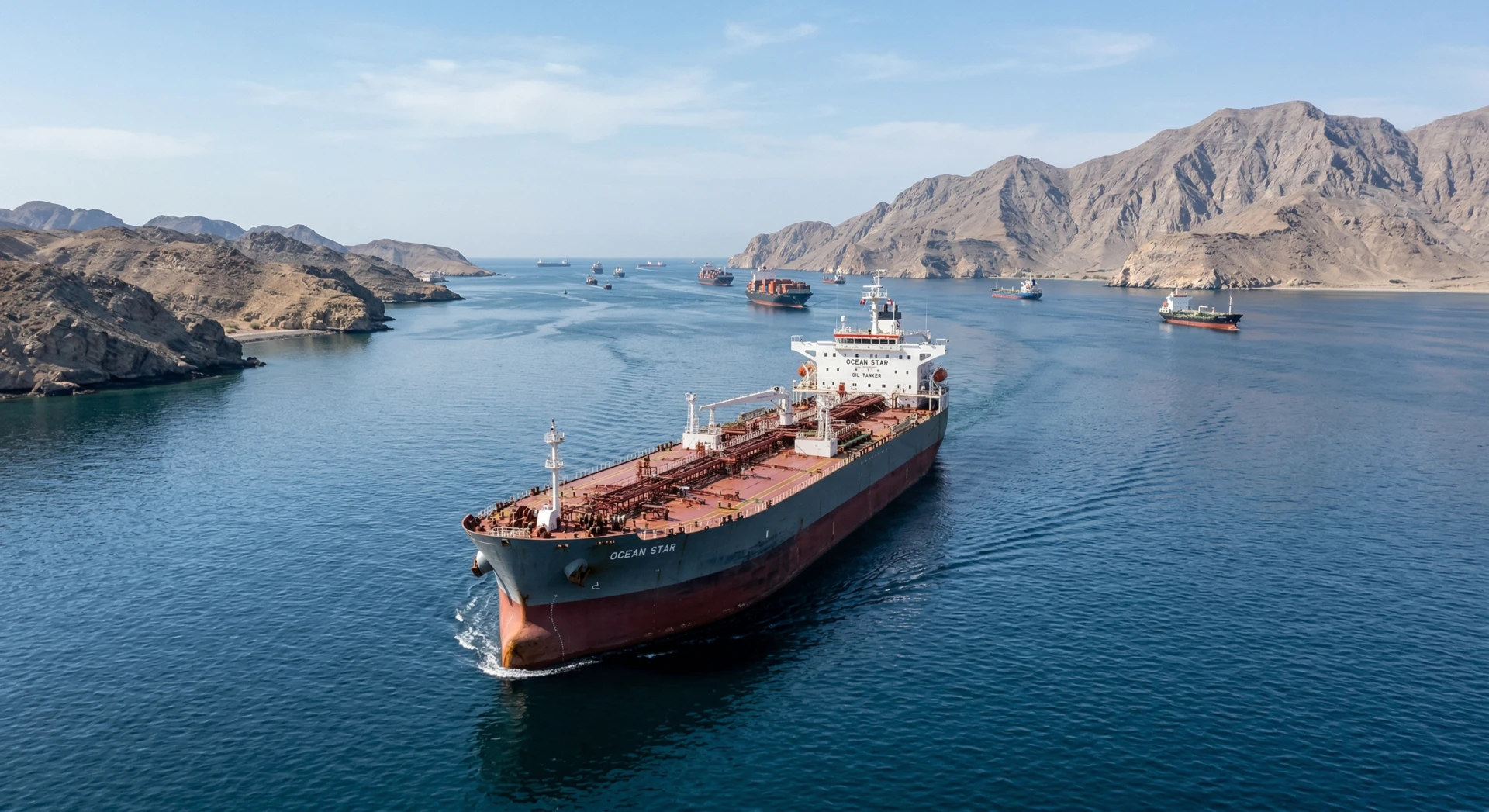
The Strait of Hormuz a 33 kilometre wide chokepoint through which roughly 20% of world traded oil flows daily has become a prisoner's dilemma for the 230 loaded tankers trapped inside the Persian Gulf. Consider a VLCC (Very Large Crude Carrier a supertanker capable of carrying 2 million barrels): at current Brent prices of $100-102/barrel, each vessel holds $200 million of crude oil. Under Project Freedom escort, the first dozen vessels capture $8–12/barrel premiums over equivalent Atlantic grades for Asian delivery approximately $16–24 million additional revenue per cargo. But if Iran escalates against the escort itself, late movers avoid the highest-risk window when IRGC (Islamic Revolutionary Guard Corps) anti-ship missiles concentrate on the convoy routes.
Project Freedom the US naval escort operation launched May 4, paused May 5, now restarting operates as a presence mission rather than dedicated convoy escort. US Central Command deploys guided-missile destroyers, over 100 land and sea-based aircraft, and multi-domain unmanned platforms in an information sharing rather than close escort configuration. This limits US exposure to Iranian inshore systems while demonstrating the strait is no longer Iran's to close at will. The operational arithmetic is unforgiving: using Operation Earnest Will from the 1980s Tanker Wars as a guide, eight warships escort about 11 merchant vessels, with air defence escorts potentially exhausting missile inventories during the 12–24 hour transit.
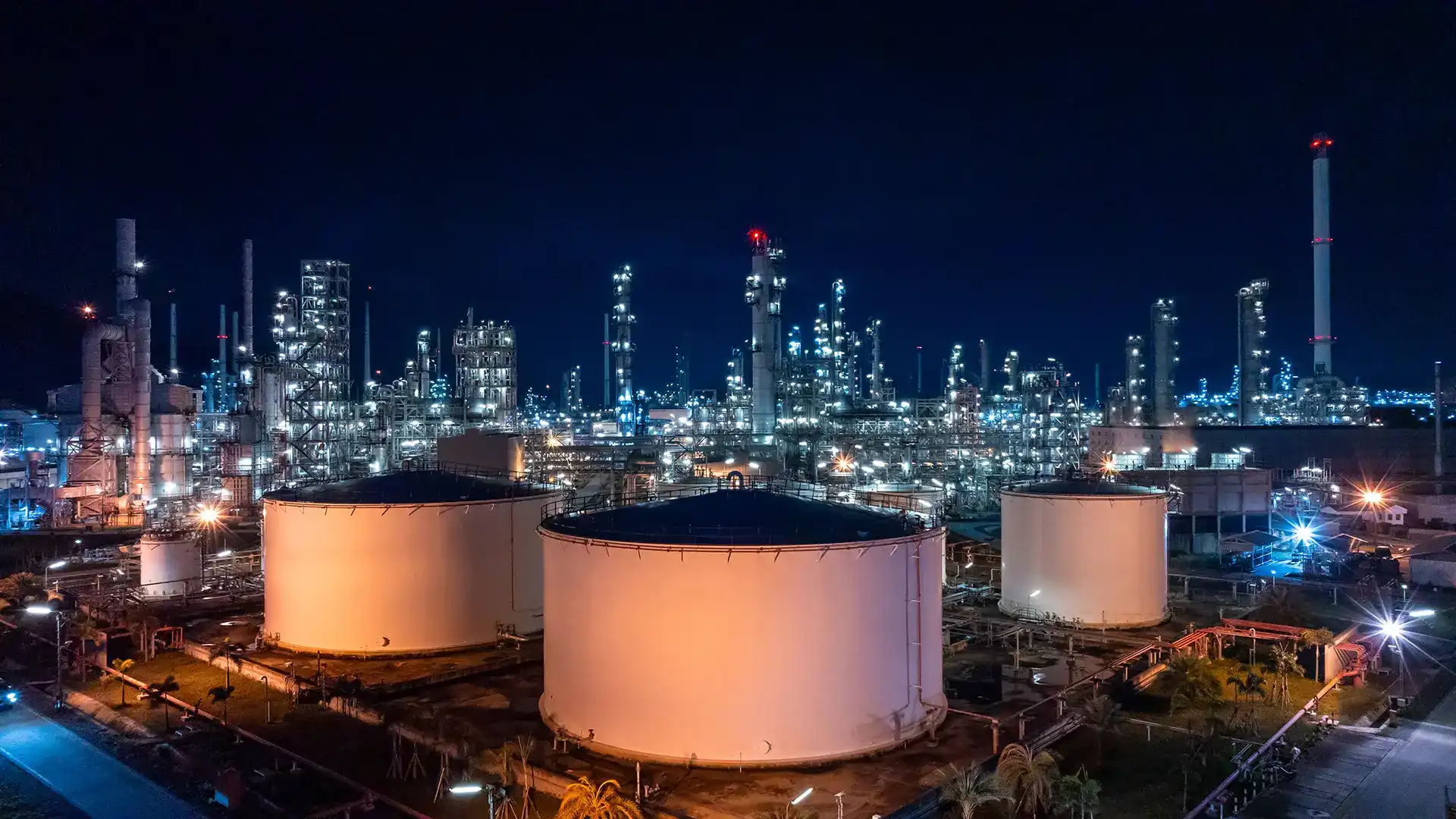
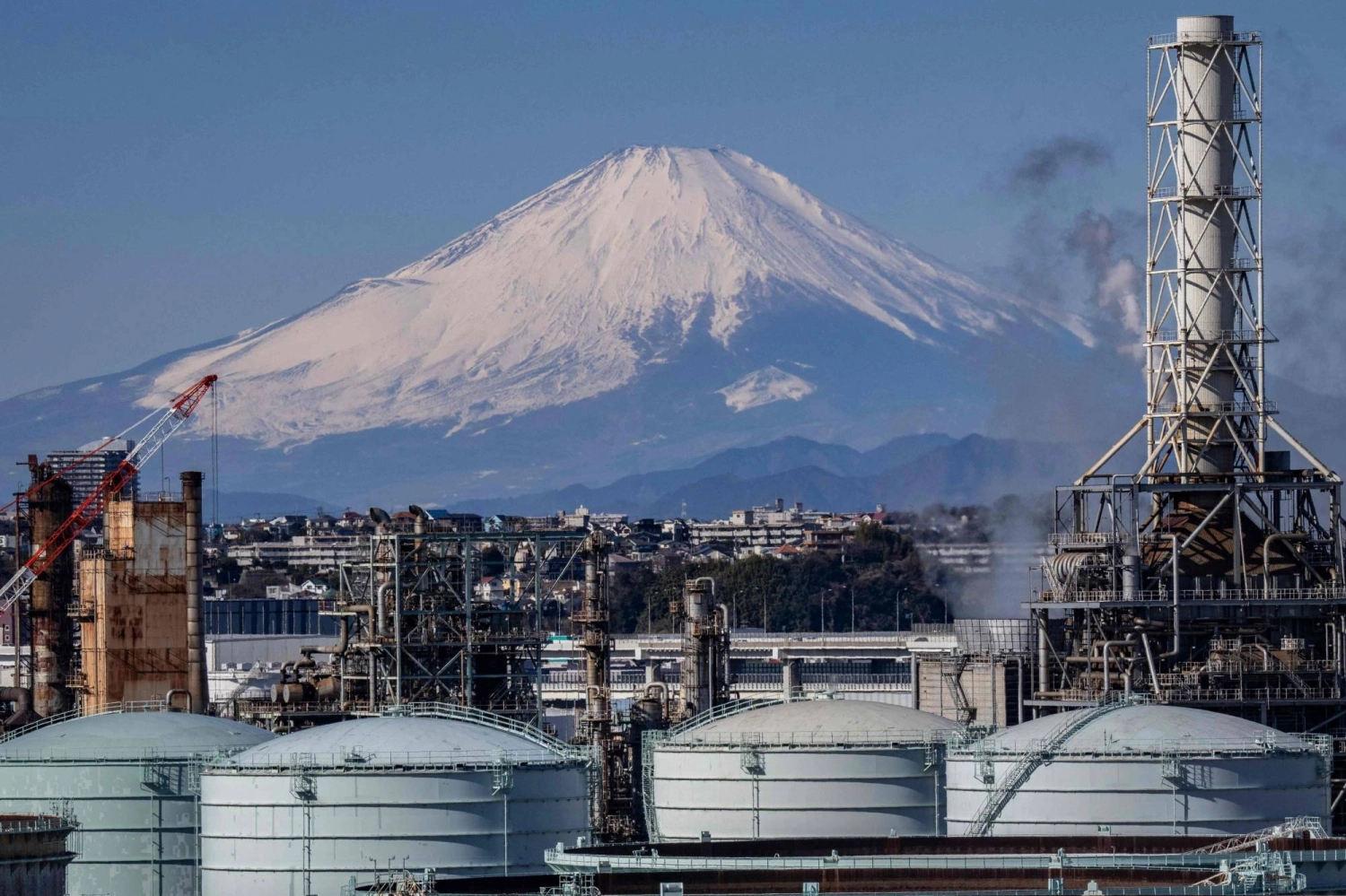
On the buy side: Asian refiners particularly in Japan, South Korea, and India lose $15–25/barrel on forced substitution to Atlantic crude grades. A mid-sized Japanese refiner processing 200,000 barrels/day of Middle East crude must source West African or US Gulf alternatives at delivered costs 15–25% higher. Over a 30 day disruption, this represents $90–150 million in additional feedstock costs with no ability to pass through to regulated fuel markets. Chinese independent refiners face tighter margins but greater flexibility, often absorbing 2-3% margin compression rather than switching suppliers entirely.
On the sell side: Atlantic crude suppliers Norwegian North Sea, US Gulf Coast, West African capture extraordinary arbitrage premiums. A Forties crude cargo from the North Sea, typically priced at Brent plus $1–2/barrel for European delivery, now commands Brent plus $8–12/barrel for Asian delivery as freight rates triple. Saudi Aramco and other Gulf suppliers forfeit spot premiums but maintain contract commitments, essentially subsidising Asian refiners' loyalty through the crisis. The margin compression forces Gulf exporters to accelerate contract renegotiations for 2027 delivery.
For large integrated traders Vitol, Trafigura, Glencore with derivatives access: the volatility creates multiple arbitrage windows across time spreads, geographic spreads, and freight differentials. Brent-Dubai spreads widening to $8–12/barrel (versus normal $2–4/barrel) enables profitable triangulation: buy Dubai crude at discount, sell Brent equivalent, hedge with ICE futures. Freight derivatives on VLCC routes surge 200-300%, but physical vessels command 400-500% premiums, creating profitable basis trades for operators with tonnage exposure.
For smaller regional operators mid-sized fuel importers, independent distributors, regional cooperatives without derivatives access: the practical equivalent involves bilateral term adjustments and inventory optimization. A regional distributor in Thailand or Philippines negotiates force majeure clauses with term suppliers while building 45-60 day inventory (versus normal 15-30 days) from available West African cargoes. Storage costs rise $2–4/barrel monthly, but this provides hedge protection equivalent to put options on supply disruption.
The freight dimension concentrates extraordinary margins with vessel operators. A VLCC currently earns approximately $14/MT at current rates around $28 million per voyage versus $16 million three months ago. The additional $12 million per voyage accrues entirely to shipowners, not cargo owners. Tanker day rates for VLCCs spike to $150,000–200,000 daily from normal $30,000–50,000. For Euronav, Frontline, and other listed tanker operators, this represents 300-400% revenue increases with minimal additional operating costs. Freight is not a rounding error at these levels, it equals or exceeds the crude oil margin itself.
Warrisk insurance premiums surge from normal 0.05–0.1% of cargo value to 1.5–2.0% effectively a $2–4 million additional cost per VLCC cargo. Lloyd's of London syndicates capturing this premium achieve 500-800 basis point returns, but exposure concentrates risk. For self-insured national oil companies Saudi Aramco, ADNOC, NIOC the calculation inverts: absorbing war risk internally while charging commercial rates to third parties creates a profitable insurance arbitrage alongside the physical oil trade.
The 230 trapped tankers face a complex optimization problem beyond simple risk tolerance. Early movers in the escort queue capture spot premiums but expose themselves to concentrated IRGC targeting as Iran tests US resolve with fast attack boats, drones, and cruise missiles. Late movers benefit from tactical learning and potentially reduced Iranian interdiction capabilities but forfeit the premium pricing as market supply normalizes. The queue itself becomes a forward market in risk tolerance.
Analyzing Iranian capabilities: IRGC naval forces deploy mobile anti-ship missile batteries, fast attack boats, and naval mines across the strait's chokepoints, though US forces previously destroyed 16 Iranian minelayers and cleared significant mine fields. The commercial calculation for vessel operators centers on IRGC's preference for harassment over escalation disrupting enough vessels to maintain pressure without triggering decisive US military response that would eliminate Iranian leverage entirely.
Route substitution creates global margin redistribution. MEG-Asia crude flows (normal 15-20 million barrels/day) redirect to US Gulf-Asia and West Africa-Asia routes, adding 10-15 days transit time and $3–5/barrel additional freight costs. Panama Canal constraints limit US Gulf substitution capacity to 1-2 million barrels/day additional throughput. The arithmetic forces Asian refiners toward West African crudes Nigerian Bonny Light, Angolan Cabinda at premiums exceeding $20/barrel over equivalent Middle East grades.
The financing dimension amplifies physical constraints. Letters of credit (LC) bank guarantees that payment will be made once shipping documents are presented become essential instruments for new trading relationships as established MEG suppliers pause shipments. Asian refiners establishing LC facilities for West African purchases face 200-300 basis point higher financing costs plus 15-30 day documentary processing delays. For inventory-intensive operations, this working capital increase of $500 million–1 billion strains balance sheets already pressured by higher feedstock costs.
Project Freedom's restart timeline depends on tactical factors invisible to commercial operators. Expert analysis suggests small convoys of six container ships accompanied by two Arleigh Burke destroyers, supported by Apache helicopters and FA-18 fighters, could test Iran's blockade using the Oman traffic separation lane. The operational tempo potentially 2-3 convoys weekly rather than daily escort limits commercial throughput to 20-30 vessels monthly versus normal 4,000+ monthly transits.
For observers monitoring this situation: track the Baltic Dry Index and VLCC freight futures (both available daily via Bloomberg commodity indices) for early signals of shipping market stress beyond the Hormuz bottleneck. A sustained move above 200% of 30-day moving averages in Pacific Basin freight rates indicates broader logistical strain requiring inventory adjustments across Asian supply chains. Monitor also the Brent-Dubai spread: widening beyond $15/barrel suggests fundamental supply shortage rather than temporary logistical disruption, requiring strategic rather than tactical procurement responses. These signals typically lead physical market tightness by 10-15 days sufficient notice for inventory and contract adjustments.

.jpg)
.jpg)

'%3e%3cg id='Final-Copy-2_2_' transform='translate(1275.000000, 200.000000)'%3e%3cpath class='st0' d='M7.4,12.8h6.8l3.1-11.6H7.4C4.2,1.2,1.6,3.8,1.6,7S4.2,12.8,7.4,12.8z'/%3e%3c/g%3e%3c/g%3e%3c/g%3e%3cg id='final---dec.11-2020'%3e%3cg id='_x30_208-our-toggle' transform='translate(-1275.000000, -200.000000)'%3e%3cg id='Final-Copy-2' transform='translate(1275.000000, 200.000000)'%3e%3cpath class='st1' d='M22.6,0H7.4c-3.9,0-7,3.1-7,7s3.1,7,7,7h15.2c3.9,0,7-3.1,7-7S26.4,0,22.6,0z M1.6,7c0-3.2,2.6-5.8,5.8-5.8 h9.9l-3.1,11.6H7.4C4.2,12.8,1.6,10.2,1.6,7z'/%3e%3cpath id='x' class='st2' d='M24.6,4c0.2,0.2,0.2,0.6,0,0.8l0,0L22.5,7l2.2,2.2c0.2,0.2,0.2,0.6,0,0.8c-0.2,0.2-0.6,0.2-0.8,0 l0,0l-2.2-2.2L19.5,10c-0.2,0.2-0.6,0.2-0.8,0c-0.2-0.2-0.2-0.6,0-0.8l0,0L20.8,7l-2.2-2.2c-0.2-0.2-0.2-0.6,0-0.8 c0.2-0.2,0.6-0.2,0.8,0l0,0l2.2,2.2L23.8,4C24,3.8,24.4,3.8,24.6,4z'/%3e%3cpath id='y' class='st3' d='M12.7,4.1c0.2,0.2,0.3,0.6,0.1,0.8l0,0L8.6,9.8C8.5,9.9,8.4,10,8.3,10c-0.2,0.1-0.5,0.1-0.7-0.1l0,0 L5.4,7.7c-0.2-0.2-0.2-0.6,0-0.8c0.2-0.2,0.6-0.2,0.8,0l0,0L8,8.6l3.8-4.5C12,3.9,12.4,3.9,12.7,4.1z'/%3e%3c/g%3e%3c/g%3e%3c/g%3e%3c/g%3e%3c/svg%3e) Privacy Choices
Privacy Choices