.avif)
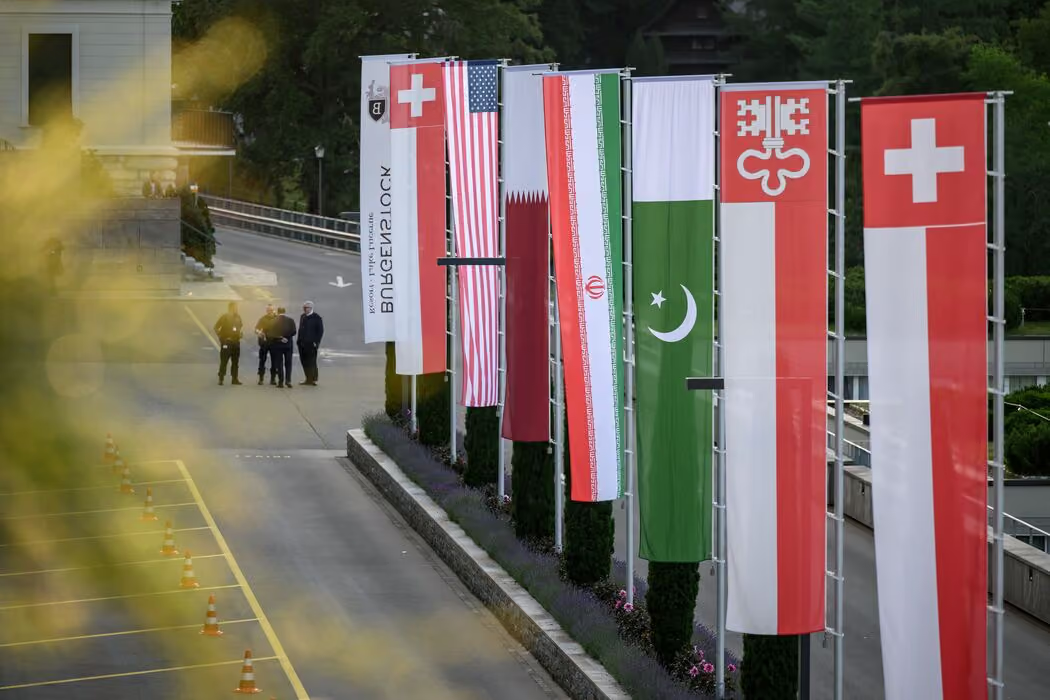
Crude oil traders pricing Iranian barrels back into conventional Brent-linked supply chains face an extended wait: the postponement of VP Vance's Switzerland technical talks reported as of 19 June 2026 freezes the next phase of the US-Iran interim memorandum and defers, by weeks at minimum, any formal pathway to normalising Iranian crude exports at scale.
The interim memorandum, signed by President Trump and Iranian President Masoud Pezeshkian, was designed to operate in sequence. Phase one established a ceasefire and removed the US naval blockade from Hormuz; phase two the Switzerland technical talks was meant to set the hard parameters: uranium enrichment limits, verification mechanisms, and a framework for disposing of Iran's highly enriched uranium (HEU) stockpile, meaning material enriched beyond 60% U-235, which has no civilian energy application and is a primary proliferation concern. Only upon completion of phase two were the full economic benefits sanctions relief, access to a reconstruction fund, and unrestricted crude export to be unlocked. That sequencing is now stalled. According to multiple reports, the delay is linked to Iran's decision to withhold its delegation from Switzerland in response to Israel's ongoing military campaign in Lebanon, though the White House cited unpredictable logistics and noted plans had not been finalised.
The Strait of Hormuz context matters physically, not just geopolitically. Hormuz is a 33 kilometre wide chokepoint at the mouth of the Persian Gulf through which approximately 20% of all globally traded oil passes daily roughly 17–20 million barrels. Under the interim ceasefire, the strait remains technically open and the naval blockade lifted, so no immediate physical disruption to current flows has occurred. But the risk premium the additional price baked into Brent crude (the international benchmark price, derived from North Sea oil and used globally to price most traded crude) reflects the possibility that talks collapse entirely and Iran reasserts leverage over the strait. Traders and analysts estimate this Hormuz uncertainty premium at roughly $4–8 per barrel on Brent at current diplomatic conditions. The postponement sustains that premium. It does not resolve it.
To understand what is at stake for margin anatomy, consider the two crude streams sitting on either side of the sanctions divide. Iranian crude Heavy Iranian Blend and Iranian Light currently trades in grey market channels at discounts of approximately $10–15 per barrel to Brent. A cargo of Iranian Light priced at Brent minus $13 per barrel, loaded at Kharg Island (Iran's main export terminal in the Persian Gulf) and shipped to a Chinese independent refiner colloquially called a teapot refinery on a sanctions tolerant vessel, yields the intermediary trader a margin that exists purely because Western operators cannot participate. If sanctions were formally lifted and Iranian crude re-entered conventional channels, that $10–15 discount compresses toward $2–4 (reflecting quality and freight differentials only), and the grey market arbitrage evaporates. The Switzerland delay extends the window in which that discount driven trade remains structurally available a quiet gain for operators positioned in it.
On the buy side, Asian refineries particularly Chinese state refiners such as Sinopec and CNOOC, and Indian public sector refiners are the natural beneficiaries of Iranian crude normalisation. At full production capacity, Iran was exporting approximately 2.5 million barrels per day before the maximum pressure sanctions campaign began in 2018. Analysts estimate Iran currently exports 1.2–1.5 mb/d through grey market routes. The gap between those two figures 1.0–1.3 mb/d of suppressed supply is what Asian buyers are waiting to access legally, on standard payment terms, via letters of credit (LCs bank guarantees that payment will be made upon presentation of shipping documents, the standard instrument for international commodity trade). Every week the Switzerland talks are delayed, those buyers remain exposed to elevated Brent prices and restricted optionality. On the sell side, Iran's National Iranian Oil Company (NIOC) is the direct loser: grey market pricing means NIOC receives $10–15/bbl less per barrel than it would under normalised conditions. At 1.3 mb/d of exports, that discount costs Iran approximately $13–19 million per day in foregone revenue at the midpoint money that does not fund reconstruction.
The infrastructure reality behind the diplomatic timeline deserves explicit attention, because the market is partially mispricing the speed of any resolution. Even if the Switzerland talks conclude successfully and sanctions are lifted in principle, Iranian crude cannot return to 2.5 mb/d within weeks. Kharg Island's export terminal infrastructure has degraded under years of underinvestment and sanctions-era isolation. Iran's conventional tanker fleet the vessels it would use for openly insured, internationally financed voyages is limited and ageing. Rebuilding loading capacity, securing war-risk insurance on standard terms, and re-establishing LC-based payment channels with Western banks takes six to twelve months at a minimum, according to the enrichment analysis. Traders pricing Iran's return as a near-term Brent-suppressing event are working with a timeline mismatch that the market has not fully corrected.
For large integrated traders a Vitol, Trafigura, or a national oil company's trading arm with full access to derivatives markets the current environment has a clear playbook. Long positions in Brent call options (the right but not obligation to buy Brent at a set price if it rises) hedge against further escalation and talk collapse. Short positions in the Iran-Brent spread, structured through over the counter (OTC) bilateral agreements rather than exchange listed products, capture the eventual compression of the grey market discount when normalisation does arrive. The cost of maintaining optionality across both scenarios is manageable at scale because the position can be structured to profit from the timing of resolution, not just its direction. For smaller regional operators a mid-sized independent refiner in Southeast Asia, a fuel importer operating without derivatives desk access the practical equivalent is simpler: fix crude purchase terms bilaterally with suppliers for 90 day windows at Brent linked prices rather than spot, diversify away from Iran exposed intermediary chains where possible, and hold slightly elevated inventory buffers against Brent volatility that the $4–8/bbl risk premium signals as ongoing.
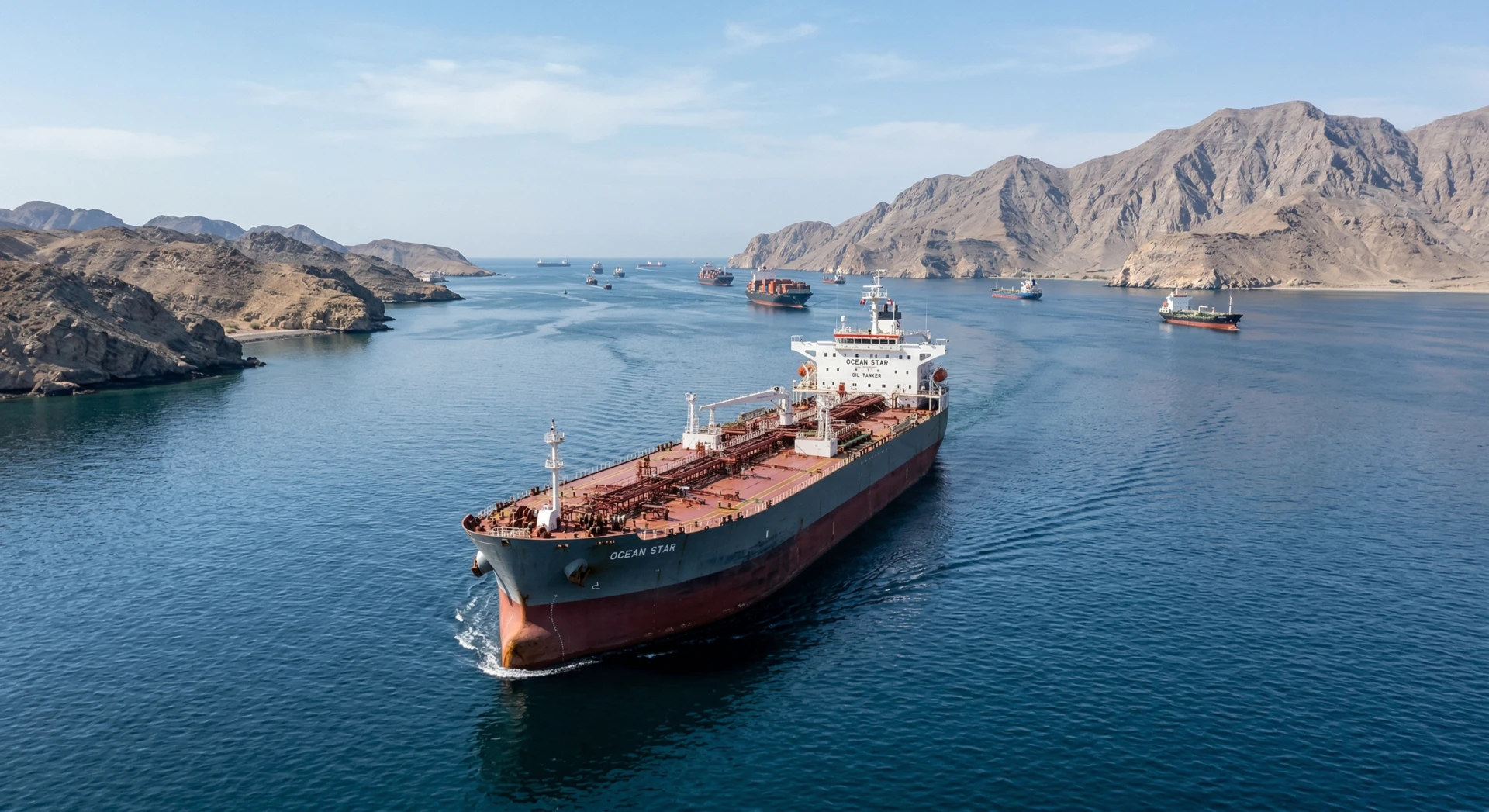
The shadow fleet dimension is where the freight margin story concentrates. Shadow fleet vessels tankers operating outside conventional P&I (Protection and Indemnity) insurance clubs and Western registration registries, used to move sanctioned crude benefit doubly from delay. First, they retain their monopoly on Iranian cargo movements. Second, elevated war-risk premiums the additional insurance cost charged on vessels transiting routes exposed to conflict remain high while Hormuz diplomatic uncertainty persists. A mid-sized Suezmax tanker (carrying approximately 1 million barrels) moving Iranian crude from Kharg Island to a Chinese port earns freight at rates that include a war-risk loading of $2–4/MT above standard. On a cargo of approximately 130,000 tonnes, that loading is worth $260,000–$520,000 per voyage to the vessel operator not the cargo owner. The last comparable structural windfall for shadow fleet operators was the extended post-2022 sanctions period following Russia's invasion of Ukraine, when freight rates on sanctioned Russian crude routes held at elevated levels for over eighteen months.
The specific signal for observers to track is not Vance's travel schedule it is the ICE Brent front-month versus six month spread. When the market is in backwardation a structure where near-term prices are higher than forward prices, signalling tight current supply and no expectation of fast relief the spread widens, indicating the market sees no imminent large-scale return of Iranian barrels. As of the reporting date, Brent remains in mild backwardation consistent with sustained uncertainty. A decisive shift to contango where forward prices exceed near-term prices, suggesting anticipated oversupply would be the clearest market signal that traders collectively believe Iranian crude normalisation is approaching on a specific timeline. Watch the ICE Brent M1-M6 spread daily. If it moves from current backwardation toward flat or contango within 30 days, the market has priced a credible Switzerland restart. Until then, the $4–8/bbl risk premium is structural, not residual, and any operator treating current Brent as a baseline rather than an elevated print is working with the wrong anchor.

.jpg)
.jpg)

'%3e%3cg id='Final-Copy-2_2_' transform='translate(1275.000000, 200.000000)'%3e%3cpath class='st0' d='M7.4,12.8h6.8l3.1-11.6H7.4C4.2,1.2,1.6,3.8,1.6,7S4.2,12.8,7.4,12.8z'/%3e%3c/g%3e%3c/g%3e%3c/g%3e%3cg id='final---dec.11-2020'%3e%3cg id='_x30_208-our-toggle' transform='translate(-1275.000000, -200.000000)'%3e%3cg id='Final-Copy-2' transform='translate(1275.000000, 200.000000)'%3e%3cpath class='st1' d='M22.6,0H7.4c-3.9,0-7,3.1-7,7s3.1,7,7,7h15.2c3.9,0,7-3.1,7-7S26.4,0,22.6,0z M1.6,7c0-3.2,2.6-5.8,5.8-5.8 h9.9l-3.1,11.6H7.4C4.2,12.8,1.6,10.2,1.6,7z'/%3e%3cpath id='x' class='st2' d='M24.6,4c0.2,0.2,0.2,0.6,0,0.8l0,0L22.5,7l2.2,2.2c0.2,0.2,0.2,0.6,0,0.8c-0.2,0.2-0.6,0.2-0.8,0 l0,0l-2.2-2.2L19.5,10c-0.2,0.2-0.6,0.2-0.8,0c-0.2-0.2-0.2-0.6,0-0.8l0,0L20.8,7l-2.2-2.2c-0.2-0.2-0.2-0.6,0-0.8 c0.2-0.2,0.6-0.2,0.8,0l0,0l2.2,2.2L23.8,4C24,3.8,24.4,3.8,24.6,4z'/%3e%3cpath id='y' class='st3' d='M12.7,4.1c0.2,0.2,0.3,0.6,0.1,0.8l0,0L8.6,9.8C8.5,9.9,8.4,10,8.3,10c-0.2,0.1-0.5,0.1-0.7-0.1l0,0 L5.4,7.7c-0.2-0.2-0.2-0.6,0-0.8c0.2-0.2,0.6-0.2,0.8,0l0,0L8,8.6l3.8-4.5C12,3.9,12.4,3.9,12.7,4.1z'/%3e%3c/g%3e%3c/g%3e%3c/g%3e%3c/g%3e%3c/svg%3e) Privacy Choices
Privacy Choices