.avif)

Nigeria's Dangote refinery exported 1.66 billion litres of refined products in April 2026, marking the first time European jet fuel buyers have accepted a 20% import share from West Africa. For European fuel distributors serving major aviation hubs, this represents margin compression of approximately $8–12 per metric tonne compared to traditional Middle Eastern supply routes, but eliminates the geopolitical premium that has driven jet fuel prices above $1,744 per tonne nearly double pre-disruption levels. The shift began when crude and fuel flows through the Strait of Hormuz dropped by around 4 million barrels per day in March and April, forcing immediate sourcing adjustments that European buyers previously avoided.
The exports included 513m litres of petrol, 534m litres of diesel, and 615m litres of aviation fuel, marking the refinery's highest monthly export volume since operations began. A letter of credit (LC) a bank guarantee that payment will be made once shipping documents are presented is the instrument facilitating most of these transactions, with European buyers extending payment terms to 120 days versus the typical 30 day terms for Middle Eastern suppliers. Europe emerged as the biggest destination for Dangote's aviation fuel exports, receiving about 70,000 bpd in April 2026, compared to zero exports to Europe in April 2024. The 650,000 barrels per day facility a refinery capacity equivalent to processing roughly 2 million barrels of crude oil every three days operated at an average capacity utilisation of 99.12 per cent in April, with the Dangote refinery accounting for the overwhelming share of production.
Analysis reveals why European buyers are accepting West African supply despite transport premiums. Consider a major European fuel distributor supplying Amsterdam Schiphol with 5,000 tonnes of jet fuel monthly. Before Hormuz closure, Middle Eastern supply delivered at approximately $1,350 per tonne. With Nigerian supply, the delivered cost rises to $1,420 per tonne a $70 per tonne premium driven by Atlantic Basin shipping costs of 12–15 days versus 18–25 days from the Gulf. However, current European spot prices exceed $1,740 per tonne, meaning buyers secure $320 per tonne margin versus $390 from pre-crisis Middle Eastern routes. The margin differential of $70 per tonne represents acceptable insurance against supply interruption for European distributors managing 8–12 month supply contracts.
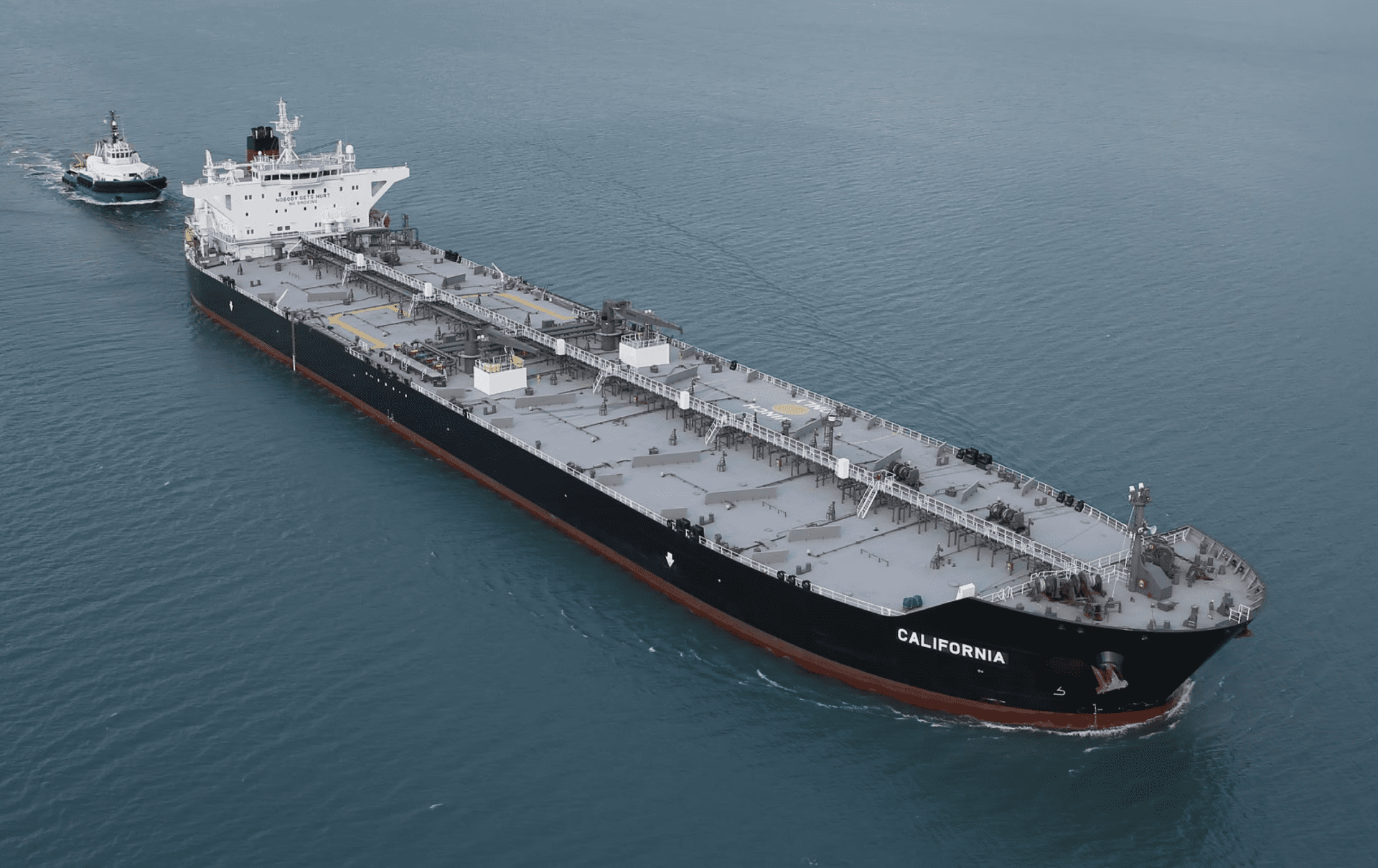
European refiners had earned about $15 per barrel. He estimated Dangote's margins at more than double that as a result of access to Nigerian crude and the plant's scale and sophistication. Freight dynamics concentrate additional margin with Atlantic Basin product tanker operators. A Medium Range (MR) tanker capable of carrying 37,000 tonnes of refined products now earns $18,000 per day on Nigeria-Rotterdam routes versus $11,000 per day in February 2026. With voyage times of 12–15 days, tanker operators capture approximately $216,000–270,000 per voyage, compared to $154,000–165,000 three months ago. The additional $62,000–105,000 per voyage represents pure freight margin, not cargo value. For European buyers, this freight premium translates to $6–8 per tonne in delivered costs that did not exist under Red Sea/Suez Canal routing.
On the buy side: Large European fuel distributors (Shell, Total, Vitol trading arms) with derivatives access are hedging Nigeria-Europe freight exposure through Baltic Exchange freight agreements (BDTI) and product tanker futures, locking rates at $16,000–17,000 per day for Q3 2026 delivery. Mid-sized regional distributors independent aviation fuel suppliers, airport fuel consortiums without derivatives access are negotiating bilateral CFR (Cost and Freight) terms with Nigerian suppliers, accepting 15–20% price volatility in exchange for supply certainty. On the sell side: Dangote imported most of its crude from the U.S., as well as some from other African producers and Brazil. He said the bulk of the 24 million litres of jet fuel it produces daily was shipped to Europe, although he also said the refinery largely supplied the needs of Nigerian airlines, which the aviation industry estimates at about 2.1 million litres per day.
For large integrated traders (Trafigura, Glencore, Mercuria) with storage infrastructure in both Nigeria and Europe: The arbitrage window remains open at current spreads, with Nigeria FOB jet fuel at $1,380 per tonne versus ARA (Amsterdam-Rotterdam, Antwerp) CIF at $1,650 per tonne, providing $270 per tonne gross margin before $180–200 per tonne transport costs. Net arbitrage margins of $70–90 per tonne support sustained trading activity. For smaller regional operators mid-sized European fuel importers, independent FBO chains without storage or blending capabilities: Direct term contracts with Dangote offer price certainty but require accepting Jet A-1 specifications that may differ from traditional Jet A supplies, potentially requiring engine compatibility verification and insurance adjustments.
Backwardation where near-term prices are higher than forward prices in European jet fuel markets signals buyers need physical supply immediately, not contracts for future delivery. Brent crude futures were little changed at around $105 per barrel on Thursday, oil had reached $107.82 per barrel, measured using the Brent benchmark. The June-December jet fuel spread in Amsterdam has reached $45 per tonne backwardation, meaning buyers will pay $45 per tonne more for June delivery than December delivery. This pricing structure incentivises immediate West African imports over forward Middle Eastern contracts that may not materialise. For European buyers, securing Nigerian supply at $1,420 per tonne for June delivery beats waiting for Middle Eastern supply at $1,350 per tonne that may not arrive until September.
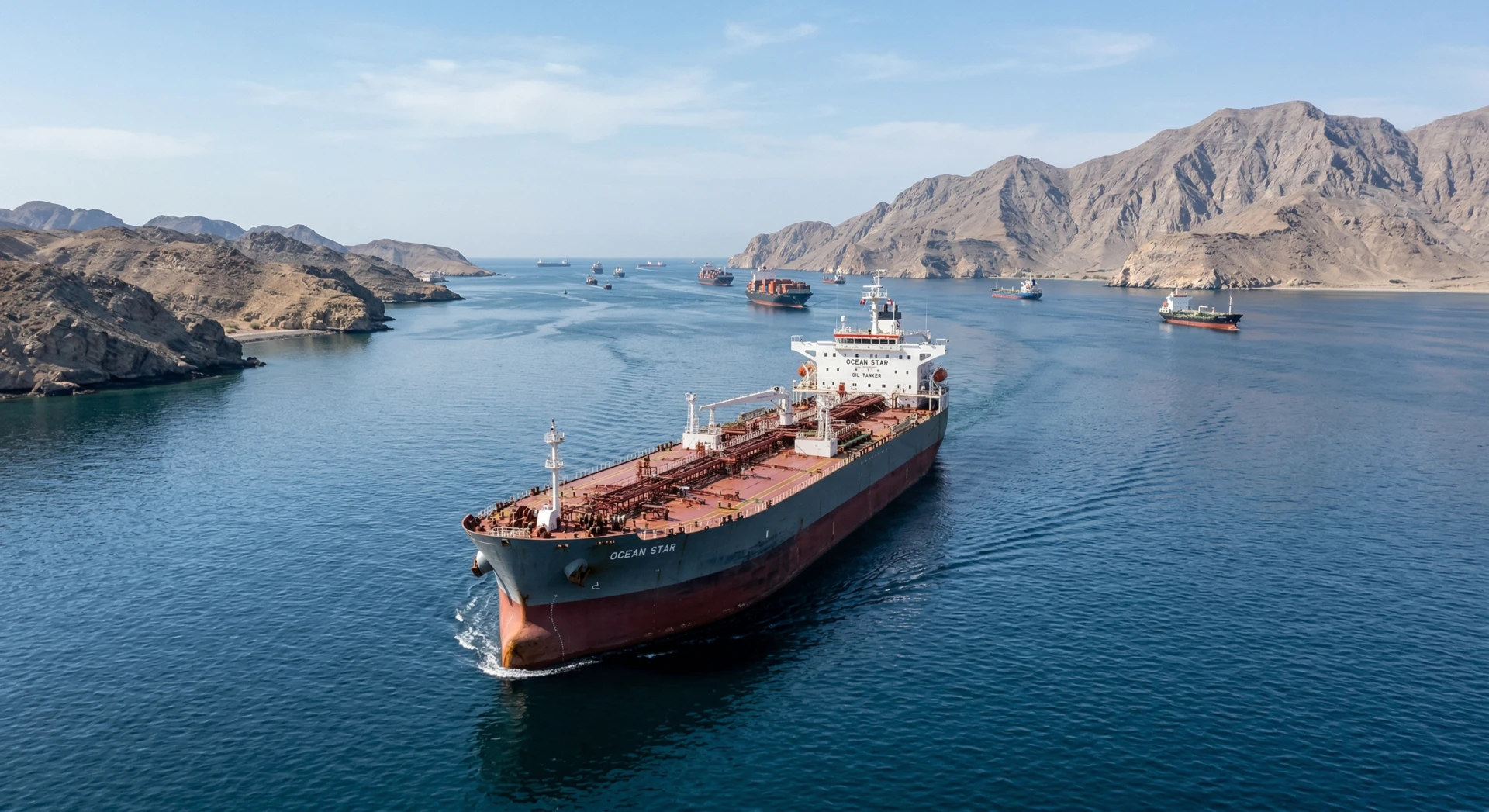
Europe faces 300kbd jet fuel shortfall from Middle East disruption. The effective closure of the Strait of Hormuz cuts off nearly 21% of total global seaborne jet supply and reduces European imports by almost 300kbd, 247kbd of which would typically go to North West Europe (NWE). Supply chain grounding demonstrates the physical constraints European buyers face. Jet fuel from Nigeria's Lekki terminal is loaded onto Medium Range tankers, transits the Gulf of Guinea a 1,200 nautical mile coastal route largely under Nigerian naval security then crosses the Atlantic via established shipping lanes. The 4,200 nautical mile voyage to Rotterdam takes 12–15 days depending on weather and vessel speed. Compare this to the pre-crisis Middle Eastern route: crude loaded at Ras Tanura, refined at European facilities, with total supply chain time of 21–28 days. Nigerian supply actually offers European buyers a shorter total logistics timeline.
Crack spreads the price difference between crude oil and refined products reveal why Nigerian exports remain profitable despite transport costs. The Brent-jet fuel crack spread in April 2026 averaged $52 per barrel versus $31 per barrel in February 2026. European refiners are estimated to earn around $15 per barrel; Dangote plant margins are more than double that, supported by access to locally sourced crude and facility scale. This $21 per barrel margin advantage allows Nigerian exports to absorb $15–18 per barrel in additional Atlantic Basin transport costs while maintaining commercial viability. For European buyers, the Nigerian supply chain delivers product at economically sustainable levels despite geographical premiums.
Financing structures determine which European buyers can access Nigerian supply reliably. Large European fuel traders with investment grade credit ratings secure 180 day supplier financing directly from Dangote through standby letters of credit, minimising working capital requirements. Mid-sized distributors require bank intermediation, typically through Trade Finance facilities at 3.2–4.1% annual rates, adding $42–53 per tonne to annual financing costs on typical 90 day payment cycles. Regional distributors often rely on fuel trading houses as intermediaries, accepting 2–3% trading margins in exchange for credit facilitation and logistics coordination. The financing cascade means smaller European buyers pay effective premiums of $85–110 per tonne versus large integrated operators.
Watch Nigerian jet fuel export allocation announcements from NMDPRA by month end. If May exports exceed 650 million litres (21 million litres per day), European supply displacement of Middle Eastern volumes becomes permanent rather than crisis driven. Monitor the Brent-Dubai spread the price difference between North Sea crude and Middle East crude which determines whether Atlantic Basin supply maintains cost competitiveness. If the spread narrows below $8 per barrel, Nigerian exports face margin pressure. Track ARA jet fuel inventory levels weekly through PJK International data; if stocks remain below 850,000 tonnes through Q3 2026, European buyers continue paying Atlantic Basin premiums regardless of Middle East resolution.

.jpg)

'%3e%3cg id='Final-Copy-2_2_' transform='translate(1275.000000, 200.000000)'%3e%3cpath class='st0' d='M7.4,12.8h6.8l3.1-11.6H7.4C4.2,1.2,1.6,3.8,1.6,7S4.2,12.8,7.4,12.8z'/%3e%3c/g%3e%3c/g%3e%3c/g%3e%3cg id='final---dec.11-2020'%3e%3cg id='_x30_208-our-toggle' transform='translate(-1275.000000, -200.000000)'%3e%3cg id='Final-Copy-2' transform='translate(1275.000000, 200.000000)'%3e%3cpath class='st1' d='M22.6,0H7.4c-3.9,0-7,3.1-7,7s3.1,7,7,7h15.2c3.9,0,7-3.1,7-7S26.4,0,22.6,0z M1.6,7c0-3.2,2.6-5.8,5.8-5.8 h9.9l-3.1,11.6H7.4C4.2,12.8,1.6,10.2,1.6,7z'/%3e%3cpath id='x' class='st2' d='M24.6,4c0.2,0.2,0.2,0.6,0,0.8l0,0L22.5,7l2.2,2.2c0.2,0.2,0.2,0.6,0,0.8c-0.2,0.2-0.6,0.2-0.8,0 l0,0l-2.2-2.2L19.5,10c-0.2,0.2-0.6,0.2-0.8,0c-0.2-0.2-0.2-0.6,0-0.8l0,0L20.8,7l-2.2-2.2c-0.2-0.2-0.2-0.6,0-0.8 c0.2-0.2,0.6-0.2,0.8,0l0,0l2.2,2.2L23.8,4C24,3.8,24.4,3.8,24.6,4z'/%3e%3cpath id='y' class='st3' d='M12.7,4.1c0.2,0.2,0.3,0.6,0.1,0.8l0,0L8.6,9.8C8.5,9.9,8.4,10,8.3,10c-0.2,0.1-0.5,0.1-0.7-0.1l0,0 L5.4,7.7c-0.2-0.2-0.2-0.6,0-0.8c0.2-0.2,0.6-0.2,0.8,0l0,0L8,8.6l3.8-4.5C12,3.9,12.4,3.9,12.7,4.1z'/%3e%3c/g%3e%3c/g%3e%3c/g%3e%3c/g%3e%3c/svg%3e) Privacy Choices
Privacy Choices