.avif)
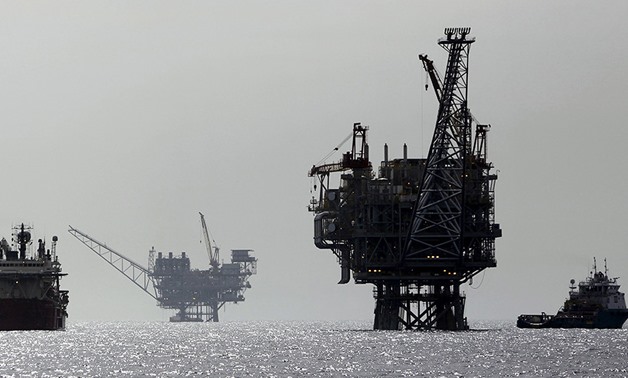
Badr El-Din Petroleum's new Badr 15 well in Egypt's Western Desert will add roughly 15 billion cubic feet (bcf) of natural gas to national reserves and generate approximately $40,000 per day in gross condensate revenue at plateau but that income materialises only if the ministry follows through on resolving the payment arrears that have quietly throttled international partner investment for years.
The discovery sits within the Western Desert, Egypt's most productive onshore hydrocarbon basin, where Badr El-Din Petroleum Company (BAPETCO) a joint venture between Shell and the Egyptian General Petroleum Corporation (EGPC), the state body that oversees upstream petroleum activities operates a network of gas and condensate fields. The Badr 15 well is expected to produce approximately 15 million cubic feet per day (MMcf/d) of gas alongside 500 barrels per day of condensate a light, high-value liquid hydrocarbon that separates from gas during production and is priced close to Brent crude. At current Brent-linked condensate values near $80 per barrel, the condensate stream alone yields around $40,000 per day at plateau. The gas volumes are sold domestically at regulated Egyptian prices, which are set well below international export parity, meaning the condensate revenue is commercially disproportionate relative to its volume. The ministry framed the well as part of a five year plan to double crude output, with horizontal drilling where the wellbore turns sideways through a reservoir to maximise contact with the productive rock and hydraulic fracturing where pressurised fluid is injected to crack the rock and release hydrocarbons cited as the central enabling technologies.
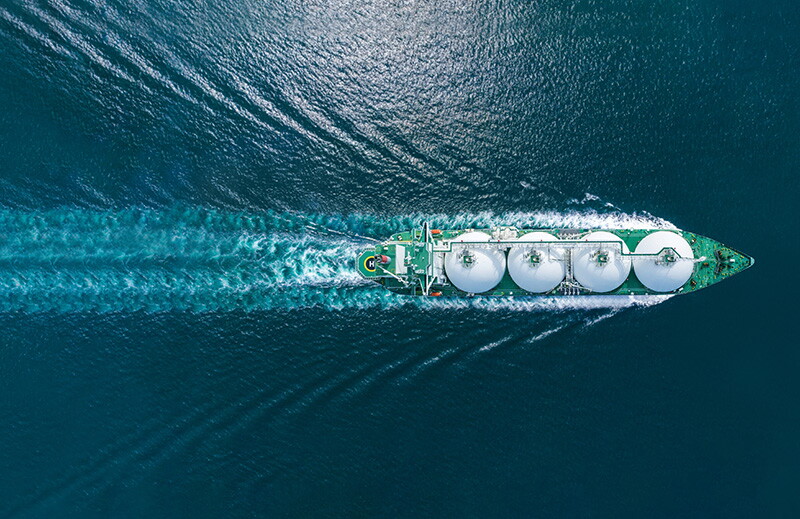
The ministry reported 40 successful hydraulic fracturing operations across Egyptian fields during the fiscal year, collectively adding more than 10,000 barrels of oil per day and over 15 MMcf/d of gas. That is a meaningful operational result. To put it in context: a standard onshore fracturing operation in a mature field typically costs between $500,000 and $2 million per well depending on depth and complexity; 40 operations implies capital deployment of $20–80 million, with the combined incremental output suggesting a reasonable return at current prices. On the sell side, BAPETCO and EGPC capture that incremental production directly the condensate at market-linked prices, the gas at regulated domestic tariffs. On the buy side, Egyptian downstream buyers power generators and industrial consumers fed by the national grid receive additional domestic supply that reduces the call on imported liquefied natural gas (LNG), the super-cooled form of gas shipped by tanker when pipelines are unavailable. Each additional MMcf/d of domestic gas displaces roughly one spot LNG cargo every two to three months, marginally reducing Egypt's exposure to volatile Mediterranean spot LNG prices.
The structural constraint, however, is financing not geology. Egypt has historically accumulated significant arrears owed to international oil company (IOC) partners: unpaid cost-recovery invoices that pile up when the state-controlled offtake price and payment cycle fall out of sync with operating costs. The ministry's reference to "addressing partner arrears and regularising payments" is the operative admission. A large integrated operator a Shell, an Eni, a TotalEnergies, each active in Egypt will allocate incremental drilling capital only once the arrears backlog is demonstrably clearing. For these operators, the practical instrument is straightforward: conditional work programme commitments, where new well approvals are tied to scheduled arrears repayments. For a smaller regional exploration company farming into Egyptian acreage, the equivalent discipline is tighter: insist on escrow arrangements or payment guarantees before committing to the next well tranche. The 15 bcf discovery and the 40 fracturing operations are genuine signals of technical competence. They are not a substitute for the financing fix.
For observers tracking whether Egypt's upstream revival is real or rhetorical, one signal matters above all others: the pace at which EGPC reduces its reported IOC arrears balance over the next 90 days. According to industry reporting, outstanding arrears to foreign partners have at times exceeded $1.5 billion across the sector; the ministry's language around "incentives" and "regularising payments" suggests the problem remains live. Watch the EGPC quarterly settlement disclosures and any public statements from IOC partners regarding Egypt work programme approvals at their Q3 2026 results calls scheduled for late October. If arrears are visibly declining and partners are announcing new well commitments, the five-year production plan has traction. If the technology narrative advances while the payment narrative stalls, the 15 bcf discovery remains an isolated data point rather than the leading edge of a sustained exploration cycle. Production start from the Badr 15 well is targeted before the end of June 2026; that operational milestone is achievable regardless of the arrears question but what follows it is not.
.jpg)
'%3e%3cg id='Final-Copy-2_2_' transform='translate(1275.000000, 200.000000)'%3e%3cpath class='st0' d='M7.4,12.8h6.8l3.1-11.6H7.4C4.2,1.2,1.6,3.8,1.6,7S4.2,12.8,7.4,12.8z'/%3e%3c/g%3e%3c/g%3e%3c/g%3e%3cg id='final---dec.11-2020'%3e%3cg id='_x30_208-our-toggle' transform='translate(-1275.000000, -200.000000)'%3e%3cg id='Final-Copy-2' transform='translate(1275.000000, 200.000000)'%3e%3cpath class='st1' d='M22.6,0H7.4c-3.9,0-7,3.1-7,7s3.1,7,7,7h15.2c3.9,0,7-3.1,7-7S26.4,0,22.6,0z M1.6,7c0-3.2,2.6-5.8,5.8-5.8 h9.9l-3.1,11.6H7.4C4.2,12.8,1.6,10.2,1.6,7z'/%3e%3cpath id='x' class='st2' d='M24.6,4c0.2,0.2,0.2,0.6,0,0.8l0,0L22.5,7l2.2,2.2c0.2,0.2,0.2,0.6,0,0.8c-0.2,0.2-0.6,0.2-0.8,0 l0,0l-2.2-2.2L19.5,10c-0.2,0.2-0.6,0.2-0.8,0c-0.2-0.2-0.2-0.6,0-0.8l0,0L20.8,7l-2.2-2.2c-0.2-0.2-0.2-0.6,0-0.8 c0.2-0.2,0.6-0.2,0.8,0l0,0l2.2,2.2L23.8,4C24,3.8,24.4,3.8,24.6,4z'/%3e%3cpath id='y' class='st3' d='M12.7,4.1c0.2,0.2,0.3,0.6,0.1,0.8l0,0L8.6,9.8C8.5,9.9,8.4,10,8.3,10c-0.2,0.1-0.5,0.1-0.7-0.1l0,0 L5.4,7.7c-0.2-0.2-0.2-0.6,0-0.8c0.2-0.2,0.6-0.2,0.8,0l0,0L8,8.6l3.8-4.5C12,3.9,12.4,3.9,12.7,4.1z'/%3e%3c/g%3e%3c/g%3e%3c/g%3e%3c/g%3e%3c/svg%3e) Privacy Choices
Privacy Choices