.avif)
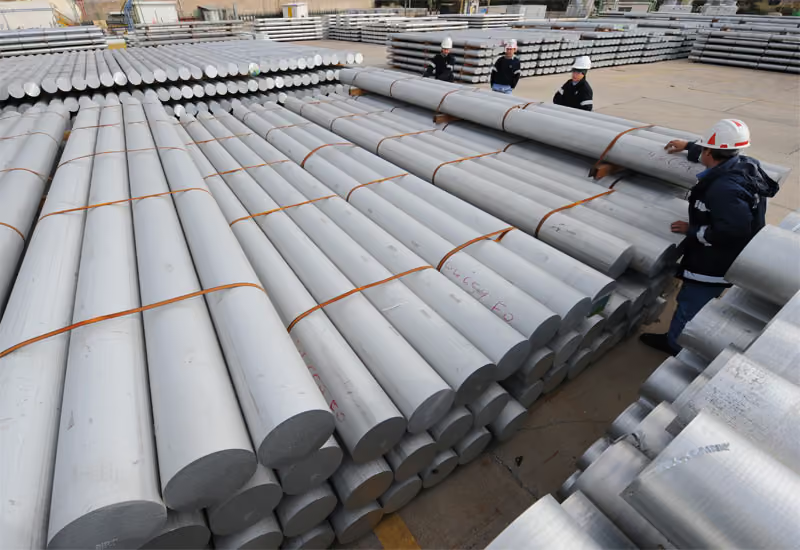
GCC primary aluminium smelters principally EMAL in the UAE and Alba in Bahrain are absorbing an estimated $50–120 per metric tonne (MT) margin compression this week as LME three-month aluminium slides to approximately $3,164/MT, completing a fourth consecutive weekly decline that has erased roughly 7%, or around $220/MT, from the peak reached during peak Hormuz risk earlier this year. The selloff began in earnest once a US brokered Memorandum of Understanding (MOU) a non-binding diplomatic agreement stabilising Gulf transit was signed in June 2026, according to reports, enabling UAE and Bahrain exporters to accelerate shipments that had been throttled not by production cuts but by a collapse in vessel willingness and war-risk insurance coverage for Strait of Hormuz transits. Buyers who secured long-term supply contracts above $3,400/MT are now sitting on paper losses. Sellers who hedged early are partially protected. Those who did neither are fully exposed to the pullback.
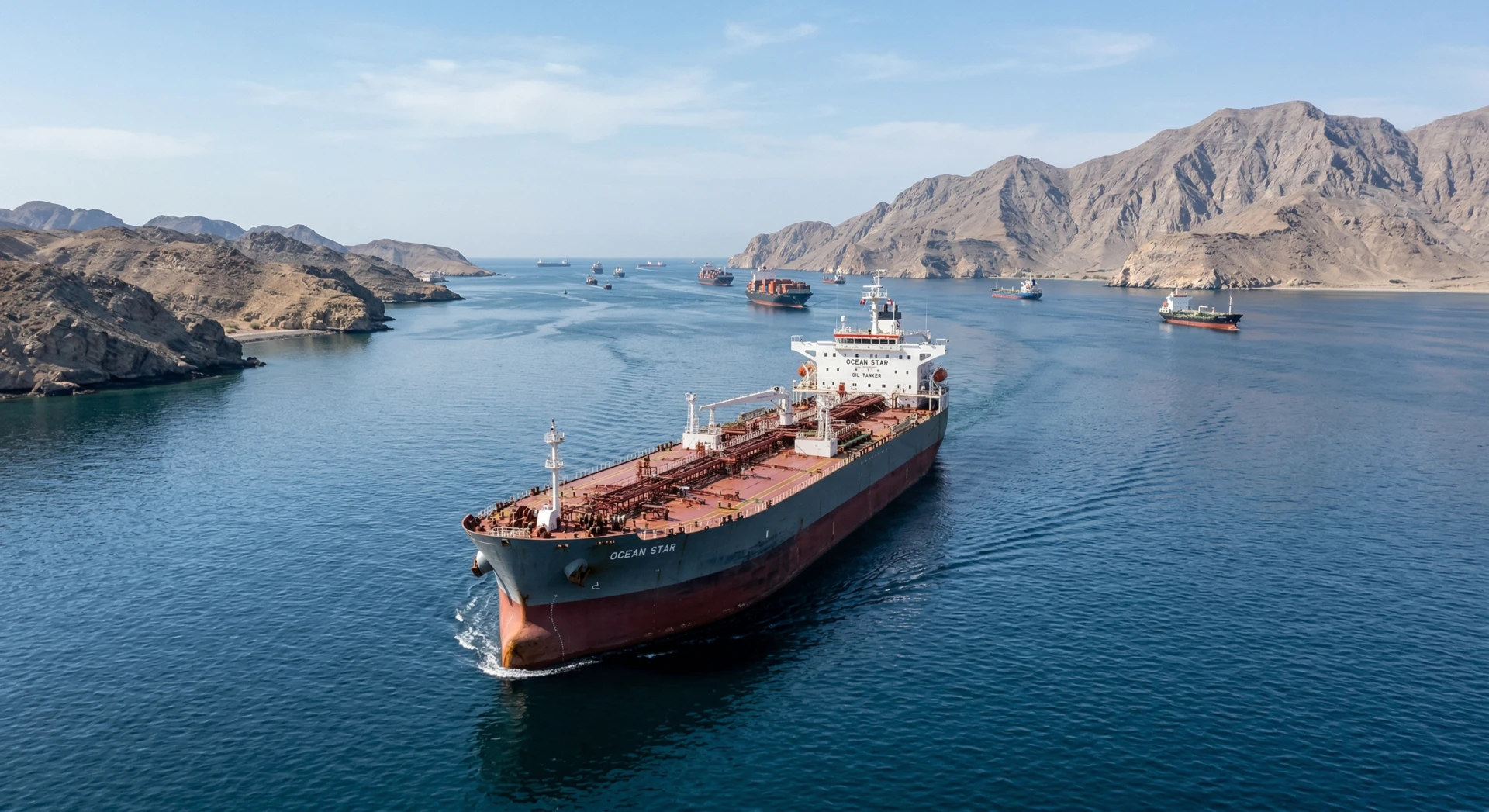
The physical supply chain context matters here. EMAL (Emirates Global Aluminium's smelting operation in Abu Dhabi) and Alba (Aluminium Bahrain) are among the world's most competitive smelters by cost, benefiting from subsidised energy and proximity to deep-water export terminals. Their aluminium primary aluminium ingots, T-bars, and billets is loaded onto bulk carriers or breakbulk vessels at ports including Khalifa Industrial Zone Abu Dhabi (KIZAD) and Khalifa bin Salman Port in Bahrain, then transits the Strait of Hormuz before dispersing to Asian and European buyers. During the peak disruption period, vessels were diverting via the Cape of Good Hope, adding 10–14 sailing days and approximately $15–30/MT in additional freight cost per tonne on Middle East Gulf-to-Europe lanes. That Cape routing is now partially reverting as the MOU holds and Hormuz transits resume.
The critical distinction the LME benchmark price does not capture is that war-risk insurance premiums the additional surcharge insurers levy on cargo and hull coverage for vessels transiting a designated conflict zone remain elevated above pre-crisis levels, even as the LME aluminium price has corrected sharply lower. Before the Hormuz disruption, war-risk premiums on Gulf transits were negligible, a few basis points of cargo value. At the height of the disruption, according to market sources, those premiums spiked to levels adding $8–15/MT to delivered costs on top of standard freight. Today, with the MOU in place but one cargo ship attack already reported as reigniting concerns, premiums have retreated but have not fully normalised. The LME price is telling one story. The landed cost for a European or Asian buyer is telling a slightly different one still $5–10/MT above where it would be in a genuinely stable Hormuz environment.
To illustrate the margin anatomy precisely: consider a mid-sized UAE smelter selling 10,000 MT of primary aluminium billet to a European rolling mill on a spot basis. Three months ago, with LME aluminium at $3,380/MT and a Rotterdam duty-paid premium the additional amount buyers pay above the LME benchmark for physical metal delivered to Rotterdam, inclusive of freight, insurance, and handling of approximately $180/MT, the all-in realised price was roughly $3,560/MT. Against an estimated cash cost of production of $1,900–2,100/MT for a competitive GCC smelter, that delivered margin was $1,460–1,660/MT. Today, with LME at $3,164/MT and the Rotterdam duty-paid premium having partially compressed to around $160/MT because the supply disruption premium has faded the all-in realised price is approximately $3,324/MT. Against the same cost base, the margin has fallen to $1,224–1,424/MT. That is a reduction of $200–280/MT in roughly twelve weeks. For a smelter running 1 million MT annually, this is a $200–280 million annualised margin event if prices hold.
On the buy side, the picture is more nuanced. A European automotive stamping plant or can sheet manufacturer purchasing primary aluminium for Q3 delivery is now facing lower spot prices, which is nominally positive. But procurement teams that locked in quarterly fixed-price contracts at $3,400+ during the Hormuz risk premium peak a common hedging strategy for manufacturers seeking cost certainty are now contractually committed to prices roughly $240/MT above spot. For a buyer consuming 5,000 MT per quarter, that is a $1.2 million above market commitment for the current quarter alone. On the sell side, GCC smelters with unhedged spot exposure are absorbing the full $220/MT decline. Producers who used LME futures exchange traded contracts to sell metal at a fixed future price to hedge their Q2 and Q3 production above $3,300/MT are protected on those hedged tonnes, but only partially, since hedging coverage ratios at most smelters rarely exceed 50–60% of production.
The dollar and equity dimensions compound the pressure in ways that are structural, not temporary. LME aluminium, like all London Metal Exchange contracts, is priced in US dollars. When the US dollar strengthens against currencies in which smelters pay their local costs the UAE dirham is pegged to the dollar, so less relevant there, but relevant for aluminium downstream consumers in non-dollar economies the dollar price of the metal effectively increases in local currency terms, dampening demand. Simultaneously, the renewed selloff in Asian technology equities has reduced risk appetite across commodity markets broadly, leading funds and speculative traders to reduce long positions bets that prices will rise in industrial metals including aluminium. This is not an aluminium specific story; it is aluminium being caught in a broader macro tide. That matters because the fundamental supply picture strong GCC smelter output, recovering inventory would in isolation justify a price closer to $3,000–3,100/MT based on historical cost-support analysis, suggesting the macro overlay had been adding $150–200/MT in premium that is now unwinding.
For large integrated commodity traders firms such as Glencore, Trafigura, or the trading arms of major smelting groups the opportunity in this environment lies in the regional premium arbitrage. The LME cash price represents a global benchmark, but physical metal trades at premiums or discounts to that benchmark depending on location, form, and availability. If the Rotterdam duty-paid premium and the Midwest premium the US equivalent, representing the all-in cost of primary aluminium delivered to the US Midwest have not fully retraced the gains made during the Hormuz disruption, a trader with access to both markets can short the LME futures while holding physical metal in a premium market, capturing the spread. This trade requires derivatives access and physical logistics capability simultaneously, and the window is time-limited: as GCC shipments normalise over the next four to eight weeks, premiums will likely converge lower toward historical averages of $130–150/MT on Rotterdam lanes.
For smaller regional operators a mid-sized aluminium distributor serving Southern European fabricators, or an independent importer supplying Southeast Asian extruders derivatives access is limited and the strategic options are narrower but still meaningful. The primary lever is purchase timing. With LME aluminium at $3,164/MT and war-risk premiums still embedded in freight, forward buying on 60–90 day delivery terms locking in today's price before any potential Hormuz re-escalation provides price certainty at a level that, while lower than three months ago, remains above the $2,900–3,000/MT range that represented the pre-disruption equilibrium. A regional distributor buying 2,000 MT at $3,164/MT plus $160/MT Rotterdam premium ($3,324/MT all-in) is paying roughly $80–100/MT above where the market could settle if full normalisation occurs, but is insulated against the rapid $150–200/MT premium spike that would follow any confirmed resumption of Hormuz interference. That is not hedge perfection it is managed exposure.
The single most time-sensitive signal for operators monitoring this situation is the war-risk insurance rate on Hormuz transits, published weekly by the Joint War Committee of Lloyd's Market Association (LMA) the London insurance market body that designates conflict zones affecting marine coverage. If the JWC removes the Arabian Gulf from its Listed Areas a designation that triggers mandatory war-risk surcharges within the next 30 days, freight and insurance costs will fall $8–12/MT toward pre-disruption norms, and the remaining premium gap between LME and true landed cost closes. If, conversely, the JWC expands its coverage area or a second vessel incident is confirmed in the Strait, expect a rapid reversal: LME aluminium could recover $100–150/MT within days as the geopolitical risk premium is repriced. The MOU has no enforcement mechanism, and the most recent vessel incident unverified in its full details at time of writing is a reminder that diplomatic signalling and physical security are not the same thing.

.jpg)




'%3e%3cg id='Final-Copy-2_2_' transform='translate(1275.000000, 200.000000)'%3e%3cpath class='st0' d='M7.4,12.8h6.8l3.1-11.6H7.4C4.2,1.2,1.6,3.8,1.6,7S4.2,12.8,7.4,12.8z'/%3e%3c/g%3e%3c/g%3e%3c/g%3e%3cg id='final---dec.11-2020'%3e%3cg id='_x30_208-our-toggle' transform='translate(-1275.000000, -200.000000)'%3e%3cg id='Final-Copy-2' transform='translate(1275.000000, 200.000000)'%3e%3cpath class='st1' d='M22.6,0H7.4c-3.9,0-7,3.1-7,7s3.1,7,7,7h15.2c3.9,0,7-3.1,7-7S26.4,0,22.6,0z M1.6,7c0-3.2,2.6-5.8,5.8-5.8 h9.9l-3.1,11.6H7.4C4.2,12.8,1.6,10.2,1.6,7z'/%3e%3cpath id='x' class='st2' d='M24.6,4c0.2,0.2,0.2,0.6,0,0.8l0,0L22.5,7l2.2,2.2c0.2,0.2,0.2,0.6,0,0.8c-0.2,0.2-0.6,0.2-0.8,0 l0,0l-2.2-2.2L19.5,10c-0.2,0.2-0.6,0.2-0.8,0c-0.2-0.2-0.2-0.6,0-0.8l0,0L20.8,7l-2.2-2.2c-0.2-0.2-0.2-0.6,0-0.8 c0.2-0.2,0.6-0.2,0.8,0l0,0l2.2,2.2L23.8,4C24,3.8,24.4,3.8,24.6,4z'/%3e%3cpath id='y' class='st3' d='M12.7,4.1c0.2,0.2,0.3,0.6,0.1,0.8l0,0L8.6,9.8C8.5,9.9,8.4,10,8.3,10c-0.2,0.1-0.5,0.1-0.7-0.1l0,0 L5.4,7.7c-0.2-0.2-0.2-0.6,0-0.8c0.2-0.2,0.6-0.2,0.8,0l0,0L8,8.6l3.8-4.5C12,3.9,12.4,3.9,12.7,4.1z'/%3e%3c/g%3e%3c/g%3e%3c/g%3e%3c/g%3e%3c/svg%3e) Privacy Choices
Privacy Choices