.avif)
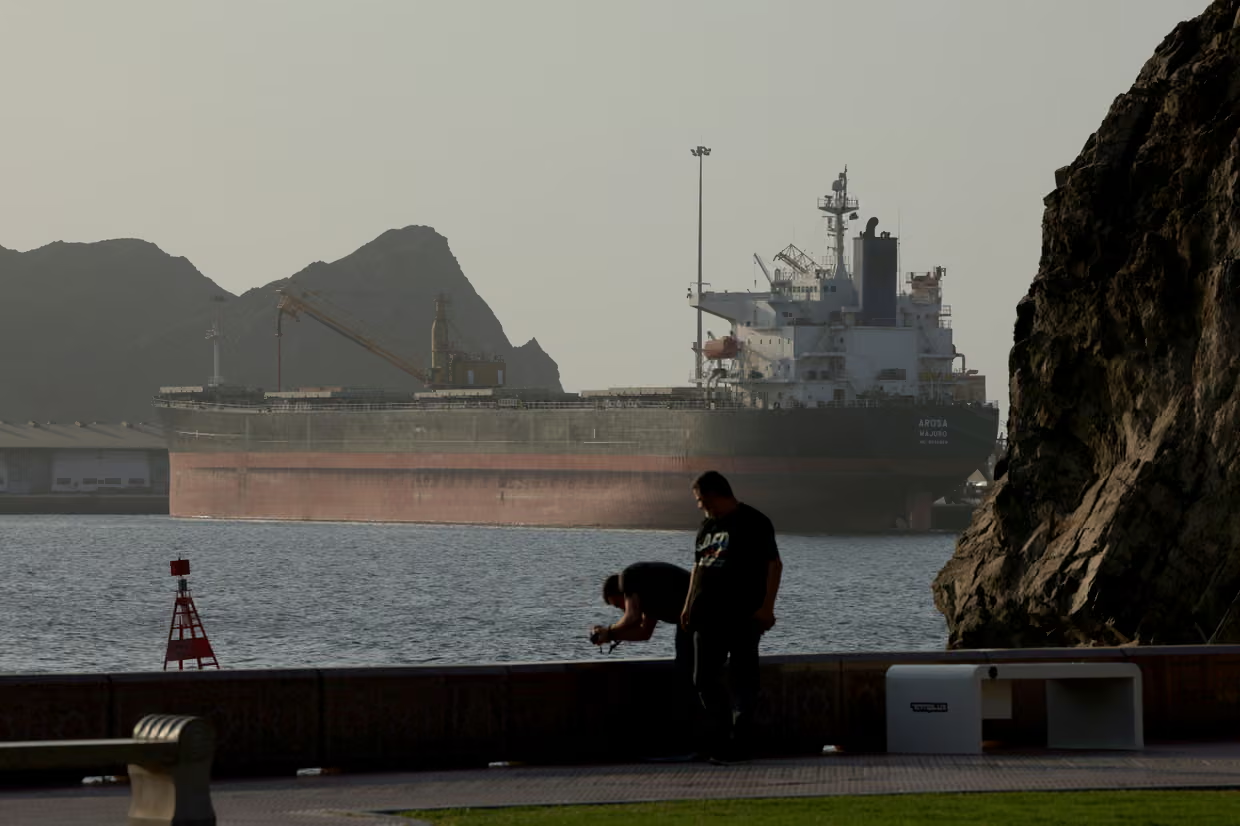
Crude oil traders who built positions around a prolonged Hormuz premium are unwinding fast: Brent traded near $79 per barrel on June 17 three month lows after falling for four straight sessions, pressured by expectations of a US-Iran peace agreement. That represents a collapse from conflict highs above $109/bbl in barely three weeks. The commercial consequence is immediate and asymmetric. Gulf crude sellers who had been extracting an $8–12/barrel war premium over competing Atlantic Basin grades are watching that premium evaporate ahead of any physical barrel actually transiting. The signal came not from a tanker movement or a cargo transaction but from a television interview: Defense Secretary Pete Hegseth's June 14 assertion on CBS's Face the Nation that the United States has 'controlled the Strait of Hormuz the entire time' a claim with a specific commercial subtext that every crude oil desk in London, Singapore, and Houston is now pricing into forward curves.
The Hegseth interview matters to traders not as political theatre but as a price signal about the rate at which supply will return. According to the CBS transcript, Hegseth cited '45 days of overwhelming combat' in which Iran's 'navy is gone, air force gone, air defenses,' producing 'a blockade which was impenetrable for a couple of months,' before pointing to Project Freedom a US-escorted shipping operation which, according to reports, allowed 25 million barrels of oil to transit the strait. Twenty-five million barrels sounds large in isolation. It is not. Pre-conflict, the Strait of Hormuz moved an average of 20 million barrels per day. Project Freedom's total volume across its entire operational period represents less than 36 hours of pre-war throughput. The gap between the administration's framing of 'control' and the commercial reality of a choke-point still operating at roughly half capacity is precisely where crude oil margin is being made and lost right now.
The physical mechanism needs unpacking. The Strait of Hormuz is a passage roughly 33 kilometres wide at its narrowest navigable point, connecting the Persian Gulf where Iraq, Kuwait, Saudi Arabia, the UAE, Iran, and Qatar all load crude to the Gulf of Oman and onward to Asian and global markets. Around 25% of the world's seaborne oil trade transited the strait in 2025, with countries including Iran, Iraq, Kuwait, Qatar, and Bahrain relying on it for the vast majority of their oil exports. The alternative bypass routes are limited: only Saudi Arabia and the UAE have operational crude pipelines that could re-route flows, with an estimated 3.5 to 5.5 million barrels per day of combined available capacity less than a quarter of the strait's normal daily throughput. Every barrel above that ceiling either transits Hormuz or does not move. According to reports, Iranian authorities introduced requirements for vessels to obtain prior permission before transit and established an oversight mechanism to levy charges, creating a toll-booth architecture atop what had been a free-passage waterway.
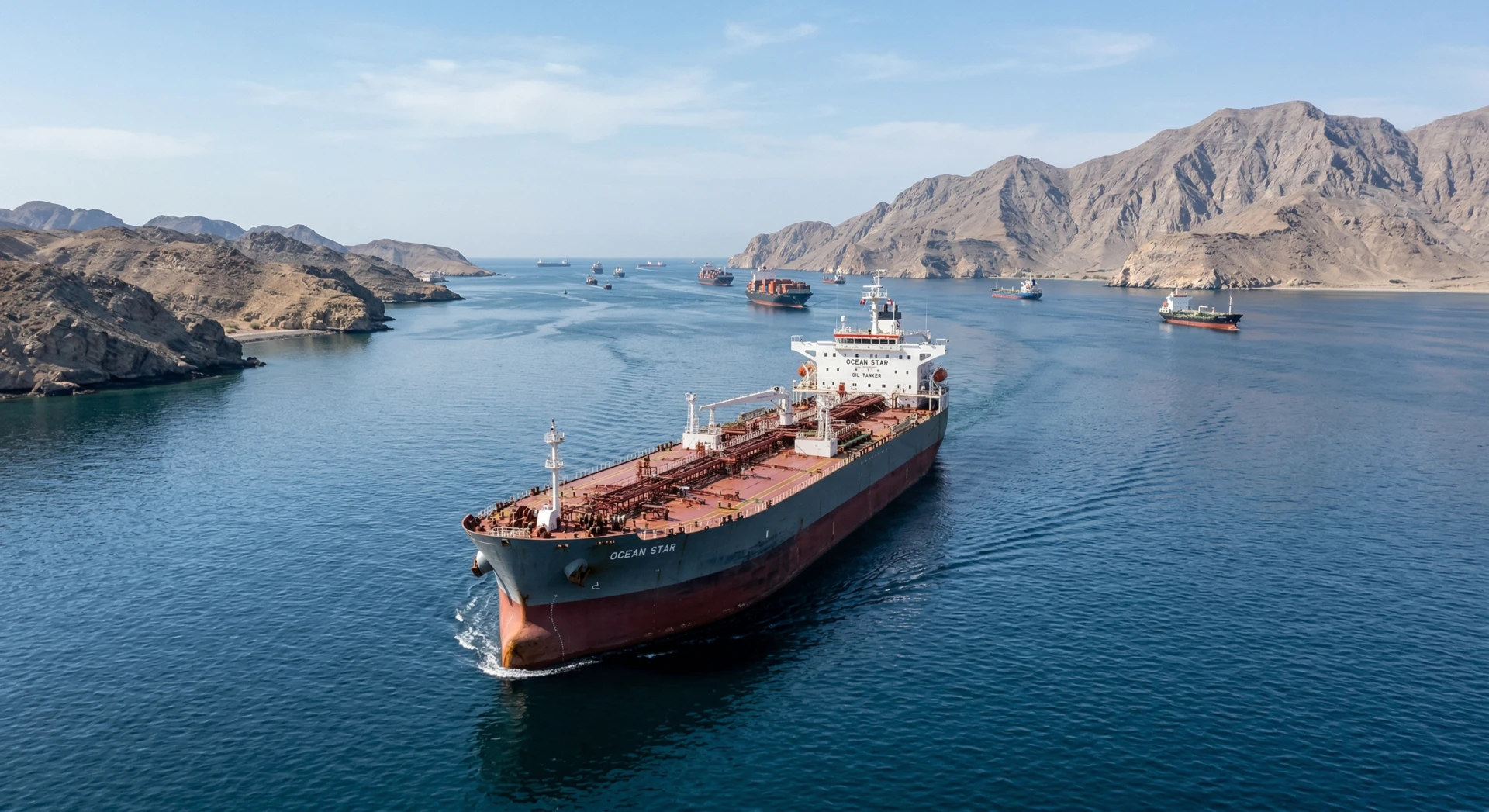
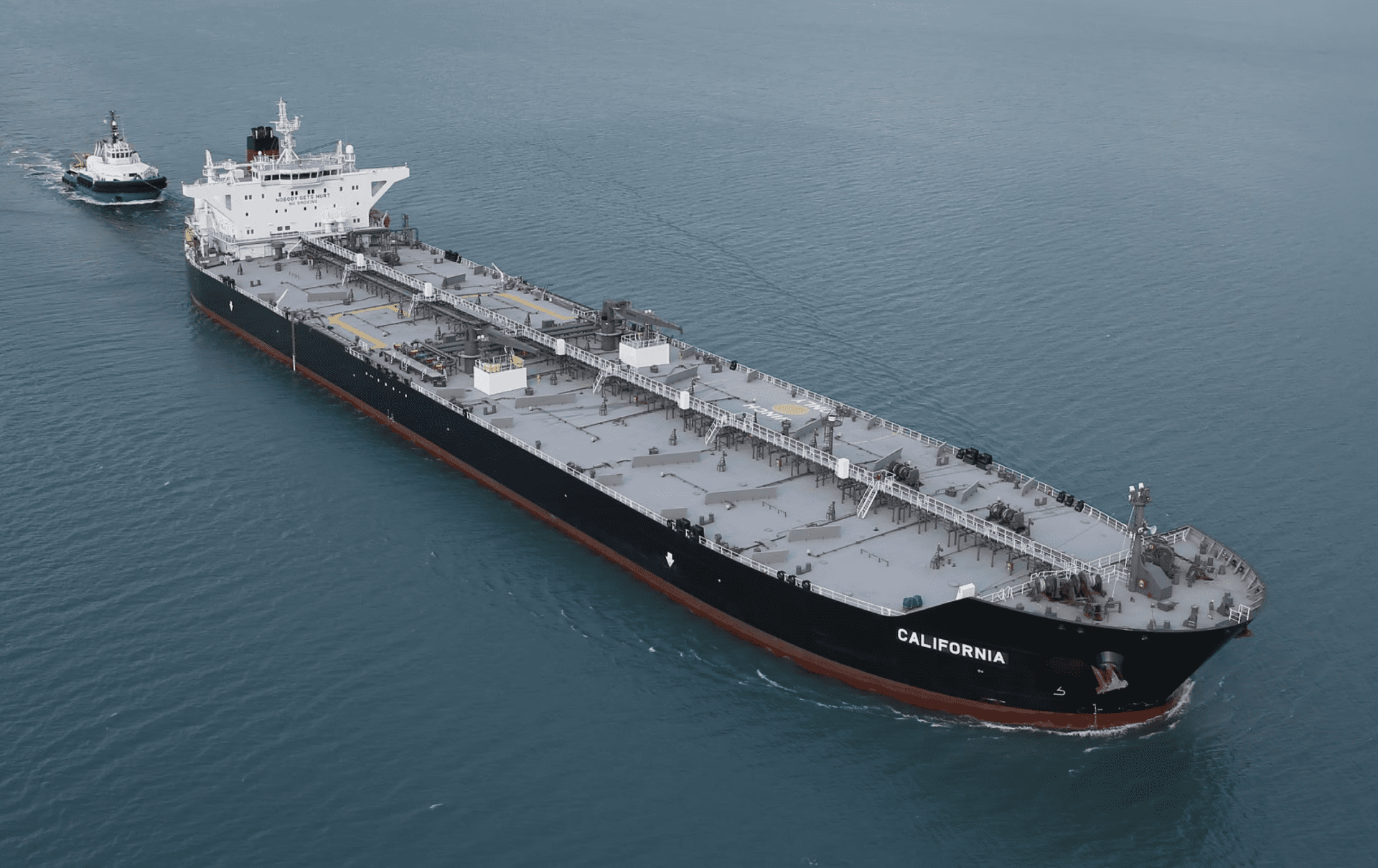
Here is the margin anatomy that matters to a crude oil desk. Consider a VLCC a Very Large Crude Carrier, a supertanker capable of carrying approximately 2 million barrels loaded with Saudi Arab Light at Ras Tanura for discharge at a Chiba, Japan refinery. Pre-conflict, the voyage freight rate on the Ras Tanura to Japan route (the TD3C benchmark the industry's standard measure for VLCC rates on Middle East Gulf to Asia) ran approximately $4–5/MT, or roughly $2.50–3.00/bbl. At conflict peak, with only escorted transits viable, war-risk insurance alone added an estimated $4–6/bbl, and escort premiums added another $2–3/bbl, pushing total delivered cost uplift to $8–12/bbl over pre-war levels. The EIA's June 9 forecast assumed the strait remains closed to most shipping traffic near-term, keeping Brent at an average of $105/bbl in June and July. At $79 today, the market is already pricing a reopening before a single additional tanker has cleared the strait. The trader holding long positions in Gulf crude forward contracts is now selling into a market that has discounted the premium before the physical supply arrives.
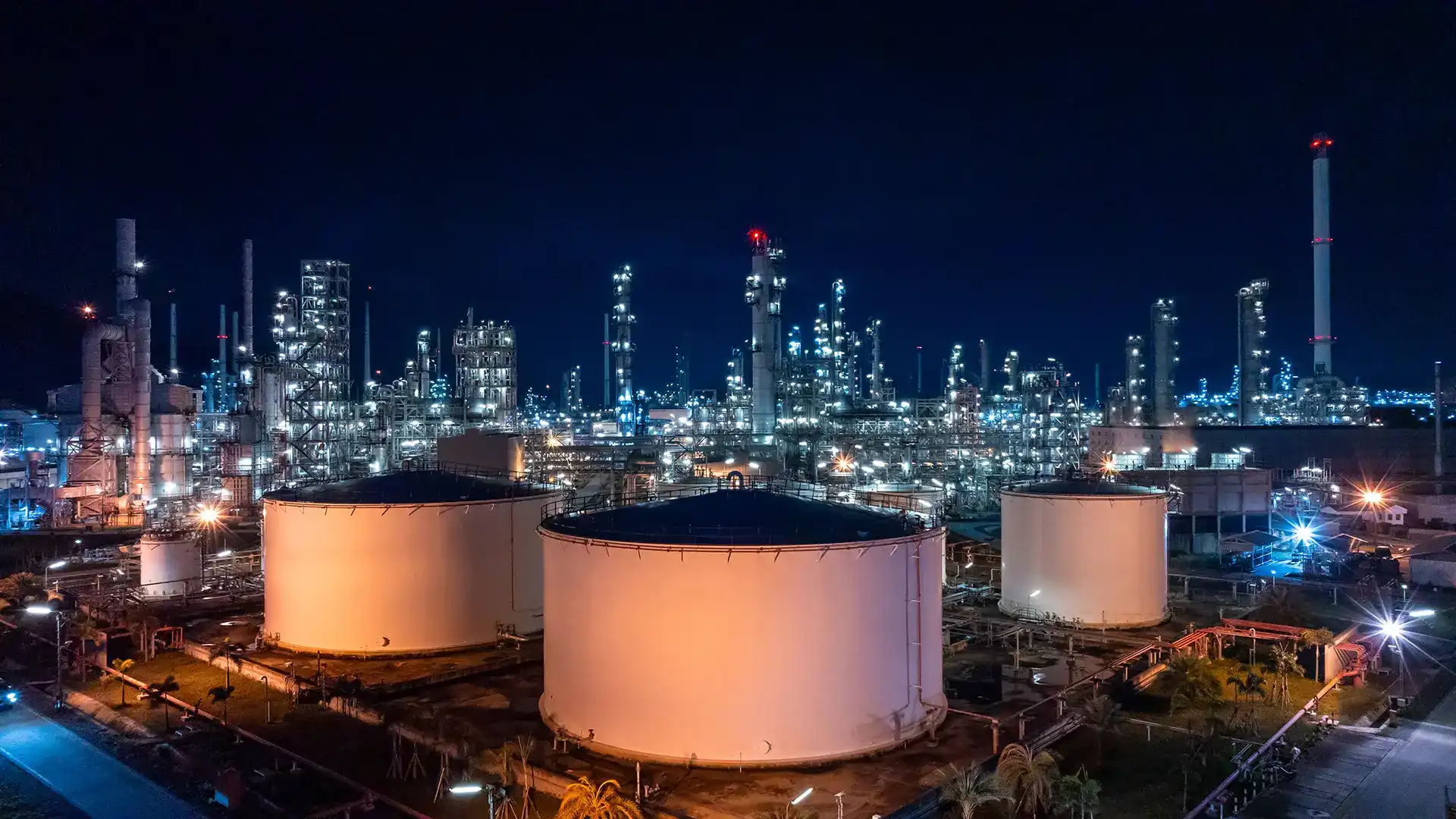
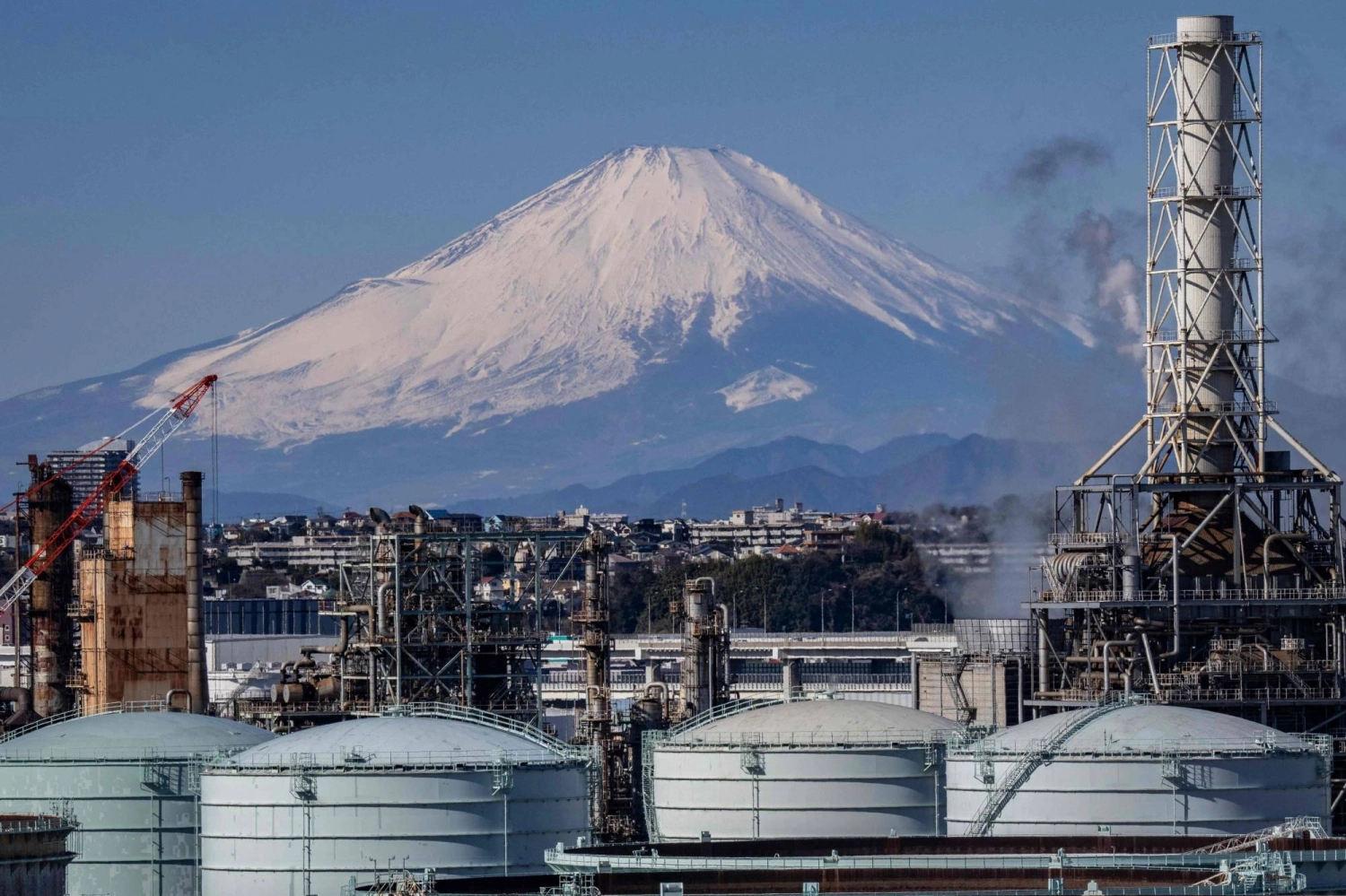
On the buy side, Asian refinery procurement teams the largest single constituency for Hormuz crude, with China sending roughly 40% of its oil imports through the strait and Japan routing 70% of its Middle Eastern crude through it face a specific dilemma. They negotiated spot and term supply at elevated delivered costs, built in war-risk premiums, and may now be locked into contract structures priced above spot as the market reprices downward. A Japanese refiner who fixed a 500,000 barrel parcel of UAE Murban at $95/bbl delivered in late May is now sitting on mark to market losses against an $82 spot equivalent. The rational response is to defer discretionary lifting and run down stocks. On the sell side, Gulf national oil companies Saudi Aramco, ADNOC, Kuwait Petroleum Corporation face a different pressure: they throttled back production during the conflict and must now ramp up into a falling price environment. Additional supplies from the region are expected to replenish refinery inventories globally, alongside higher OPEC+ export quotas and increased production from the UAE, which exited the cartel during the conflict. Ramping production back up takes time; ramping price expectations back up does not.
The two operator scales face structurally different problems. For a large integrated trader a Vitol, a Trafigura, a Shell Trading with access to derivatives markets, the current window is a basis trade: the Brent-Dubai spread the price difference between North Sea Brent crude and Middle East Dubai crude, which determines whether Atlantic Basin oil can economically reach Asian refineries has been artificially compressed by escort cost uncertainty. As Hormuz reopens and Gulf crude reclaims its natural discount to Brent, that spread should widen back toward its historical $2–4/bbl range. A position long Dubai swaps and short Brent, established at today's compressed spread, captures that normalisation. The hedge cost on a 1 million barrel position is manageable against a $2–3/bbl expected move. For a smaller regional operator a mid-sized South Korean independent refiner or a Southeast Asian fuel importer without derivatives access the practical equivalent is to fix bilateral term supply from West African or US Gulf Coast grades already priced at a normalised spread, avoiding re-exposure to Hormuz logistics risk during the ramp-up period. The critical vulnerability for this operator is not the price level but the timing mismatch: hundreds of ships remain trapped in the Persian Gulf, and Gulf oil producers that throttled back production will need time to get oil moving again. A deal signed on Friday does not produce delivered barrels on Monday.
The specific signal to watch is the TD3C VLCC freight rate on the Middle East Gulf to Japan route, published daily by the Baltic Exchange. According to reports, President Trump stated the Strait will reopen after Friday's signing of the peace deal in Switzerland, which will trigger 60 days of talks on Iran's nuclear programme with the caveat that if no nuclear agreement is reached, the US could restart military action. The EIA, in its June 9 Short-Term Energy Outlook, assumes oil shipments through the strait resume in Q3 2026 but expects it will take several months to ramp back to pre-conflict traffic levels, a pace not anticipated until early 2027. Goldman Sachs has cut its Q4 Brent forecast to $80/bbl and expects Persian Gulf crude exports to return to pre-war levels by end of July a six month gap separating the most and least optimistic institutional forecasts. That gap is a $15–20/bbl range of uncertainty. When TD3C freight rates begin declining from war-risk levels toward their pre-conflict $4–5/MT range on a sustained three session basis, that is the market's confirmation not a statement from a television studio that commercial control of the strait has actually been re-established.

.jpg)

'%3e%3cg id='Final-Copy-2_2_' transform='translate(1275.000000, 200.000000)'%3e%3cpath class='st0' d='M7.4,12.8h6.8l3.1-11.6H7.4C4.2,1.2,1.6,3.8,1.6,7S4.2,12.8,7.4,12.8z'/%3e%3c/g%3e%3c/g%3e%3c/g%3e%3cg id='final---dec.11-2020'%3e%3cg id='_x30_208-our-toggle' transform='translate(-1275.000000, -200.000000)'%3e%3cg id='Final-Copy-2' transform='translate(1275.000000, 200.000000)'%3e%3cpath class='st1' d='M22.6,0H7.4c-3.9,0-7,3.1-7,7s3.1,7,7,7h15.2c3.9,0,7-3.1,7-7S26.4,0,22.6,0z M1.6,7c0-3.2,2.6-5.8,5.8-5.8 h9.9l-3.1,11.6H7.4C4.2,12.8,1.6,10.2,1.6,7z'/%3e%3cpath id='x' class='st2' d='M24.6,4c0.2,0.2,0.2,0.6,0,0.8l0,0L22.5,7l2.2,2.2c0.2,0.2,0.2,0.6,0,0.8c-0.2,0.2-0.6,0.2-0.8,0 l0,0l-2.2-2.2L19.5,10c-0.2,0.2-0.6,0.2-0.8,0c-0.2-0.2-0.2-0.6,0-0.8l0,0L20.8,7l-2.2-2.2c-0.2-0.2-0.2-0.6,0-0.8 c0.2-0.2,0.6-0.2,0.8,0l0,0l2.2,2.2L23.8,4C24,3.8,24.4,3.8,24.6,4z'/%3e%3cpath id='y' class='st3' d='M12.7,4.1c0.2,0.2,0.3,0.6,0.1,0.8l0,0L8.6,9.8C8.5,9.9,8.4,10,8.3,10c-0.2,0.1-0.5,0.1-0.7-0.1l0,0 L5.4,7.7c-0.2-0.2-0.2-0.6,0-0.8c0.2-0.2,0.6-0.2,0.8,0l0,0L8,8.6l3.8-4.5C12,3.9,12.4,3.9,12.7,4.1z'/%3e%3c/g%3e%3c/g%3e%3c/g%3e%3c/g%3e%3c/svg%3e) Privacy Choices
Privacy Choices