.avif)
India's revised iron ore pricing rules will reduce royalty costs on low-grade material by $8-12 per tonne for most miners, effective April 10, after years of treating sub-45% Fe content ore as waste. The Ministry of Mines notified new rules to make low-grade iron ore economically viable by introducing a revised pricing framework for royalty calculation. The new rules calculate the Average Sale Price (ASP) for Haematitic Iron Ore below the threshold value, making beneficiation economically viable. Previously, operators paid royalties on low-grade ore at full ASP rates applied to 45-51% Fe grade material — a mismatch that killed any margin on beneficiation projects. Beneficiation — the process of concentrating iron content and removing impurities like silica — transforms 35-45% Fe raw material into usable 65%+ Fe pellets for steelmaking. The economic threshold matters: processing one tonne of 40% Fe ore into pellets costs approximately $25-35/MT, but that becomes viable only if royalty calculations reflect the actual raw material value, not artificially inflated benchmark pricing.
Under the revised rules, the average selling price (ASP) for iron ore, with 35 per cent to below 45 per cent Fe content, will be fixed at 75 per cent of the ASP of 45 per cent to below 51 per cent grade ore. While for ore with Fe content below 35 per cent, the ASP will be 50 per cent of the same benchmark. The discount structure directly addresses the cost equation that made low-grade processing uneconomical. Consider a mid-sized miner processing Banded Haematite Quartzite (BHQ) — a Precambrian iron-bearing rock formation common across India's mineral belt. At current 45-51% Fe ASP of roughly $65/MT, a 40% Fe deposit now carries $48.75/MT royalty liability instead of the full $65/MT. For a 500,000-tonne annual processing facility, the $16.25/MT saving generates $8.125 million annually in reduced royalty burden — often the difference between positive and negative project economics. The framework recognises that raw low-grade material requires significant capital investment in crushing, magnetic separation, flotation circuits, and tailings management before generating saleable concentrate.
On the buy side, integrated steel producers gain access to expanded domestic feedstock supply that could reduce import dependency on premium Australian and Brazilian ores. To meet the target for fiscal year 2030-31, steel producers will require 437 MT of iron ore as raw material. With such a huge demand, the industry faces several challenges, including the need to expand the resource base, utilize low-grade ore and overcome infrastructure bottlenecks. Large steelmakers like JSW Steel and Tata Steel, with captive beneficiation capacity, can now justify expanding low-grade ore processing to 67%+ Fe pellet production required for Direct Reduced Iron (DRI) furnaces — the preferred route for lower-carbon steelmaking. The vertical shaft DRI process needs high-purity pellets and "demand is much more than what is being produced right now", he added. "The only route is we beneficiate, take the Fe levels beyond 66-67pc and produce pellets that can be charged to DRI furnaces." The beneficiated output from previously waste material directly substitutes for imported pellet feed, reducing exposure to seaborne freight volatility and currency fluctuation on $106/MT benchmark iron ore.
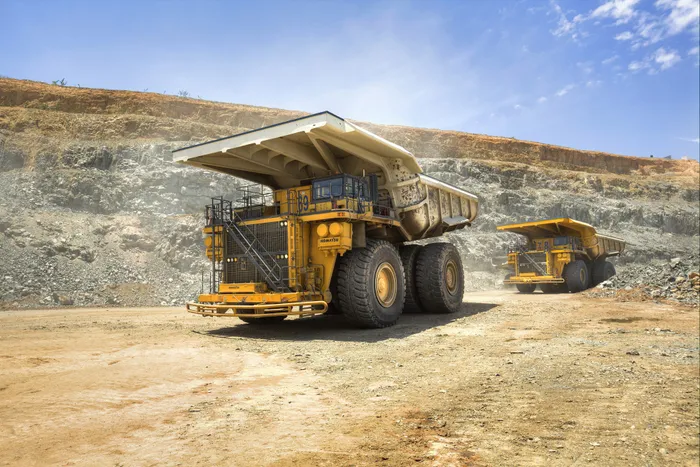
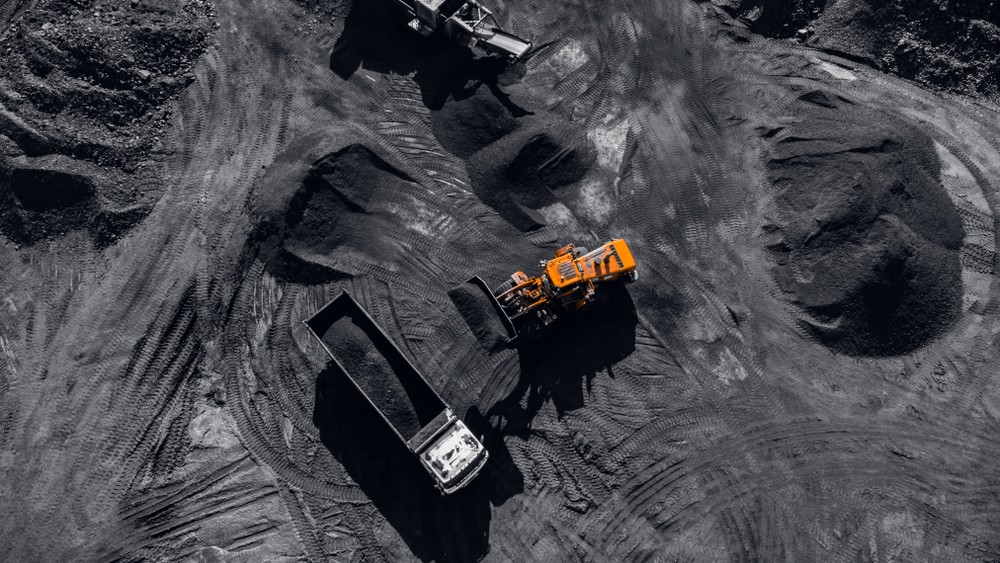
On the sell side, miners with extensive low-grade reserves — particularly those holding BHJ and BHQ leases in Odisha, Jharkhand, and Karnataka — suddenly possess monetizable assets instead of waste dumps. Small-to-medium miners without existing beneficiation infrastructure face a different calculation: the 75%/50% pricing discount may still not generate sufficient margin to justify new processing plant investment. Industry research suggests that upgrading beneficiation capacity costs around INR1,500 crore per million tons. To increase capacity from 136 MTPA to 170 MTPA, the mining industry will require an investment of INR 51,000 crore by 2030. At $18 million per million-tonne capacity, smaller operators need merchant beneficiation partnerships or tolling arrangements with established processors. The amendment's clarification on Run-of-Mine (ROM) processing prevents value destruction schemes: It said that in case the processing of run-of-mine results in decrease in its economic value, then royalty shall be chargeable on the lumps and fines after initial screening of unprocessed Run-of-Mine. The term Run-of-Mine refers to raw unprocessed or uncrushed material in its natural state obtained after blasting or digging, from the mineralised zone of a lease area.
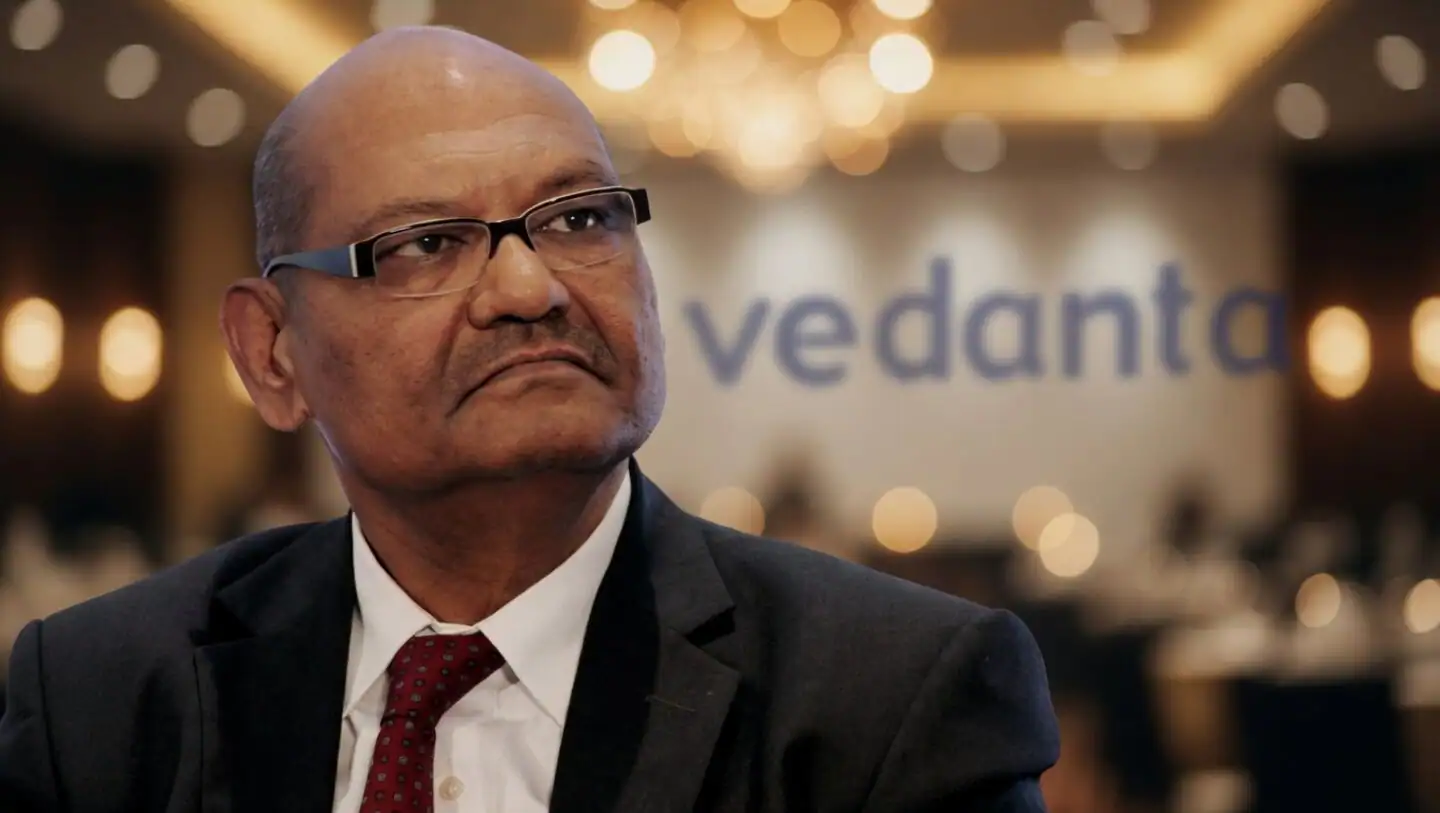
For large integrated miners with existing beneficiation infrastructure — NMDC, Vedanta, JSW — the immediate opportunity lies in activating underutilized capacity on previously uneconomical feedstock. About 150mn t of beneficiation plant capacity is currently available in India and only 40-42pc is being utilised, some industry executives highlighted at the conference. Existing plants can shift feed mix toward lower-grade material without major capex, generating incremental margin on assets already depreciated. For smaller regional miners lacking processing infrastructure, the path requires partnerships or contracted beneficiation services — effectively creating a two-tier market where processing capability determines margin capture. Observers should monitor the ASP publication methodology for 45-51% Fe grade material, expected monthly from the Indian Bureau of Mines — this benchmark determines the derived pricing for all sub-threshold material and directly impacts project economics across India's vast low-grade iron ore resources estimated at several billion tonnes.



'%3e%3cg id='Final-Copy-2_2_' transform='translate(1275.000000, 200.000000)'%3e%3cpath class='st0' d='M7.4,12.8h6.8l3.1-11.6H7.4C4.2,1.2,1.6,3.8,1.6,7S4.2,12.8,7.4,12.8z'/%3e%3c/g%3e%3c/g%3e%3c/g%3e%3cg id='final---dec.11-2020'%3e%3cg id='_x30_208-our-toggle' transform='translate(-1275.000000, -200.000000)'%3e%3cg id='Final-Copy-2' transform='translate(1275.000000, 200.000000)'%3e%3cpath class='st1' d='M22.6,0H7.4c-3.9,0-7,3.1-7,7s3.1,7,7,7h15.2c3.9,0,7-3.1,7-7S26.4,0,22.6,0z M1.6,7c0-3.2,2.6-5.8,5.8-5.8 h9.9l-3.1,11.6H7.4C4.2,12.8,1.6,10.2,1.6,7z'/%3e%3cpath id='x' class='st2' d='M24.6,4c0.2,0.2,0.2,0.6,0,0.8l0,0L22.5,7l2.2,2.2c0.2,0.2,0.2,0.6,0,0.8c-0.2,0.2-0.6,0.2-0.8,0 l0,0l-2.2-2.2L19.5,10c-0.2,0.2-0.6,0.2-0.8,0c-0.2-0.2-0.2-0.6,0-0.8l0,0L20.8,7l-2.2-2.2c-0.2-0.2-0.2-0.6,0-0.8 c0.2-0.2,0.6-0.2,0.8,0l0,0l2.2,2.2L23.8,4C24,3.8,24.4,3.8,24.6,4z'/%3e%3cpath id='y' class='st3' d='M12.7,4.1c0.2,0.2,0.3,0.6,0.1,0.8l0,0L8.6,9.8C8.5,9.9,8.4,10,8.3,10c-0.2,0.1-0.5,0.1-0.7-0.1l0,0 L5.4,7.7c-0.2-0.2-0.2-0.6,0-0.8c0.2-0.2,0.6-0.2,0.8,0l0,0L8,8.6l3.8-4.5C12,3.9,12.4,3.9,12.7,4.1z'/%3e%3c/g%3e%3c/g%3e%3c/g%3e%3c/g%3e%3c/svg%3e) Privacy Choices
Privacy Choices