.avif)
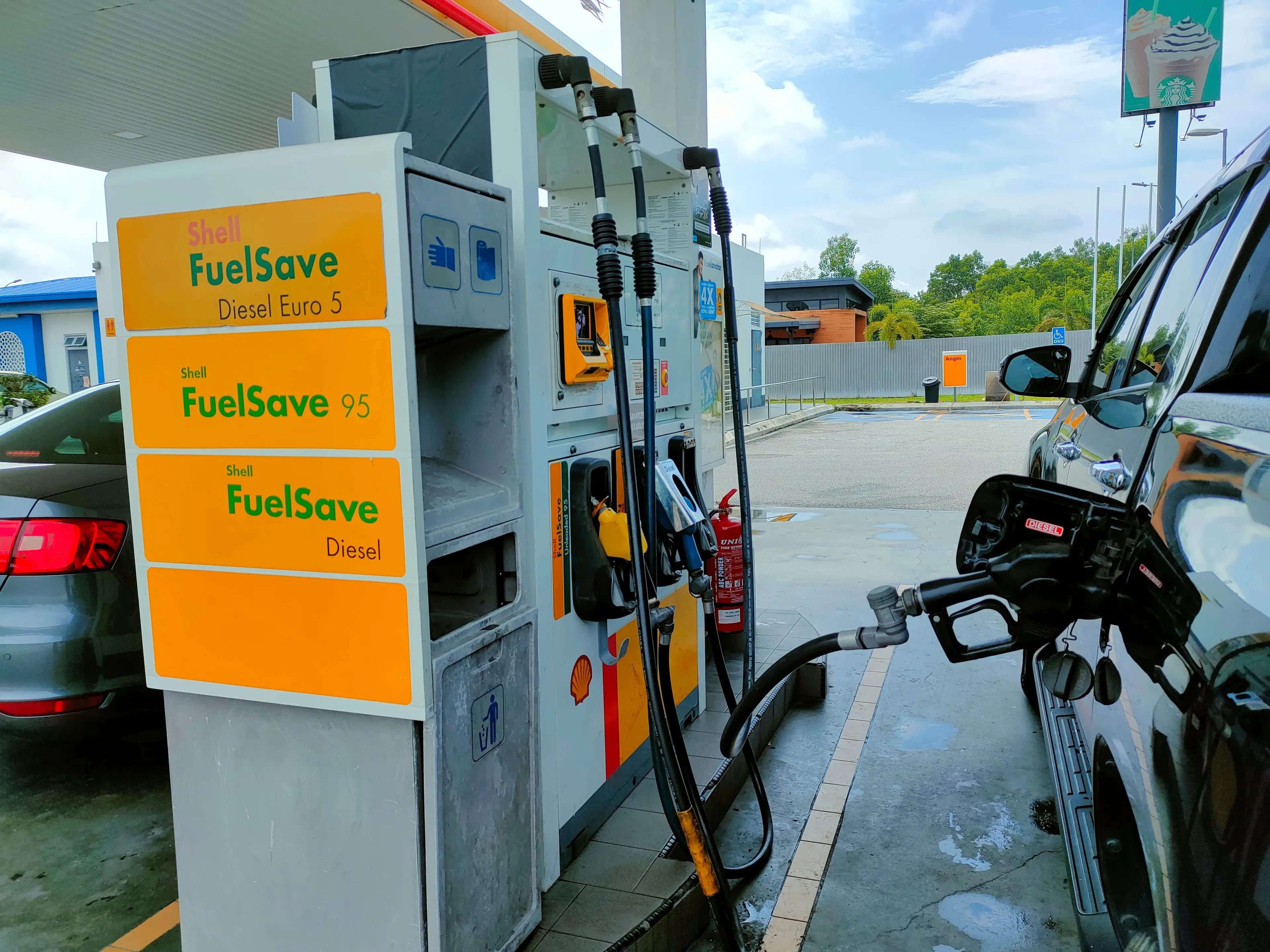
From 1 July 2026, road freight operators in Sabah, Sarawak, and Labuan who have registered under Malaysia's Subsidised Diesel Control System (SKDS) but have not yet received their fleet cards face a cash-flow gap of approximately RM1.20 to RM1.47 per litre on every litre of diesel purchased a gap they must pre-finance out of pocket before any reimbursement can be claimed.
The SKDS Sistem Kawalan Diesel Bersubsidi, Malaysia's targeted diesel subsidy mechanism sets the subsidised pump price at RM1.88 per litre for public transport operators and RM2.15 per litre for goods and freight transport operators. The fleet card is the physical instrument through which eligible operators access that subsidised rate at the pump. Without it, operators pay the full unsubsidised market price. As of 22 June 2026, some 8,445 companies operating roughly 30,557 vehicles across the three eastern territories had registered under SKDS but had not yet received cards with Sabah accounting for 4,062 companies and 14,750 vehicles, Sarawak 4,108 companies and 15,030 vehicles, and Labuan 275 companies and 777 vehicles. To address the interim period, the government will open a cash reimbursement window from 1 July: registered operators without fleet cards may claim the price differential for diesel purchased between 1 and 31 July 2026, or until the card is received, whichever comes first. Claims must be submitted through the MySubsidi portal the government's centralised digital subsidy management platform.
The reimbursement mechanism is structurally sound on paper, but the financing requirement embedded within it is the trade. Consider a medium-sized Sabah freight operator running fifteen trucks, each consuming approximately 400 litres of diesel per week. At the unsubsidised pump price, the weekly diesel bill for the fleet runs to roughly RM24,000–RM28,000 depending on prevailing rates. The subsidy differential RM1.20 to RM1.47 per litre represents RM7,200 to RM8,800 per week that this operator must advance from working capital before any reimbursement arrives. Over a full month, that pre-financing requirement reaches RM28,000 to RM35,000 real money for a regional hauler operating on thin margins and without a credit facility structured for this purpose. Larger logistics groups those operating bonded warehouse to port routes between Kuching and Bintulu, for instance, with treasury functions and established bank lines can absorb this timing mismatch. The owner-operator running two or three trucks between Kota Kinabalu and the interior may not be able to, and the subsidy benefit intended for them simply does not materialise in July.
On the buy side freight operators purchasing diesel those who are registered and administratively prepared will recover the full RM1.20–1.47 per litre differential through the reimbursement pathway, preserving operating margins for the July billing cycle. The risk is not to the subsidy itself but to the timing: operators who cannot pre-finance the full unsubsidised cost for up to 31 days effectively bear a real cost increase during the window, regardless of their formal eligibility. On the sell side fuel retailers and oil company forecourts the transition to fleet cards is commercially neutral at the pump: the oil companies receive the subsidised rate from the government and the market rate from unregistered customers, with no margin compression on either leg. The pressure point for fuel retailers is administrative rather than commercial: operators presenting SKDS approval letters issued promptly after registration and valid for fleet card applications will need to be directed correctly by forecourt staff unfamiliar with the new documentation flow. Fleet cards themselves are typically issued within two to three weeks of approval, meaning operators who registered in mid-to-late June could receive cards by mid-July, shortening but not eliminating the cash-flow exposure period.
For large integrated logistics operators regional freight consolidators, intermodal groups managing road to port transfers in Sarawak's LNG supply chain, or national courier networks with treasury access the practical step is straightforward: document every unsubsidised purchase with receipts, batch the MySubsidi reimbursement claim at month-end, and treat the differential as a short-term receivable on the balance sheet. For smaller owner operators a single truck hauler in Labuan, a family-run three-vehicle timber transport firm in rural Sabah the practical equivalent is to accelerate fleet card receipt wherever possible: complete registration on MySubsidi immediately if not already done, collect the approval letter on the same day, and present it directly to the preferred oil company to initiate card issuance. Every day saved on card receipt is roughly RM200–400 in pre-financing avoided per truck. For observers tracking the effectiveness of Malaysia's broader targeted subsidy rollout, the signal to watch is the MySubsidi portal's reported reimbursement processing timeline, which the Ministry of Domestic Trade and Cost of Living (KPDN) has not yet published as a guaranteed service standard. If processing times extend beyond 30 days, the de facto cost of the subsidy gap shifts permanently onto the smallest operators and registration figures for goods transport, which only opened on 4 May 2026, will plateau as word spreads that the benefit does not reach the cash constrained in time.

.jpg)

'%3e%3cg id='Final-Copy-2_2_' transform='translate(1275.000000, 200.000000)'%3e%3cpath class='st0' d='M7.4,12.8h6.8l3.1-11.6H7.4C4.2,1.2,1.6,3.8,1.6,7S4.2,12.8,7.4,12.8z'/%3e%3c/g%3e%3c/g%3e%3c/g%3e%3cg id='final---dec.11-2020'%3e%3cg id='_x30_208-our-toggle' transform='translate(-1275.000000, -200.000000)'%3e%3cg id='Final-Copy-2' transform='translate(1275.000000, 200.000000)'%3e%3cpath class='st1' d='M22.6,0H7.4c-3.9,0-7,3.1-7,7s3.1,7,7,7h15.2c3.9,0,7-3.1,7-7S26.4,0,22.6,0z M1.6,7c0-3.2,2.6-5.8,5.8-5.8 h9.9l-3.1,11.6H7.4C4.2,12.8,1.6,10.2,1.6,7z'/%3e%3cpath id='x' class='st2' d='M24.6,4c0.2,0.2,0.2,0.6,0,0.8l0,0L22.5,7l2.2,2.2c0.2,0.2,0.2,0.6,0,0.8c-0.2,0.2-0.6,0.2-0.8,0 l0,0l-2.2-2.2L19.5,10c-0.2,0.2-0.6,0.2-0.8,0c-0.2-0.2-0.2-0.6,0-0.8l0,0L20.8,7l-2.2-2.2c-0.2-0.2-0.2-0.6,0-0.8 c0.2-0.2,0.6-0.2,0.8,0l0,0l2.2,2.2L23.8,4C24,3.8,24.4,3.8,24.6,4z'/%3e%3cpath id='y' class='st3' d='M12.7,4.1c0.2,0.2,0.3,0.6,0.1,0.8l0,0L8.6,9.8C8.5,9.9,8.4,10,8.3,10c-0.2,0.1-0.5,0.1-0.7-0.1l0,0 L5.4,7.7c-0.2-0.2-0.2-0.6,0-0.8c0.2-0.2,0.6-0.2,0.8,0l0,0L8,8.6l3.8-4.5C12,3.9,12.4,3.9,12.7,4.1z'/%3e%3c/g%3e%3c/g%3e%3c/g%3e%3c/g%3e%3c/svg%3e) Privacy Choices
Privacy Choices