.avif)
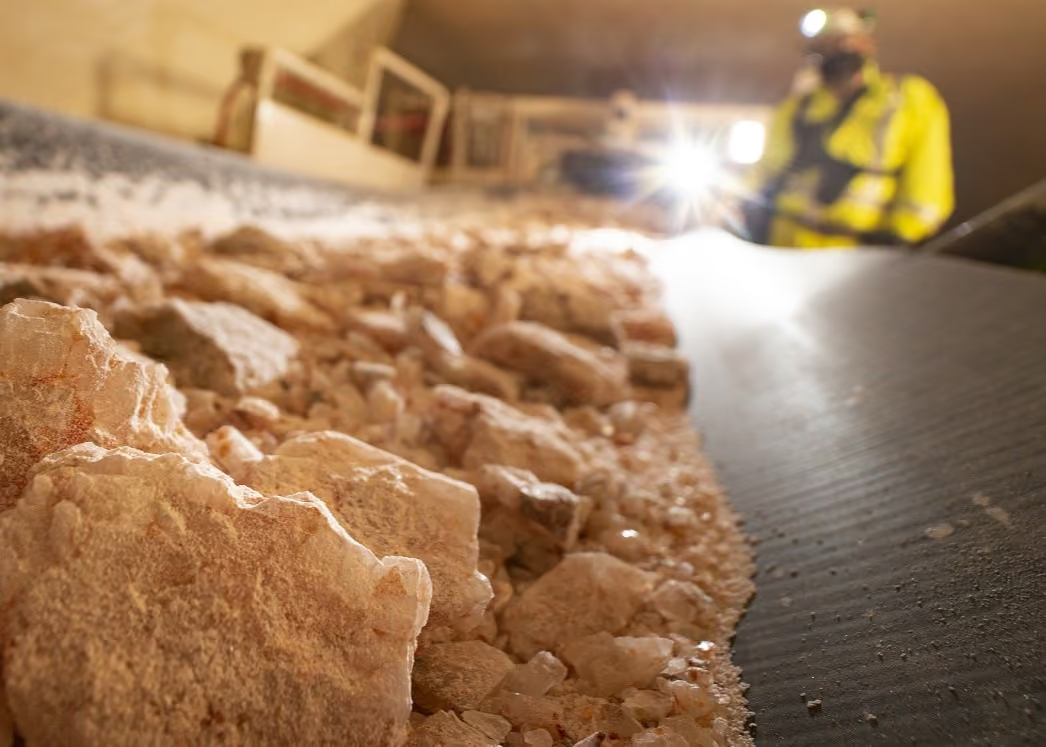
Phosphate fertilizer buyers across North America, Brazil, and Southeast Asia face a tightening supply window beginning July 2026, as Mosaic Company the world's largest integrated phosphate producer has withdrawn its full-year production guidance of at least 7 million metric tonnes and curtailed output at multiple U.S. and Brazilian facilities, removing a significant volume of globally traded diammonium phosphate (DAP) and monoammonium phosphate (MAP) from the market at the start of the Southern Hemisphere application season.
The root cause is not demand weakness. It is sulfur specifically, a constraint in elemental sulfur supply that has cascaded into a production bottleneck Mosaic has described as reflecting "extraordinary market conditions." Elemental sulfur, for readers unfamiliar with fertilizer chemistry, is the feedstock used to produce sulfuric acid, which in turn reacts with phosphate rock to produce the concentrated phosphoric acid that is the backbone of every DAP and MAP granule. There is no cost-effective substitute for sulfuric acid at commercial scale. If sulfur is short, phosphate output stops regardless of rock inventory, workforce, or processing capacity. The dependency is absolute, and it links one of the world's most critical food-system inputs directly to a single upstream supply chain most buyers have never tracked.
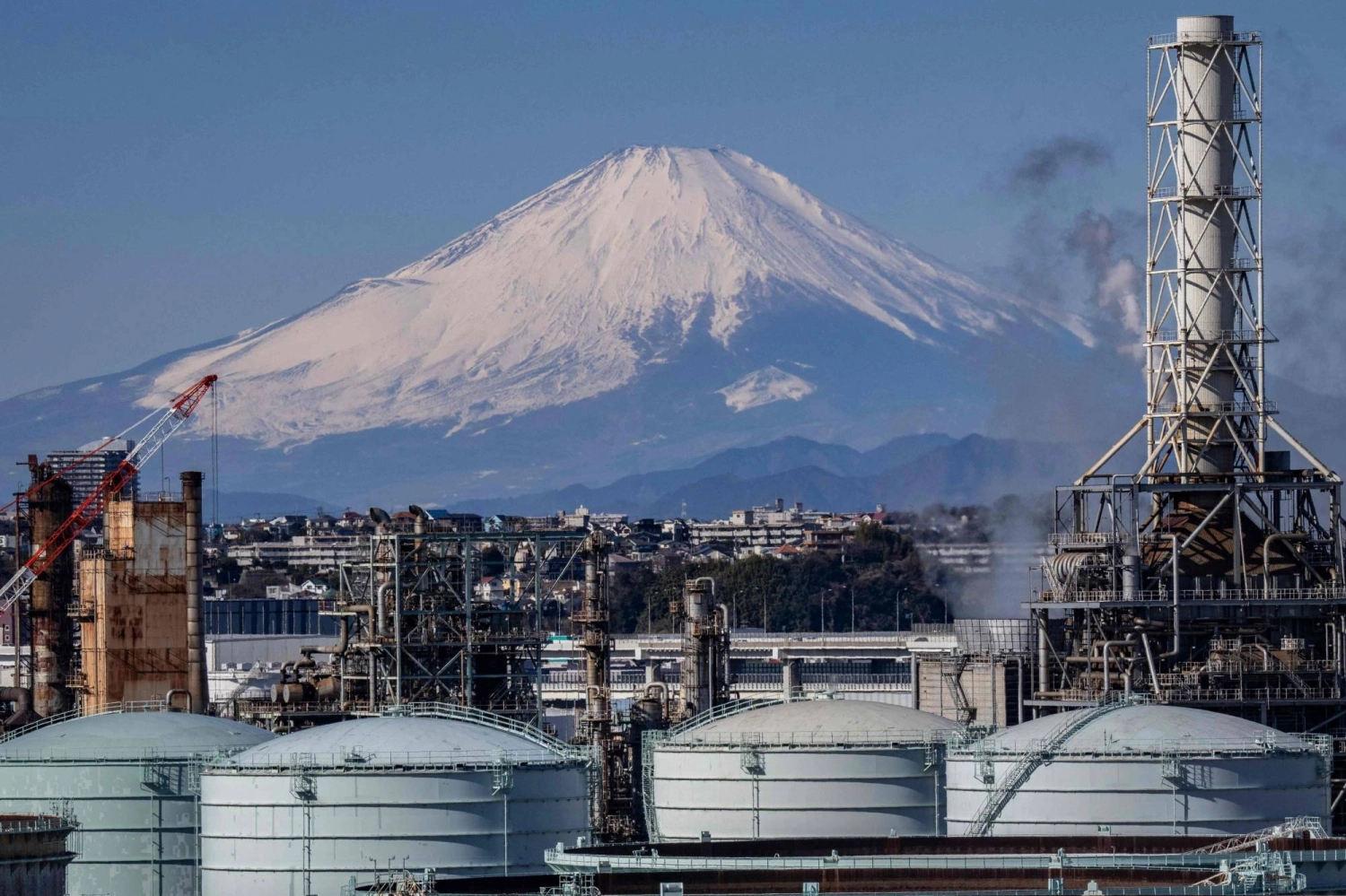
That upstream supply chain runs through the Middle East. Elemental sulfur is not mined independently at meaningful scale; it is recovered as a byproduct of refining high-sulfur crude oil and processing natural gas a process called hydrodesulfurization. The Gulf's massive refining and gas processing complex, particularly in Saudi Arabia, Kuwait, and the UAE, makes it the world's dominant sulfur exporter, shipping the element in molten or solidified form to phosphate producers globally. According to reports, geopolitical pressures and routing complications through Hormuz have contributed to sulfur cargo delays affecting Mosaic's feedstock position. If confirmed, this represents a direct link between Gulf geopolitics and the price of a bag of fertilizer in Iowa or Mato Grosso.
To make the margin anatomy visible: consider a standard DAP production sequence at one of Mosaic's Florida operations, processing roughly 500,000 tonnes of phosphate rock per quarter. Converting that rock to finished DAP requires approximately 0.4 tonnes of sulfur per tonne of P₂O₅ the phosphorus pentoxide measure used across the industry meaning a 500,000 tonne rock campaign needs around 70,000–80,000 tonnes of sulfur, typically sourced on contracts that reprice quarterly. Tampa area sulfur spot prices, which had averaged $90–110 per tonne FOB (free on board meaning the seller loads the cargo at the named port, and the buyer bears freight cost from that point) in early 2025, have moved sharply upward on tightening supply. Each $20/tonne increase in sulfur cost adds approximately $8–10/MT to DAP production cost on a product trading near $560–580/MT delivered, that narrows the margin but does not close it outright. What closes it is the combination: higher sulfur cost, curtailed throughput (fixed costs spread over fewer tonnes), and freight pressure all arriving simultaneously. Mosaic's decision to curtail rather than produce through reflects a rational margin calculation, not a strategic retreat.
On the buy side, the immediate pressure falls on large-scale blenders and distributors companies like Nutrien's retail network, independent crop input cooperatives, and direct farm supply chains in the U.S. Corn Belt and Brazil's Cerrado region who had contracted forward volumes against Mosaic's guidance. A producer withdrawing 7 million tonne annual guidance mid-year creates genuine inventory uncertainty. DAP and MAP for the Southern Hemisphere spring application window (August–October planting in Brazil, particularly for soybeans) must be purchased or committed by August at the latest. Buyers who deferred procurement expecting Q3 spot availability now face a compressed window. For a mid-sized Brazilian fertilizer distributor committing 20,000 tonnes of MAP for soy-season delivery, the cost of a $20/MT price move on the contracted volume is $400,000 meaningful against typical distributor margins of 3–5% on gross sales value.
On the sell side, Mosaic's curtailment decision is structurally rational even if it erases near-term revenue. Producing tonnes that cost more to make than the market will immediately absorb when sulfur input costs are elevated and fixed-cost recovery per tonne is worsened by lower volumes destroys cash margin. The company's strategy of maintaining higher-value specialty nutrient product mix, rather than running bulk volume at compressed margin, reflects a discipline that integrated producers with pricing power can sustain. Smaller, single-facility phosphate producers particularly in North Africa (Morocco's OCP Group excepted, given its scale) and China, where export restrictions already constrain global availability face similar sulfur cost pressures but without Mosaic's ability to curtail strategically and hold price. The margin in this environment concentrates at the top of the supply stack, among producers who can afford to wait.
For large integrated traders an Archer-Daniels-Midland, a Cargill fertilizer desk, or a national agricultural input company with a derivatives capability the instrument is a long position in DAP futures on the CME (Chicago Mercantile Exchange), combined with a short in Tampa sulfur swaps to isolate the processing margin. This spread trade long finished fertilizer, short key input captures the scenario where DAP prices rise faster than sulfur costs normalize. The cost of establishing this position is approximately $5–8/MT in combined margin requirements. For smaller regional operators a single country grain cooperative, a mid-sized Brazilian distributor derivatives access is limited or unavailable. The practical equivalent is bilateral term contracting: locking a portion of Q4 requirements now at current price, even at a modest premium to spot, as protection against a further supply draw in the August–September window. Paying $15/MT above current spot for contractual certainty on 10,000 tonnes costs $150,000 far less than the exposure of a full spot purchase at a crisis price.
The historical anchor matters here. The 2021–2022 global fertilizer crisis triggered by European gas price spikes that shut European nitrogen producers and coincided with Chinese phosphate export restrictions demonstrated how quickly a feedstock disruption at one node can reprice the entire nutrient complex globally. DAP prices peaked above $900/MT in late 2021, from sub-$400/MT in early 2020. The current situation is structurally distinct: it is input-constrained, not demand-driven, and Mosaic's curtailment is a managed operational response, not a systemic market failure. But the directional signal supply coming off, seasonal demand approaching, buyers under-covered rhymes closely enough with 2021 that procurement teams would be unwise to treat this as a routine inventory adjustment.
For observers establishing a monitoring position, the specific signal to watch is the Tampa Bay sulfur spot price published weekly by Fertecon (a fertilizer market intelligence service), combined with Mosaic's Q2 2026 earnings call guidance update, expected late July 2026. If Mosaic restores or narrows its production guidance on that call indicating that sulfur supply has normalised enough to resume full throughput spot DAP prices will likely soften within two to three weeks as the market reprices the supply signal. If guidance remains withdrawn or is reduced further, buyers should treat that as confirmation of a structural Q3 tightening and act on procurement within five business days of the announcement. The window between signal and consequence in seasonal fertilizer markets is short.
.jpg)




'%3e%3cg id='Final-Copy-2_2_' transform='translate(1275.000000, 200.000000)'%3e%3cpath class='st0' d='M7.4,12.8h6.8l3.1-11.6H7.4C4.2,1.2,1.6,3.8,1.6,7S4.2,12.8,7.4,12.8z'/%3e%3c/g%3e%3c/g%3e%3c/g%3e%3cg id='final---dec.11-2020'%3e%3cg id='_x30_208-our-toggle' transform='translate(-1275.000000, -200.000000)'%3e%3cg id='Final-Copy-2' transform='translate(1275.000000, 200.000000)'%3e%3cpath class='st1' d='M22.6,0H7.4c-3.9,0-7,3.1-7,7s3.1,7,7,7h15.2c3.9,0,7-3.1,7-7S26.4,0,22.6,0z M1.6,7c0-3.2,2.6-5.8,5.8-5.8 h9.9l-3.1,11.6H7.4C4.2,12.8,1.6,10.2,1.6,7z'/%3e%3cpath id='x' class='st2' d='M24.6,4c0.2,0.2,0.2,0.6,0,0.8l0,0L22.5,7l2.2,2.2c0.2,0.2,0.2,0.6,0,0.8c-0.2,0.2-0.6,0.2-0.8,0 l0,0l-2.2-2.2L19.5,10c-0.2,0.2-0.6,0.2-0.8,0c-0.2-0.2-0.2-0.6,0-0.8l0,0L20.8,7l-2.2-2.2c-0.2-0.2-0.2-0.6,0-0.8 c0.2-0.2,0.6-0.2,0.8,0l0,0l2.2,2.2L23.8,4C24,3.8,24.4,3.8,24.6,4z'/%3e%3cpath id='y' class='st3' d='M12.7,4.1c0.2,0.2,0.3,0.6,0.1,0.8l0,0L8.6,9.8C8.5,9.9,8.4,10,8.3,10c-0.2,0.1-0.5,0.1-0.7-0.1l0,0 L5.4,7.7c-0.2-0.2-0.2-0.6,0-0.8c0.2-0.2,0.6-0.2,0.8,0l0,0L8,8.6l3.8-4.5C12,3.9,12.4,3.9,12.7,4.1z'/%3e%3c/g%3e%3c/g%3e%3c/g%3e%3c/g%3e%3c/svg%3e) Privacy Choices
Privacy Choices