.avif)
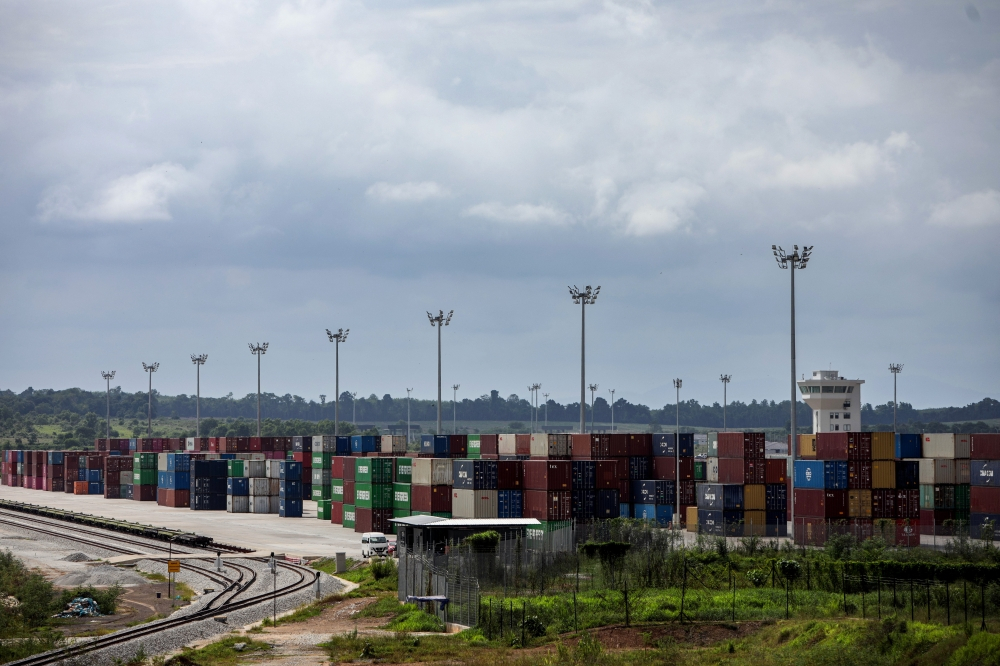
Palm oil traders shipping from Sumatra face a new routing decision as Malaysia opens its 492 million ringgit Perlis Inland Port with a direct container agreement targeting Singapore bypass. At current FCPO prices of 4,535 MYR/tonne (approximately $1,015/MT), the facility is designed to handle 300,000 TEUs annually via rail links to Thailand and onward China connectivity. The agreement between Indonesia's Belawan New Container Terminal, Penang Port, and Perlis creates an integrated sea-land pathway for commodities moving north. The opening coincides with Malaysia-Thailand targeting $30 billion bilateral trade by next year, requiring efficient cross-border clearance to justify route switching costs.
The critical infrastructure bottleneck lies in rail gauge differences Malaysia and Thailand use metre gauge while China's system requires standard gauge, meaning containers must be physically transferred at the border. Each container transfer takes 2–3 minutes, but cross-border customs delays extend dwell times significantly. A single 20 foot container (TEU) the standard shipping unit representing cargo capacity equivalent to one 20 foot shipping container moving from Belawan to Perlis via the new 388 kilometre route saves approximately 400 kilometres compared to routing through Singapore. However, the ASEAN Rail Express service launched last year was suspended within months due to gauge change delays and cross-border customs bottlenecks.
On the buy side: Malaysian palm oil importers in northern states gain access to faster Indonesian supply, potentially reducing inventory holding costs by 15-20% through shortened lead times from Sumatra plantations. Regional cooperatives and mid-sized processors without Singapore storage facilities benefit most from the direct routing option. Electronics, automotive, and Halal food exporters can diversify away from maritime chokepoints, though rail infrastructure investment must stay on schedule. On the sell side: Indonesian palm oil exporters face a choice between established Singapore transshipment networks with proven reliability versus faster but unproven rail connectivity through Malaysia. Large integrated traders (Wilmar, Musim Mas) with existing Singapore storage and financing facilities may continue current routing until rail performance data emerges.
Thailand's commitment of 6.6 billion baht for double-tracking the 45 kilometre Hat Yai-Padang Besar rail segment will enable over 20 freight trains daily, significantly boosting capacity. Malaysia's East Coast Rail Link project, scheduled for late 2026 completion, will provide the backbone connectivity linking the facility to broader regional networks and China. For large integrated traders with derivatives access: FCPO futures contracts provide hedging against price volatility during the 12-18 month infrastructure proving period, while freight rate agreements can lock in Malaysia-Thailand corridor costs. For smaller regional operators without derivatives: bilateral supply agreements with fixed routing clauses protect against infrastructure delays, while maintaining dual-route optionality (Singapore and Perlis) preserves flexibility during the transition period.
Success depends on ASEAN achieving its $4.5 trillion trade target by 2030 through seamless regional rail connectivity. The Perlis facility faces execution risk as signalling certification must complete by end 2025 to enable Padang Besar Container Terminal decommissioning in January 2026. Cross-border trucking remains competitive with driver shortages and fuel pricing pressures creating opportunities for rail modal shift. For observers: Monitor Malaysia-Thailand customs processing times at Padang Besar crossing by Q1 2026 sub 4 hour clearance times signal viable commercial operation. Track Belawan-Penang container volumes via Perlis routing relative to Singapore transshipment data starting March 2026 when full operations commence.
.jpg)


'%3e%3cg id='Final-Copy-2_2_' transform='translate(1275.000000, 200.000000)'%3e%3cpath class='st0' d='M7.4,12.8h6.8l3.1-11.6H7.4C4.2,1.2,1.6,3.8,1.6,7S4.2,12.8,7.4,12.8z'/%3e%3c/g%3e%3c/g%3e%3c/g%3e%3cg id='final---dec.11-2020'%3e%3cg id='_x30_208-our-toggle' transform='translate(-1275.000000, -200.000000)'%3e%3cg id='Final-Copy-2' transform='translate(1275.000000, 200.000000)'%3e%3cpath class='st1' d='M22.6,0H7.4c-3.9,0-7,3.1-7,7s3.1,7,7,7h15.2c3.9,0,7-3.1,7-7S26.4,0,22.6,0z M1.6,7c0-3.2,2.6-5.8,5.8-5.8 h9.9l-3.1,11.6H7.4C4.2,12.8,1.6,10.2,1.6,7z'/%3e%3cpath id='x' class='st2' d='M24.6,4c0.2,0.2,0.2,0.6,0,0.8l0,0L22.5,7l2.2,2.2c0.2,0.2,0.2,0.6,0,0.8c-0.2,0.2-0.6,0.2-0.8,0 l0,0l-2.2-2.2L19.5,10c-0.2,0.2-0.6,0.2-0.8,0c-0.2-0.2-0.2-0.6,0-0.8l0,0L20.8,7l-2.2-2.2c-0.2-0.2-0.2-0.6,0-0.8 c0.2-0.2,0.6-0.2,0.8,0l0,0l2.2,2.2L23.8,4C24,3.8,24.4,3.8,24.6,4z'/%3e%3cpath id='y' class='st3' d='M12.7,4.1c0.2,0.2,0.3,0.6,0.1,0.8l0,0L8.6,9.8C8.5,9.9,8.4,10,8.3,10c-0.2,0.1-0.5,0.1-0.7-0.1l0,0 L5.4,7.7c-0.2-0.2-0.2-0.6,0-0.8c0.2-0.2,0.6-0.2,0.8,0l0,0L8,8.6l3.8-4.5C12,3.9,12.4,3.9,12.7,4.1z'/%3e%3c/g%3e%3c/g%3e%3c/g%3e%3c/g%3e%3c/svg%3e) Privacy Choices
Privacy Choices