.avif)
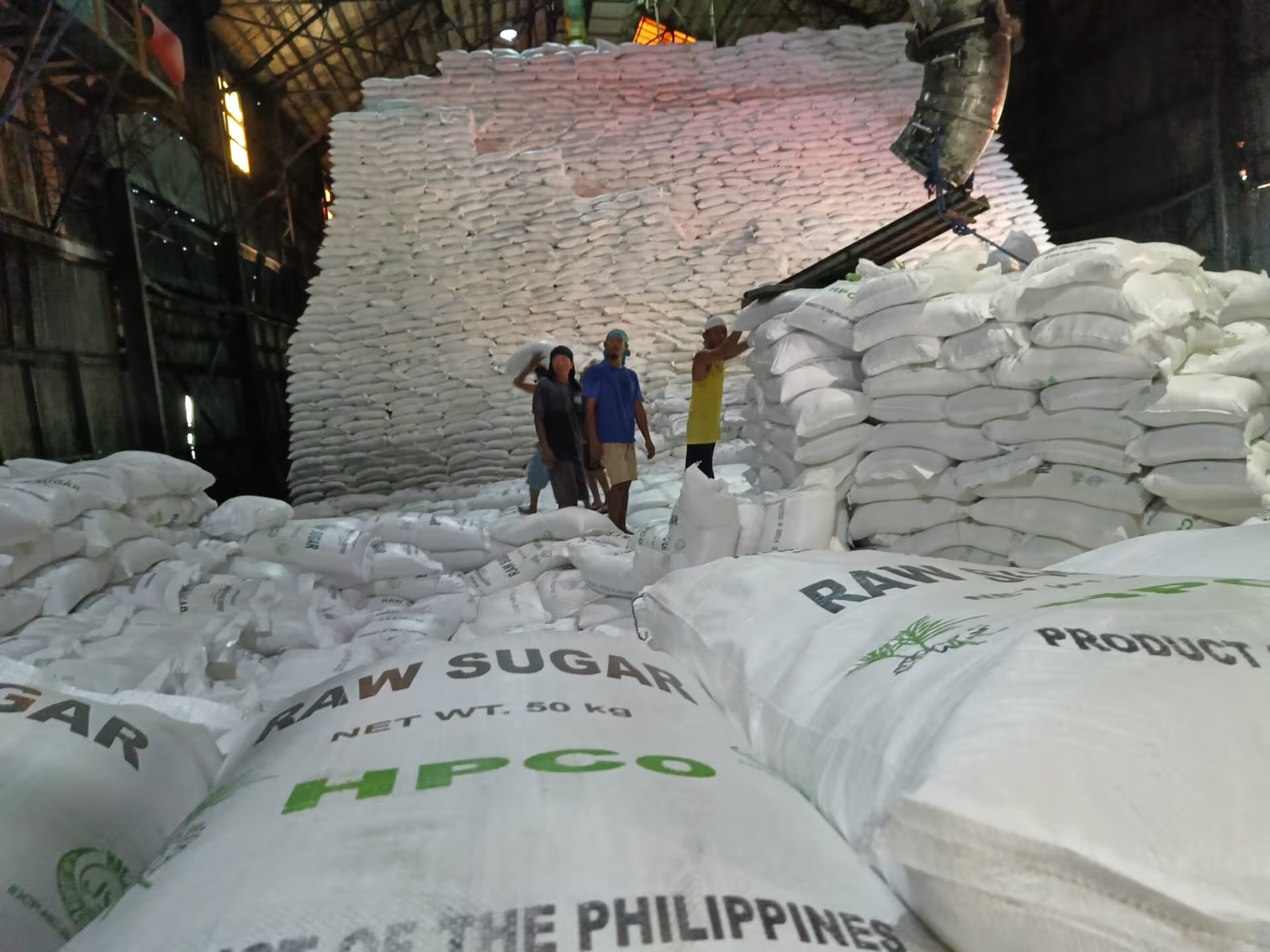
Philippine sugar mills face a ₱28/MT margin erosion as domestic prices fall 17% to ₱2,284 per 50kg bag while drought from emerging El Niño conditions threatens yields in Negros Occidental — the province that produces 60% of the nation's sugar output. The United Sugar Producers' Federation of the Philippines (UNIFED) has urged government authorities to implement emergency cloud seeding operations as production is projected to reach only 1.92 million MT for crop year 2025-2026, down 7.9% from the previous year. Global sugar prices have simultaneously hit 5-year lows at 14.3-14.25 cents per pound, creating a dual margin squeeze that leaves no operational buffer for regional producers.
Cloud seeding — a weather modification technique that disperses substances like sodium chloride into cloud formations to trigger precipitation — represents a last-resort intervention for agricultural drought mitigation. Successful operations in the Philippines typically scatter 33 sacks of sodium chloride at 4,500 feet altitude, but effectiveness depends entirely on the presence of seedable cloud formations. PAGASA has warned that El Niño-related dry conditions may develop from June through the end of 2026, creating atmospheric conditions that inherently reduce cloud formation — the precise opposite of what cloud seeding requires. Even under optimal conditions, cloud seeding increases rainfall by only 5-15%, insufficient to offset severe drought impact on established sugarcane growing cycles that require consistent irrigation over 12-18 month maturation periods.
On the buy side: Regional food processors and beverage manufacturers that source directly from Philippine mills face immediate supply tightening and potential 15-20% price increases if drought conditions persist through the critical May-July growing period. Large integrated buyers like San Miguel Corporation's food division, which processes roughly 400,000 MT annually, have derivative access to hedge against domestic price volatility but must weigh the cost of forward contracts against spot procurement. Current US wholesale sugar prices range from $0.58-$0.65 per pound — equivalent to roughly ₱2,600-2,900 per 50kg bag including shipping and duties — making imports marginally competitive but requiring 45-60 day lead times that eliminate operational flexibility.
On the sell side: Domestic sugar millers confront a margin trap where production costs remain fixed while both domestic and export prices compress simultaneously. A mid-sized Philippine mill processing 150,000 MT annually faces roughly ₱4.2 million in reduced revenue at current price levels — before accounting for potential 20-30% yield reductions if drought persists. Global surplus conditions forecast at 2.9-3.4 million MT for 2025/26 eliminate any premium for Philippine raw sugar in export markets, while falling crude oil prices reduce ethanol demand, removing the alternative revenue stream that typically supports sugar prices during oversupply periods. For smaller cooperative mills without financial reserves, the combination of drought-reduced throughput and compressed margins threatens operational viability within 6-9 months.
For large integrated traders with commodity financing capabilities: Fix forward sales commitments immediately at current levels and establish peso-hedged positions against further domestic currency weakness, as drought-driven supply concerns may provide temporary support before global surplus conditions reassert price pressure by Q3 2026. For regional sugar distributors and smaller millers: Diversify sourcing to include Thai or Brazilian raw sugar through established import channels, accepting 60-90 day payment terms to preserve working capital during the drought period. For observers: Monitor SRA cloud seeding coordination with local government units and PAGASA June precipitation forecasts — any delay in cloud seeding implementation beyond mid-May, or confirmed El Niño strengthening, signals a 6-month supply tightening that will support domestic prices regardless of global surplus conditions.


.jpg)



'%3e%3cg id='Final-Copy-2_2_' transform='translate(1275.000000, 200.000000)'%3e%3cpath class='st0' d='M7.4,12.8h6.8l3.1-11.6H7.4C4.2,1.2,1.6,3.8,1.6,7S4.2,12.8,7.4,12.8z'/%3e%3c/g%3e%3c/g%3e%3c/g%3e%3cg id='final---dec.11-2020'%3e%3cg id='_x30_208-our-toggle' transform='translate(-1275.000000, -200.000000)'%3e%3cg id='Final-Copy-2' transform='translate(1275.000000, 200.000000)'%3e%3cpath class='st1' d='M22.6,0H7.4c-3.9,0-7,3.1-7,7s3.1,7,7,7h15.2c3.9,0,7-3.1,7-7S26.4,0,22.6,0z M1.6,7c0-3.2,2.6-5.8,5.8-5.8 h9.9l-3.1,11.6H7.4C4.2,12.8,1.6,10.2,1.6,7z'/%3e%3cpath id='x' class='st2' d='M24.6,4c0.2,0.2,0.2,0.6,0,0.8l0,0L22.5,7l2.2,2.2c0.2,0.2,0.2,0.6,0,0.8c-0.2,0.2-0.6,0.2-0.8,0 l0,0l-2.2-2.2L19.5,10c-0.2,0.2-0.6,0.2-0.8,0c-0.2-0.2-0.2-0.6,0-0.8l0,0L20.8,7l-2.2-2.2c-0.2-0.2-0.2-0.6,0-0.8 c0.2-0.2,0.6-0.2,0.8,0l0,0l2.2,2.2L23.8,4C24,3.8,24.4,3.8,24.6,4z'/%3e%3cpath id='y' class='st3' d='M12.7,4.1c0.2,0.2,0.3,0.6,0.1,0.8l0,0L8.6,9.8C8.5,9.9,8.4,10,8.3,10c-0.2,0.1-0.5,0.1-0.7-0.1l0,0 L5.4,7.7c-0.2-0.2-0.2-0.6,0-0.8c0.2-0.2,0.6-0.2,0.8,0l0,0L8,8.6l3.8-4.5C12,3.9,12.4,3.9,12.7,4.1z'/%3e%3c/g%3e%3c/g%3e%3c/g%3e%3c/g%3e%3c/svg%3e) Privacy Choices
Privacy Choices