.avif)
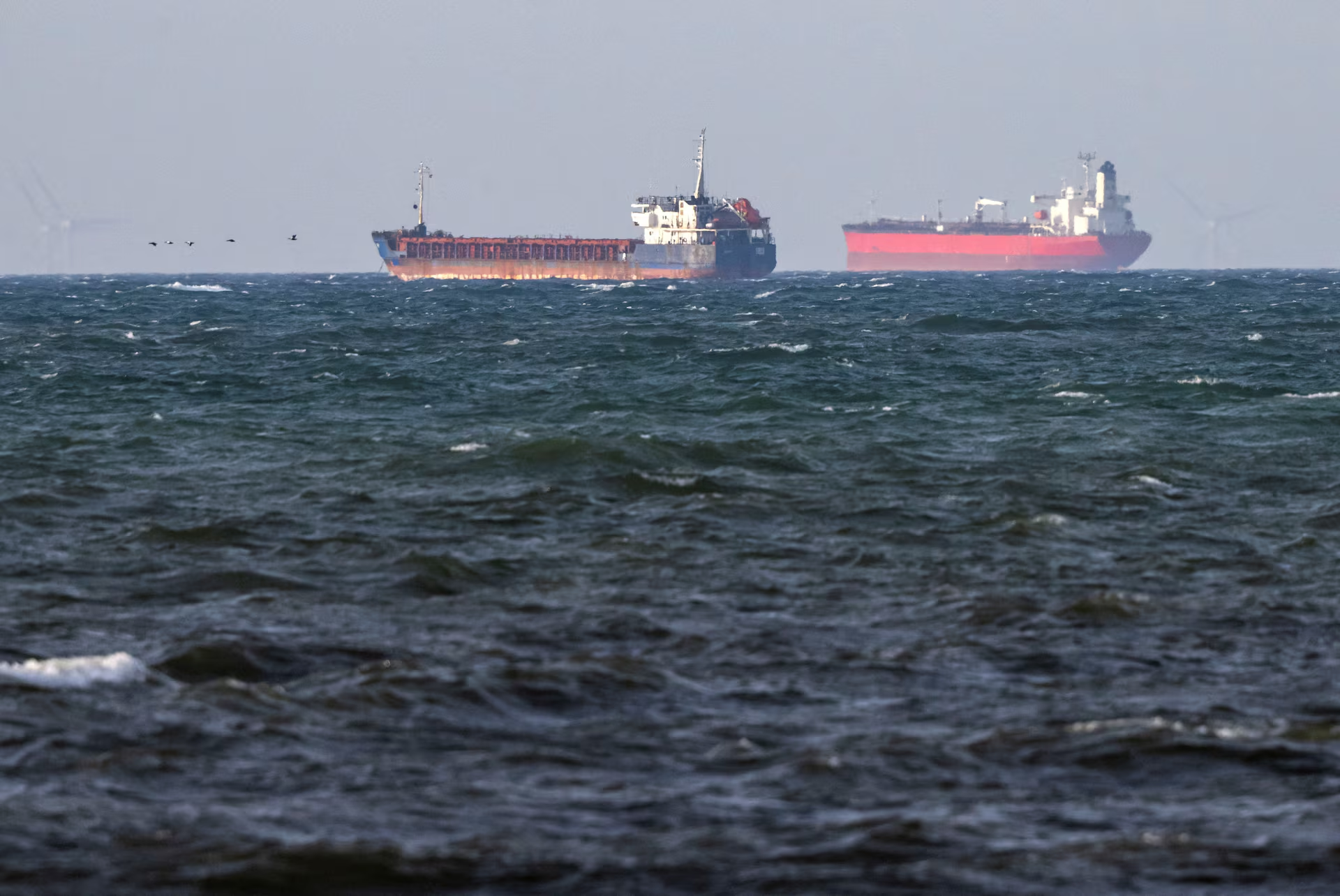
Dry bulk operators face new vessel seizure risks after a Swedish court approved the arrest of the 4,337 dwt bulk carrier CAFFA on June 4, marking the first time a foreign judicial authority has acted on Ukraine's allegations of grain theft from Russian occupied territories. The ruling exposes operators to potential multi-million dollar asset forfeitures, with vessel values easily exceeding $5-10 million for mid-sized bulk carriers like CAFFA. This precedent arrives as the Baltic Dry Index trades at 3,037 points, down 2.78% but still 86.78% higher year on year, indicating strong underlying demand that makes vessel availability critical.
The Swedish court's decision establishes a new enforcement threshold. CAFFA was intercepted while transiting from Morocco to St. Petersburg a routine commercial route that became legally perilous due to its cargo history. Ukrainian prosecutors alleged the vessel systematically violated entry procedures to Russian occupied ports and used false registration, listing itself in international databases as "Guinea False" to conceal its activities. The court determined this constituted potential war crimes under Swedish law, clearing the way for asset transfer to Ukrainian authorities.
On the buy side, European and Mediterranean grain importers now face supply chain verification requirements that extend beyond traditional sanctions compliance. A major EU wheat importer sourcing 500,000 tonnes annually must now trace vessel histories through multiple prior voyages to avoid inadvertent receipt of disputed grain. This documentation burden adds 3-5 days to contract finalization as buyers verify each vessel's port call history through satellite tracking services and maritime databases.
On the sell side, grain traders operating in contested regions confront cargo liability that extends beyond the immediate transaction. Between January and April, 25 vessels made 50 voyages from Russian occupied Ukrainian ports, transporting over 850,000 metric tons of grain. Each voyage now carries seizure risk if vessels subsequently enter European waters, regardless of cargo origin on later voyages. A Panamax operator typically earns $15,000-25,000 daily on Baltic grain routes income that disappears entirely if the vessel faces months long detention.
For large integrated trading houses with diversified fleets Cargill, ADM, or major NOCs the solution involves enhanced due diligence systems and derivatives hedging. These operators can afford satellite monitoring subscriptions ($50,000-100,000 annually) that track vessel movements through contested waters and flag potential compliance issues. They also maintain legal reserves and insurance coverage specifically for asset seizure scenarios, spreading risk across fleet operations that may include 50-200 vessels.
For smaller regional operators independent grain traders, family owned shipping companies, cooperative grain elevators the compliance burden is disproportionate. A mid-sized Baltic trader operating 5-10 vessels cannot afford comprehensive satellite tracking or maintain dedicated legal teams. These operators must rely on bilateral contractual protections, requiring grain suppliers to warrant cargo origins and provide indemnification against vessel seizure. This shifts liability upstream but increases contract costs by 2-3%.
The enforcement mechanism matters more than the legal theory. Swedish authorities acted within one week of receiving Ukraine's March 12 legal assistance request, conducting vessel searches and crew interviews before the formal court ruling. This rapid response time Search conducted, crew questioned, vessel detained, court approval secured within three months suggests an established judicial process that other EU member states may adopt. The precedent now exists for similar seizures in Danish, German, or Polish waters.
The physical supply chain geography amplifies the risk. CAFFA was a 96 meter general cargo vessel transiting standard Baltic shipping lanes used by thousands of similar vessels annually. The Panamax segment, which tracks vessels carrying 60,000-70,000 tons of coal or grain, recently traded at 2,254 index points according to Baltic Exchange data. These are precisely the vessel sizes and routes most exposed to enhanced inspection regimes as European authorities coordinate maritime enforcement.
For observers, the critical signal is the Swedish court's statement that the alleged conduct "could constitute a war crime under Swedish law" language that establishes legal precedent beyond sanctions violations into criminal liability. This classification enables asset forfeiture procedures unavailable under standard sanctions enforcement. Monitor Baltic Exchange inspection frequency data, typically published with 2 week lag, for evidence that other Nordic countries are adopting similar vessel boarding protocols. Any increase in inspection rates above the current 5-7% of transiting vessels signals systematic enforcement expansion.
.jpg)


'%3e%3cg id='Final-Copy-2_2_' transform='translate(1275.000000, 200.000000)'%3e%3cpath class='st0' d='M7.4,12.8h6.8l3.1-11.6H7.4C4.2,1.2,1.6,3.8,1.6,7S4.2,12.8,7.4,12.8z'/%3e%3c/g%3e%3c/g%3e%3c/g%3e%3cg id='final---dec.11-2020'%3e%3cg id='_x30_208-our-toggle' transform='translate(-1275.000000, -200.000000)'%3e%3cg id='Final-Copy-2' transform='translate(1275.000000, 200.000000)'%3e%3cpath class='st1' d='M22.6,0H7.4c-3.9,0-7,3.1-7,7s3.1,7,7,7h15.2c3.9,0,7-3.1,7-7S26.4,0,22.6,0z M1.6,7c0-3.2,2.6-5.8,5.8-5.8 h9.9l-3.1,11.6H7.4C4.2,12.8,1.6,10.2,1.6,7z'/%3e%3cpath id='x' class='st2' d='M24.6,4c0.2,0.2,0.2,0.6,0,0.8l0,0L22.5,7l2.2,2.2c0.2,0.2,0.2,0.6,0,0.8c-0.2,0.2-0.6,0.2-0.8,0 l0,0l-2.2-2.2L19.5,10c-0.2,0.2-0.6,0.2-0.8,0c-0.2-0.2-0.2-0.6,0-0.8l0,0L20.8,7l-2.2-2.2c-0.2-0.2-0.2-0.6,0-0.8 c0.2-0.2,0.6-0.2,0.8,0l0,0l2.2,2.2L23.8,4C24,3.8,24.4,3.8,24.6,4z'/%3e%3cpath id='y' class='st3' d='M12.7,4.1c0.2,0.2,0.3,0.6,0.1,0.8l0,0L8.6,9.8C8.5,9.9,8.4,10,8.3,10c-0.2,0.1-0.5,0.1-0.7-0.1l0,0 L5.4,7.7c-0.2-0.2-0.2-0.6,0-0.8c0.2-0.2,0.6-0.2,0.8,0l0,0L8,8.6l3.8-4.5C12,3.9,12.4,3.9,12.7,4.1z'/%3e%3c/g%3e%3c/g%3e%3c/g%3e%3c/g%3e%3c/svg%3e) Privacy Choices
Privacy Choices