.avif)
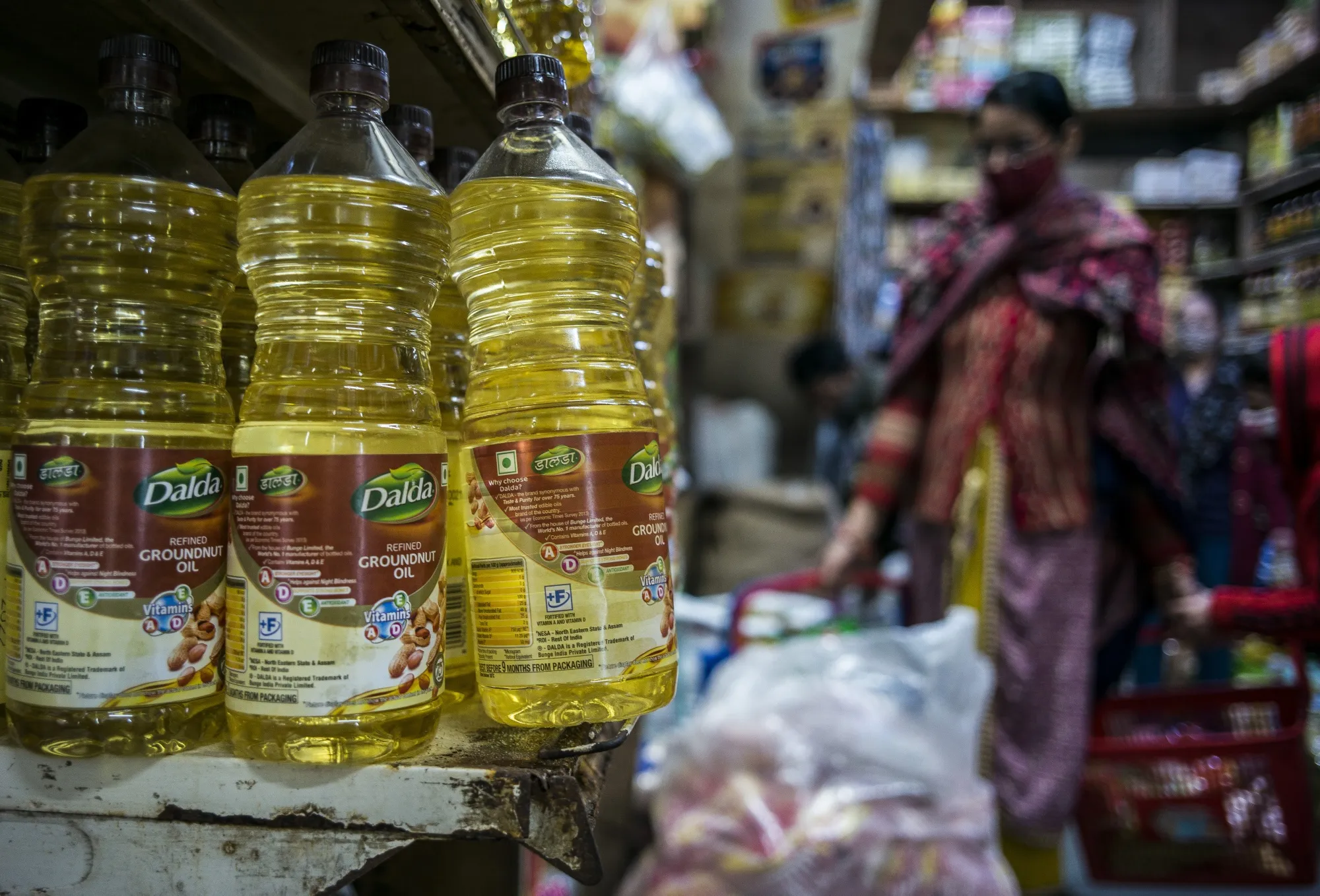
Indian vegetable oil importers are paying the price of a margin squeeze: June 2026 shipments fell roughly 29% year on year to approximately 11.1–11.5 lakh tonnes (one lakh equals 100,000 units, so this range is 1.11–1.15 million tonnes), the lowest monthly figure of the current oil year, as the economic logic that has long driven palm oil purchases into India quietly collapsed. The trigger is straightforward: palm oil's price discount to soft oils the premium that palm commands as the cheapest bulk vegetable oil on the market narrowed to below $50 per tonne in June. Historically, a discount above $100/tonne makes palm oil the default choice for Indian refiners, dal millers, and food manufacturers. Below $50/tonne, the economics tip. Buyers who can substitute processors with flexible equipment, blenders servicing premium retail segments increasingly switched to soybean or sunflower oil, and those who couldn't simply deferred purchases, waiting for the market to re-establish a clear price hierarchy. The result was a demand pause, not a demand collapse, but the distinction matters enormously for anyone with cargo already floating toward Indian ports.
Palm oil drove the headline number down, falling 10.5% month on month to approximately 487,000 tonnes in June alone, but soybean oil imports also contracted sharply. The one outlier was sunflower oil imports rose to 242,870 tonnes from 195,726 tonnes in May, a 24% monthly jump reflecting a route shift that is now physically visible. Cargoes of crude sunflower oil from Ukraine's Black Sea ports, primarily loaded at Chornomorsk and Yuzhne, and Argentine soybean oil shipped from Rosario and Buenos Aires, are arriving in growing volumes at Kandla and Mundra on India's west coast, displacing Malaysian and Indonesian palm oil shipments. The voyage from a Black Sea port to Kandla runs approximately 18–22 days on an MR tanker (a medium-range product tanker carrying roughly 35,000–45,000 tonnes); the competing palm oil voyage from Port Klang in Malaysia is 12–15 days. The extra transit time adds cost approximately $2–4/tonne in freight and financing but at current soft-oil price levels, that cost is absorbed and the cargo still lands cheaper than palm on a delivered, duty-paid basis.
The number that experienced importers should not overlook sits in the inventory data: total edible oil stocks as of 1 July 2026 stood at 20.09 lakh tonnes (2.009 million tonnes), down from 22.16 lakh tonnes a year earlier. Stocks are tighter than they appear, yet import demand is weak. The explanation is the Nepal SAFTA channel a structural arbitrage that is quietly supplying the market outside normal tariff accounting. Under SAFTA (the South Asian Free Trade Area agreement), Nepal exports refined vegetable oils to India at concessional meaning reduced tariff rates. Between November 2025 and April 2026, approximately 338,854 tonnes flowed through this route, primarily refined soybean oil and RBD palmolein (RBD: refined, bleached, deodorised the final consumer-grade form of palm oil). May and June 2026 added an estimated 54,000 and 32,000 tonnes respectively. The effective duty advantage this creates estimated at 5.5–7.5 percentage points versus direct refined-oil imports means Indian domestic refiners cannot price-compete with Nepal routed product. The policy lever India would normally use to protect refining margins is partially neutered by this channel.
On the buy side, Indian edible oil traders and food manufacturers face a pricing environment where the cheapest option palm oil has lost its edge, and the second cheapest options are arriving via non-standard routes that depress the effective import price of all refined oils. A mid-sized Indian importer who locked a palm oil cargo at a $45/tonne discount to soybean oil in May 2026 is now sitting on a position that has eroded by $15–30/tonne relative to expectations, because soft oil prices have not risen enough to restore palm's competitive advantage. On the sell side, Malaysian and Indonesian palm oil traders are facing precisely the kind of demand erosion that happens when a commodity's cheapness its only durable selling point in a price-sensitive market is no longer obvious. For a palm trader running a 50,000 tonne cargo to India at current discount levels, the margin versus shipping to a biofuel blender in Europe or China narrows to near parity, fundamentally changing the optimal destination calculus.
For large integrated traders a Wilmar, an Olam, or a Louis Dreyfus with hedging desks and derivatives access, the instrument is a long sunflower oil / short palm oil spread position on CME or via OTC swaps, capturing the current discount shift while it persists. The watch signal is the Bursa Malaysia crude palm oil (CPO) futures front-month contract: if palm oil recovers to a discount of $80–100/tonne versus soybean oil before the October–November seasonal import surge, the June demand pause reverses and the route shift partially unwinds. For a smaller regional importer a state cooperative, a mid-market food manufacturer buying 5,000–10,000 tonnes per month the practical action is bilateral: lock forward purchase contracts for sunflower or soybean oil now, at current landed prices, for August–September delivery, before the seasonal demand uptick tightens availability. The specific signal to watch is SEA (Solvent Extractors' Association of India) monthly import data for July, due in mid-August: if palm oil's share of total imports remains below 45% against a historical norm above 55% the structural substitution is not a blip. It is a regime shift.
.jpg)
.avif)
'%3e%3cg id='Final-Copy-2_2_' transform='translate(1275.000000, 200.000000)'%3e%3cpath class='st0' d='M7.4,12.8h6.8l3.1-11.6H7.4C4.2,1.2,1.6,3.8,1.6,7S4.2,12.8,7.4,12.8z'/%3e%3c/g%3e%3c/g%3e%3c/g%3e%3cg id='final---dec.11-2020'%3e%3cg id='_x30_208-our-toggle' transform='translate(-1275.000000, -200.000000)'%3e%3cg id='Final-Copy-2' transform='translate(1275.000000, 200.000000)'%3e%3cpath class='st1' d='M22.6,0H7.4c-3.9,0-7,3.1-7,7s3.1,7,7,7h15.2c3.9,0,7-3.1,7-7S26.4,0,22.6,0z M1.6,7c0-3.2,2.6-5.8,5.8-5.8 h9.9l-3.1,11.6H7.4C4.2,12.8,1.6,10.2,1.6,7z'/%3e%3cpath id='x' class='st2' d='M24.6,4c0.2,0.2,0.2,0.6,0,0.8l0,0L22.5,7l2.2,2.2c0.2,0.2,0.2,0.6,0,0.8c-0.2,0.2-0.6,0.2-0.8,0 l0,0l-2.2-2.2L19.5,10c-0.2,0.2-0.6,0.2-0.8,0c-0.2-0.2-0.2-0.6,0-0.8l0,0L20.8,7l-2.2-2.2c-0.2-0.2-0.2-0.6,0-0.8 c0.2-0.2,0.6-0.2,0.8,0l0,0l2.2,2.2L23.8,4C24,3.8,24.4,3.8,24.6,4z'/%3e%3cpath id='y' class='st3' d='M12.7,4.1c0.2,0.2,0.3,0.6,0.1,0.8l0,0L8.6,9.8C8.5,9.9,8.4,10,8.3,10c-0.2,0.1-0.5,0.1-0.7-0.1l0,0 L5.4,7.7c-0.2-0.2-0.2-0.6,0-0.8c0.2-0.2,0.6-0.2,0.8,0l0,0L8,8.6l3.8-4.5C12,3.9,12.4,3.9,12.7,4.1z'/%3e%3c/g%3e%3c/g%3e%3c/g%3e%3c/g%3e%3c/svg%3e) Privacy Choices
Privacy Choices