.avif)
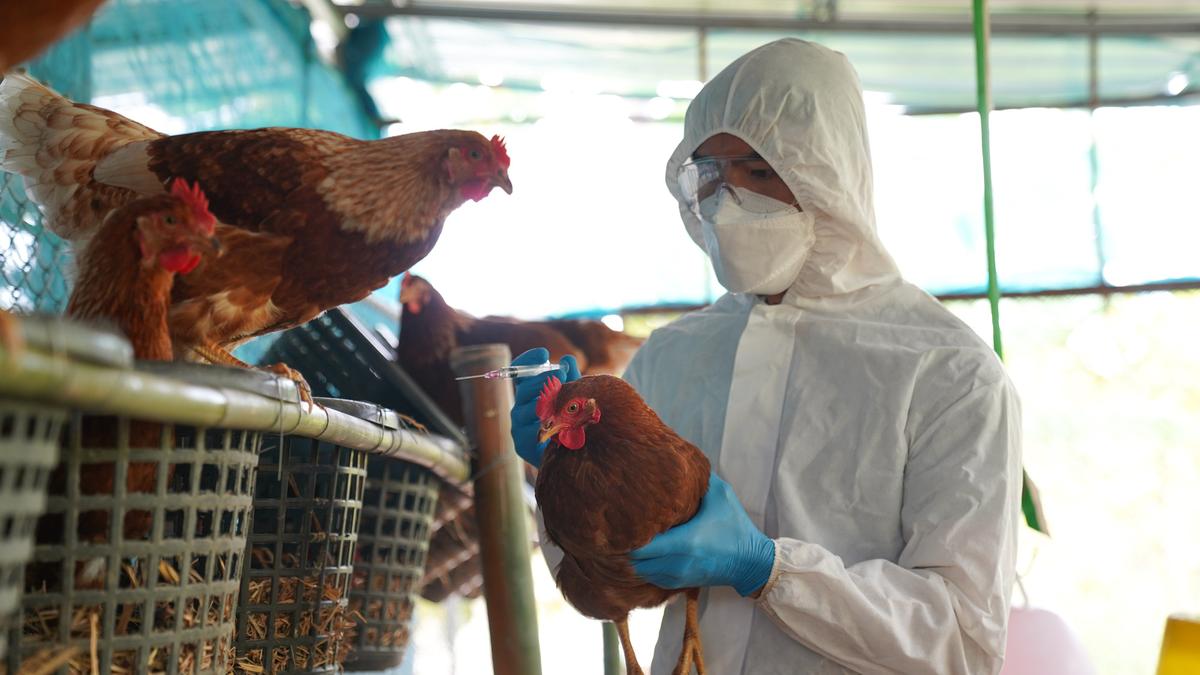
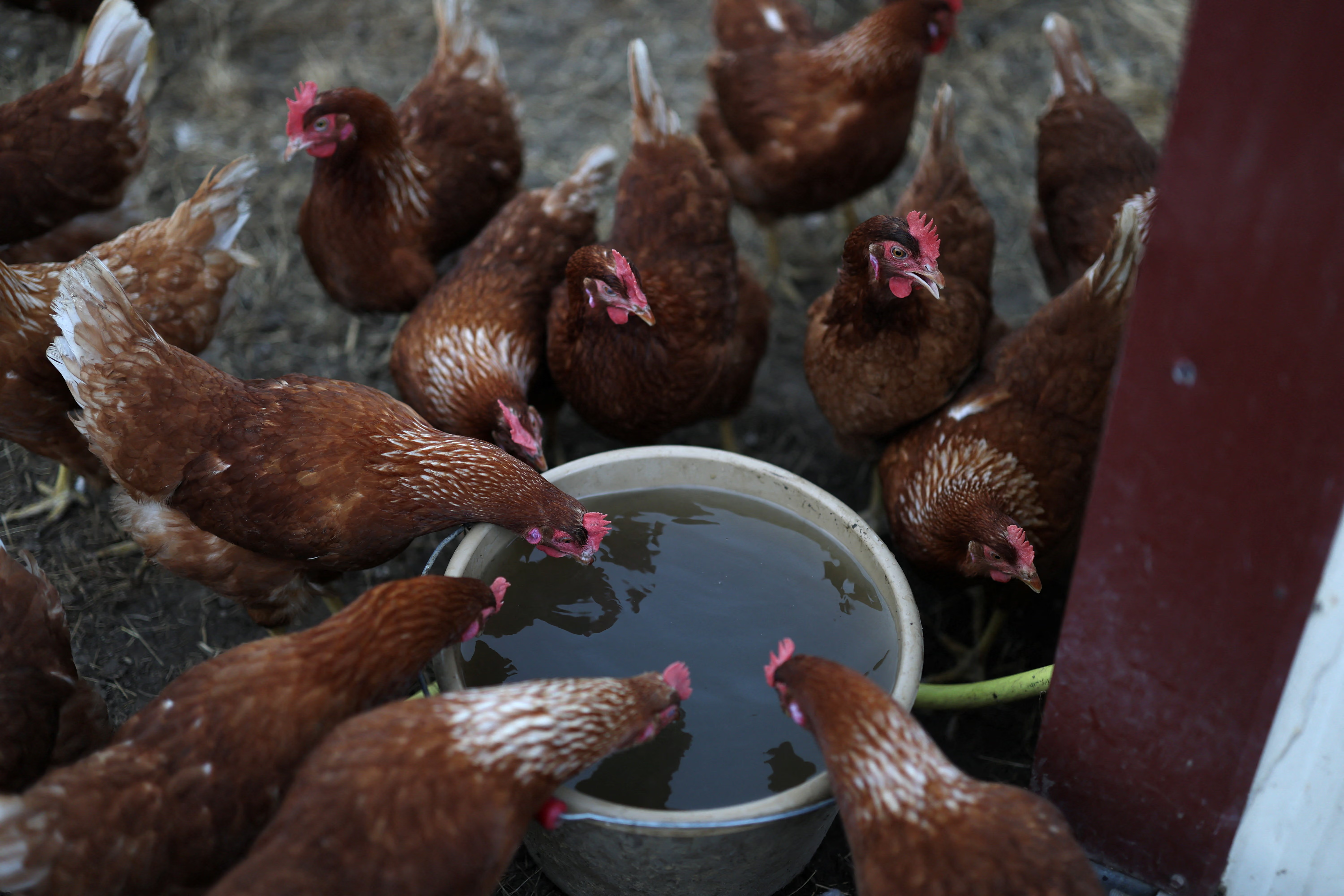
Australian poultry exporters face an estimated A$65 million annualised revenue loss effective immediately, as Papua New Guinea Australia's single largest overseas chicken meat buyer has imposed an indefinite import suspension on all Australian poultry products, including chicken meat, eggs, and egg products, following the detection of H5N1 avian influenza in wild seabirds near Esperance, Western Australia.
H5N1 is a strain of highly pathogenic avian influenza (HPAI) a fast-spreading viral disease in birds that triggers automatic import bans from trading partners concerned about biosecurity and two wild seabirds tested positive for it off the WA coast in late June 2026. The critical nuance here is that Australia retains its WOAH certified HPAI free status for commercial poultry. WOAH (the World Organisation for Animal Health) is the international body that sets veterinary standards governing trade in animal products. Australia's commercial flocks have no confirmed infections. PNG is not disputing this. It is acting under its own national import protocols, which permit suspension on any detection in wild populations within Australian territory, regardless of commercial flock status. This distinction matters enormously: Australia cannot simply wave its WOAH certificate and expect the lane to reopen. The reinstatement timeline is a diplomatic and bureaucratic variable, not a scientific one. There are no automatic reset clauses in the bilateral veterinary equivalence agreement between the two countries.
To understand the margin anatomy, consider the position of a mid-sized Australian poultry processor with WA operations. A facility processing 200,000 birds per week generates approximately A$3.5–4.5 million in weekly revenue from PNG bound consignments, priced at commodity frozen chicken rates of roughly A$3.50–4.50/kg for bone in cuts. Against that, facility operating costs labour, cold chain logistics to Fremantle port, refrigerated container freight to Port Moresby (approximately 5–7 days steaming via a Pacific container service) run at roughly A$2.80–3.20/kg, leaving a margin of A$0.70–1.30/kg. That margin is thin by protein standards. Inghams Group, among Australia's largest poultry processors, has now locked down its WA sites as a precautionary measure even in the absence of confirmed commercial flock infections. Lockdown costs enhanced biosecurity staffing, additional veterinary testing, disrupted throughput scheduling are not fully quantifiable yet, but industry estimates place direct precautionary compliance costs at A$150,000–300,000 per site per week for a large-scale processor. These costs arrive simultaneously with the loss of PNG revenue. The margin is not compressed. It is inverted.
The supply chain that underpins this trade lane is specific and worth mapping. Australian chilled and frozen chicken meat a product shelf-life advantage that Australian exporters held over Brazilian and US competitors moves primarily from WA processing facilities via refrigerated container to Fremantle port, then onto Pacific container shipping services operated by carriers such as Pacific International Lines or Swire Shipping, with transit times of five to seven days to Port Moresby's Motukea terminal. PNG's cold-chain infrastructure is limited: Port Moresby can handle containerised reefer (refrigerated container) volumes, but inland distribution relies heavily on wet markets and small-scale cold storage. The proximity and freshness advantage Australian exporters held delivering chilled product where competitors could only supply frozen is now irrelevant. Every consignment currently in transit or loaded post-ban faces potential return or rerouting costs. Export health certification, the veterinary document that accompanies each consignment and is required at the PNG border, has been paused by Australian authorities for post-ban shipments. Consignments that sailed before certification was paused may be turned back at Port Moresby.
On the buy side, PNG food importers and institutional buyers hotel chains, hospital supply chains, the large Chinese-owned wholesale distributors that dominate Port Moresby's food distribution now face an immediate supply gap in a market where chicken is a primary affordable protein. PNG imports approximately A$65 million worth of Australian chicken annually, representing roughly 45–48% of Australia's total chicken meat export value of approximately A$133 million in 2023–24. There is no domestic PNG poultry industry of scale that can substitute at speed. On the sell side, Australian exporters including Inghams and Baiada the two dominant integrated processors are now holding WA-produced inventory with no primary outlet. Domestic Australian markets will absorb some volume, but at lower prices: domestic commodity frozen chicken typically clears at A$0.20–0.40/kg below export parity given the oversupply signal. For a processor running 1 million kg/week through WA facilities, that repricing alone represents A$200,000–400,000 in weekly margin erosion on redirected volume, before lockdown and logistics costs are added.
For traders and intermediaries, the opportunity is sharp and time-bounded. Traders holding Brazilian or US frozen poultry volumes with existing Pacific shipping access now face a short-window arbitrage into PNG. Brazil is the world's largest chicken meat exporter, producing bone in cuts at landed costs of approximately US$1.60–1.80/kg (A$2.45–2.75/kg) delivered to Pacific ports. US frozen poultry is slightly higher at US$1.80–2.00/kg. PNG buyers accustomed to paying A$3.50–4.50/kg for Australian product represent a significant price ceiling, and sources in the trade indicate that spot premiums of 5–10% above normal contract prices are emerging for Brazilian product on offer into the Pacific. The arbitrage window is real but constrained: Brazilian and US exporters are not idle they have existing contract commitments to other markets and Pacific container shipping from South American ports (Santos or Paranaguá in Brazil) to Port Moresby involves 25–35 days of transit via a transhipment hub such as Singapore or Auckland, compared with Australia's five to seven days. The substitution is viable, not seamless.
For large integrated operators a major trading house or multinational food company with a diversified protein book and futures access the instrument of choice is a combination of Brazilian chicken futures positions on the BM&F Bovespa exchange (the Brazilian commodity derivatives exchange) to lock in cost on substitute supply, combined with forward freight agreements on Pacific container routes to manage the shipping cost component. A position of 2,000 MT of Brazilian frozen bone-in at current futures prices of approximately US$1,750/MT (CIF Pacific), combined with a forward container rate fixed at US$120–140/20ft reefer container (approximately US$100–120/MT), generates a delivered cost of US$1,850–1,870/MT well inside the PNG import price ceiling. For smaller regional operators a Pacific focused food distributor or a PNG wholesale importer without derivatives access the practical equivalent is to move immediately to bilateral fixedprice supply agreements with a Brazilian or US exporter, accepting a 5–8% above-spot premium in exchange for price certainty and volume guarantee for a 60–90 day window, which covers the likely minimum duration of the Australian ban while diplomatic resolution is pursued.
The historical reference point is instructive. The 2011 H5N1-related Korean poultry ban on US imports lasted six weeks from first notification to reinstatement of certification a relatively fast resolution because bilateral veterinary protocols between Washington and Seoul included defined review timelines. Australia and PNG have no equivalent structured review mechanism in their current veterinary equivalence arrangements. The 2003 Dutch avian influenza outbreak triggered EU internal trade restrictions that lasted four months before zone based equivalence was restored. Neither precedent is directly applicable, but the range six weeks to four months is the realistic planning envelope for Australian exporters. Inghams and its peers cannot currently plan cold-chain scheduling, vessel bookings, or inventory drawdown with any precision. The operational cost of this uncertainty rescheduled vessel slots, idle refrigerated warehouse capacity, revised staffing rosters accrues weekly.
The single most consequential signal to watch is DAFF's (Australia's Department of Agriculture, Fisheries and Forestry) bilateral engagement outcome with PNG's National Agriculture Quarantine Inspection Authority (NAQI). DAFF has confirmed it is actively engaging with PNG counterparts. Observers should monitor for a formal joint communiqué from DAFF and NAQI establishing a review protocol with defined timelines this is the trigger for lane reinstatement planning. If no such communiqué is issued within 30 days of the ban (by approximately 24 July 2026), the probability of a sub six week resolution drops sharply and Brazilian substitution volumes will begin arriving in Port Moresby in quantity, reshaping PNG's supply relationships in ways that may persist beyond any eventual Australian reinstatement. The second signal is commercial flock testing outcomes: if any WA commercial poultry facility returns a positive HPAI test under Inghams' lockdown protocol, the ban becomes structural rather than precautionary and the revenue impact to Australian exporters moves from A$65 million to materially higher as other Pacific markets follow PNG's lead.
.jpg)
.avif)
'%3e%3cg id='Final-Copy-2_2_' transform='translate(1275.000000, 200.000000)'%3e%3cpath class='st0' d='M7.4,12.8h6.8l3.1-11.6H7.4C4.2,1.2,1.6,3.8,1.6,7S4.2,12.8,7.4,12.8z'/%3e%3c/g%3e%3c/g%3e%3c/g%3e%3cg id='final---dec.11-2020'%3e%3cg id='_x30_208-our-toggle' transform='translate(-1275.000000, -200.000000)'%3e%3cg id='Final-Copy-2' transform='translate(1275.000000, 200.000000)'%3e%3cpath class='st1' d='M22.6,0H7.4c-3.9,0-7,3.1-7,7s3.1,7,7,7h15.2c3.9,0,7-3.1,7-7S26.4,0,22.6,0z M1.6,7c0-3.2,2.6-5.8,5.8-5.8 h9.9l-3.1,11.6H7.4C4.2,12.8,1.6,10.2,1.6,7z'/%3e%3cpath id='x' class='st2' d='M24.6,4c0.2,0.2,0.2,0.6,0,0.8l0,0L22.5,7l2.2,2.2c0.2,0.2,0.2,0.6,0,0.8c-0.2,0.2-0.6,0.2-0.8,0 l0,0l-2.2-2.2L19.5,10c-0.2,0.2-0.6,0.2-0.8,0c-0.2-0.2-0.2-0.6,0-0.8l0,0L20.8,7l-2.2-2.2c-0.2-0.2-0.2-0.6,0-0.8 c0.2-0.2,0.6-0.2,0.8,0l0,0l2.2,2.2L23.8,4C24,3.8,24.4,3.8,24.6,4z'/%3e%3cpath id='y' class='st3' d='M12.7,4.1c0.2,0.2,0.3,0.6,0.1,0.8l0,0L8.6,9.8C8.5,9.9,8.4,10,8.3,10c-0.2,0.1-0.5,0.1-0.7-0.1l0,0 L5.4,7.7c-0.2-0.2-0.2-0.6,0-0.8c0.2-0.2,0.6-0.2,0.8,0l0,0L8,8.6l3.8-4.5C12,3.9,12.4,3.9,12.7,4.1z'/%3e%3c/g%3e%3c/g%3e%3c/g%3e%3c/g%3e%3c/svg%3e) Privacy Choices
Privacy Choices