.avif)
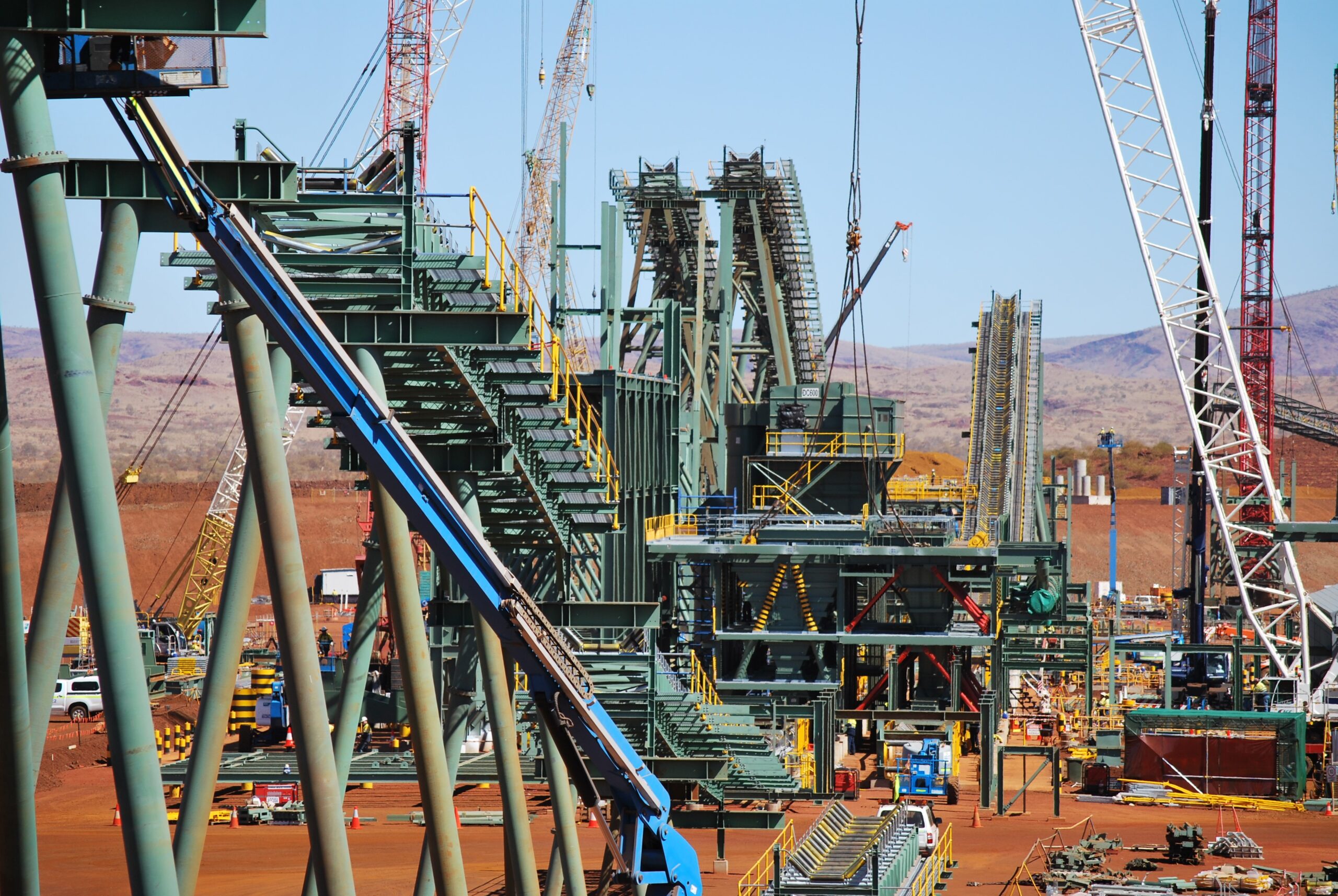
Tier-1 LNG operators in Australia Chevron, Shell, Woodside, Santos, INPEX, ConocoPhillips, and Mitsui will from approximately 1 August 2026 find their shutdown and maintenance contracts channelled through a newly consolidated services platform, as Tasmea Ltd acquires specialist contractor JPS Group for up to A$75 million. This is not a marginal shift in their supply chain. It is the consolidation of an embedded services relationship one that has already accumulated more than 500,000 safe working hours across onshore, offshore, and Floating LNG assets into a listed entity with the balance sheet, scale incentive, and management alignment to compete for larger, longer, and more complex maintenance scopes. For operators managing multi-billion dollar LNG trains, the counterparty on the other side of a master service agreement (MSA a standing contract that pre-authorises a supplier to deliver defined services across multiple future campaigns, rather than tendering each job individually) has just changed in character, if not yet in name.
The deal structure deserves examination because it is where the commercial risk concentrates. Tasmea pays approximately A$50 million upfront A$24.5 million in cash and 3,011,750 new TEA shares at A$8.50 each, worth roughly A$25.6 million plus up to A$25 million in an earn-out tied to JPS EBIT (Earnings Before Interest and Tax operating profit before financing costs, a standard measure of underlying business performance) over FY27–FY30. The earn-out mechanics are precise and exposing: for every A$1 of EBIT below A$12 million in any given year, the earn-out reduces by A$2. Fall below A$8.875 million and the earn-out for that year is nil. JPS's forecast FY26 EBIT is approximately A$10 million meaning the nil earn out floor sits just 11% below the base case. That is a thin cushion. Tier-1 LNG clients routinely defer or descope shutdown campaigns when spot LNG prices compress the Platts JKM price (the benchmark for LNG cargoes delivered into Japan and Korea) fell from above US$35/MMBtu in early 2023 to below US$10/MMBtu by mid-2023, and major operators responded by trimming maintenance windows. One deferred Woodside or Chevron shutdown could move JPS's EBIT from A$10 million to A$8 million in a single year. The earn-out penalty on that A$2 million miss is A$4 million a non-trivial destruction of vendor value.
The human capital dimension is both the platform's strength and its structural constraint. JPS brings approximately 150 full time equivalent staff and a vetted pool of more than 600 specialist LNG tradespeople instrument technicians, rotating equipment engineers, and safety critical process operators whose qualifications are asset-specific and non-transferable to most non-LNG worksites. On the buy side, Tier-1 LNG operators gain a consolidated counterparty with deeper labour depth and cross-asset deployment capability; a Woodside maintenance planner tendering a Pluto LNG turnaround, for instance, can now access a bench that previously required multiple subcontractor relationships. On the sell side, Tasmea as the acquiring entity captures an MSA margin stream estimated at roughly A$10 million EBIT per year with management projecting revenue to double by FY29 if LNG shutdown volumes grow as anticipated. That doubling assumption is load-bearing. At current deal pricing of approximately 5x forecast EBIT, versus comparable listed energy services platforms trading at 7–10x EBIT, Tasmea is acquiring at a discount to sector comps but only if JPS performs into the earn-out.
For large integrated LNG operators a Chevron or Shell managing long-cycle shutdown programmes across multiple Australian LNG assets the practical implication is a counterparty review. MSAs typically specify performance standards, key personnel retention clauses, and substitution rights; the change of control to a listed entity triggers at minimum a governance notification obligation and, in some agreements, a consent requirement. Procurement teams should confirm whether JPS's existing MSAs contain change of control provisions and, if so, whether the Tasmea transaction structure settlement targeted around 1 August 2026, subject to regulatory approval requires formal consent before that date. For smaller specialist LNG services contractors without MSA anchor relationships the sub-100 FTE independent maintenance firms that compete for discrete campaign scopes the consolidation narrows the competitive field. Tasmea-JPS can now offer integrated project delivery, compliance infrastructure, and labour depth that smaller operators cannot replicate without several years of organic growth. Pricing pressure on discrete scopes will follow.
The forward signal for observers is specific: watch JPS EBIT performance in the first half of FY27 the first full reporting period after settlement against the A$10 million annualised base and the A$8.875 million floor. Tasmea's next scheduled investor update will be the FY26 full-year result, expected in August 2026, at which FY27 guidance incorporating JPS will be articulated. Separately, monitor the Platts JKM spot LNG price through Q3 2026 (July–September): if JKM remains below US$12/MMBtu, the probability of client shutdown deferrals rises materially, and the earn-out buffer compresses toward nil. The JPS founder-GMs remain as equity-aligned management post-settlement their retention is the single strongest indicator that short-term performance will be defended. If either departs within 12 months, treat it as a structural warning on earn-out delivery, regardless of the headline revenue trajectory.





'%3e%3cg id='Final-Copy-2_2_' transform='translate(1275.000000, 200.000000)'%3e%3cpath class='st0' d='M7.4,12.8h6.8l3.1-11.6H7.4C4.2,1.2,1.6,3.8,1.6,7S4.2,12.8,7.4,12.8z'/%3e%3c/g%3e%3c/g%3e%3c/g%3e%3cg id='final---dec.11-2020'%3e%3cg id='_x30_208-our-toggle' transform='translate(-1275.000000, -200.000000)'%3e%3cg id='Final-Copy-2' transform='translate(1275.000000, 200.000000)'%3e%3cpath class='st1' d='M22.6,0H7.4c-3.9,0-7,3.1-7,7s3.1,7,7,7h15.2c3.9,0,7-3.1,7-7S26.4,0,22.6,0z M1.6,7c0-3.2,2.6-5.8,5.8-5.8 h9.9l-3.1,11.6H7.4C4.2,12.8,1.6,10.2,1.6,7z'/%3e%3cpath id='x' class='st2' d='M24.6,4c0.2,0.2,0.2,0.6,0,0.8l0,0L22.5,7l2.2,2.2c0.2,0.2,0.2,0.6,0,0.8c-0.2,0.2-0.6,0.2-0.8,0 l0,0l-2.2-2.2L19.5,10c-0.2,0.2-0.6,0.2-0.8,0c-0.2-0.2-0.2-0.6,0-0.8l0,0L20.8,7l-2.2-2.2c-0.2-0.2-0.2-0.6,0-0.8 c0.2-0.2,0.6-0.2,0.8,0l0,0l2.2,2.2L23.8,4C24,3.8,24.4,3.8,24.6,4z'/%3e%3cpath id='y' class='st3' d='M12.7,4.1c0.2,0.2,0.3,0.6,0.1,0.8l0,0L8.6,9.8C8.5,9.9,8.4,10,8.3,10c-0.2,0.1-0.5,0.1-0.7-0.1l0,0 L5.4,7.7c-0.2-0.2-0.2-0.6,0-0.8c0.2-0.2,0.6-0.2,0.8,0l0,0L8,8.6l3.8-4.5C12,3.9,12.4,3.9,12.7,4.1z'/%3e%3c/g%3e%3c/g%3e%3c/g%3e%3c/g%3e%3c/svg%3e) Privacy Choices
Privacy Choices