.avif)
.avif)
Vale's surge to 336 million tonnes of iron ore production in 2025 delivers immediate margin compression for pellet premium traders while expanding procurement leverage for Chinese steel mills buying fines. The Brazilian giant's strategic shift of feedstock away from pelletizing toward fines production eliminates roughly $15-25/tonne in pellet premia that specialized arbitrageurs previously captured. A typical pellet premium trader handling 2 million tonnes annually faces margin erosion of $30-50 million as Vale's feedstock diversion tightens pellet supply. Meanwhile, Chinese steel procurement desks benefit from abundant Vale fines availability, with major mills like Baosteel and Ansteel securing term contracts at improved pricing versus the constrained pellet market. The mechanics are straightforward: Vale's record S11D performance and Capanema ramp-up flooded the fines market with high-quality 65% Fe material while pellet plant maintenance at São Luís removed premium product supply. This dual supply shock compressed pellet-to-fines spreads from typical $40-60/tonne levels to under $25/tonne by Q4 2025, fundamentally altering the margin anatomy across the iron ore ecosystem.
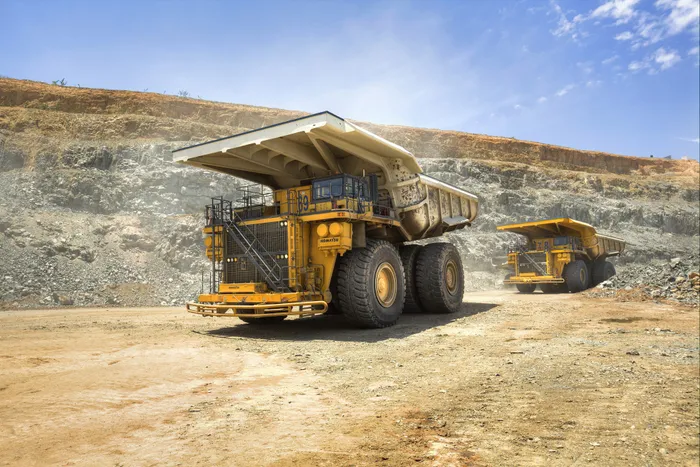
Vale's operational excellence at S11D delivering record throughput while maintaining ore quality above 65% iron content demonstrates how mining efficiency gains translate directly into market power. The mine's conveyor system and automated processing reduced unit extraction costs to an estimated $18-22/tonne, well below the industry average of $28-35/tonne for comparable quality ore. This cost advantage allows Vale to flood the fines market while still maintaining healthy margins, creating a competitive moat that smaller producers cannot match. The company's decision to redirect feedstock from pelletizing operations amplifies this advantage by eliminating the $12-18/tonne processing costs associated with pellet production. For Vale's procurement team, this strategy reduces operational complexity fines require fewer quality specifications and faster vessel loading compared to pellets. The result is a streamlined supply chain that maximizes asset utilization while pressuring competitors who lack similar operational scale. Brazilian rival CSN and smaller producers face margin compression as Vale's volume surge sets aggressive pricing benchmarks in key Asian markets.
Chinese steel mills emerge as the primary beneficiaries of Vale's fines-heavy strategy, securing abundant feedstock supply at competitive pricing while managing increased sintering costs through operational adjustments. Major integrated mills like Ansteel and Shagang can absorb the 8-12% increase in sintering energy costs that comes with higher fines ratios in their blast furnace feed mix. A typical 10 million tonne annual steel producer saves approximately $180-220 million on raw material procurement through access to cheaper Vale fines, while incurring additional sintering costs of $40-60 million a net benefit of $120-160 million annually. However, smaller Chinese mills without sophisticated sintering facilities face operational challenges. Regional producers like Jianlong Group or Rizhao Steel struggle to optimize fines-heavy blend ratios, experiencing productivity losses that can offset procurement savings. The financing implications are equally significant, Chinese mills must extend LC exposure periods as they build larger fines inventories to compensate for pellet supply constraints. Credit facilities at major Chinese banks have adjusted accordingly, with institutions like Bank of China increasing iron ore inventory financing limits by 15-25% for qualified steel producers.
Pellet premium arbitrageurs face systematic margin destruction as Vale's feedstock diversion creates structural supply tightness in the premium product segment. Traditional pellet traders who capitalize on the $40-60/tonne premium between pellets and fines see their core business model under assault. A mid-tier trading house like Trafigura's metals division, handling 8-10 million tonnes of pellets annually, loses $320-600 million in gross margin potential as pellet premia compress to $20-25/tonne levels. The mechanism is supply constraint: Vale's São Luís pellet plant maintenance removes 12-15 million tonnes of annual premium product capacity while feedstock redirection eliminates another 8-10 million tonnes of potential pellet production. This 20-25 million tonne supply reduction represents roughly 8-10% of global seaborne pellet trade, sufficient to compress premia significantly. Independent pellet producers like Samarco (when operational) or Ferrexpo gain competitive advantage as their dedicated pellet operations face reduced Vale competition. However, smaller pellet arbitrageurs without long-term supply agreements face margin elimination entirely, forcing business model pivots toward fines trading or other commodity segments.
CapeCize vessel charterers capture unexpected margin expansion as Vale's production surge generates increased cargo frequencies for Brazil-China iron ore routes. The world's largest dry bulk vessels 180,000+ deadweight tonne Capesizes benefit from Vale's strategy of maximizing fines shipments over lower volume pellet cargoes. A single Capesize carrying 170,000 tonnes of fines generates $850,000-1.2 million in freight revenue on the Brazil-China route, compared to pellet shipments that typically carry 20-25% less volume due to density differences. Major charterers like China Cosco Shipping or Vale's own fleet optimization algorithms prioritize these high volume fines cargoes, creating positive feedback loops for vessel utilization rates. The financing dimension amplifies this benefit, higher cargo volumes improve cash conversion cycles for shipowners while reducing per-tonne financing costs. Documentary requirements are simpler for fines shipments fewer quality specifications and faster port operations compared to pellet handling. However, increased cargo frequencies strain port infrastructure at key Brazilian terminals like Tubarão and Chinese discharge ports like Qingdao, potentially creating bottlenecks that could reverse current freight rate advantages if infrastructure capacity becomes constrained.
Vale's 2026 guidance of 335-345 million tonnes signals sustained pressure on competitors and continued margin reallocation across the iron ore value chain. The company's expectation that Capanema will reach full capacity in early 2026 adds another 30-35 million tonnes of annual production, primarily fines, to an already saturated market. This volume expansion occurs as Chinese steel production faces government-imposed capacity constraints and environmental regulations that limit blast furnace utilization rates. The timing creates a supply-demand imbalance that favors buyers over sellers across most iron ore segments. For integrated producers like BHP Billiton, Vale's volume surge forces pricing discipline and operational efficiency improvements to maintain market share. Smaller Brazilian producers face existential pressure companies like Mineração Usiminas must either achieve significant cost reductions or exit marginal operations entirely. The financial implications extend beyond immediate pricing: Vale's improved cash generation from higher volumes strengthens its balance sheet for future expansion while competitors face reduced cash flow for capital investment. This creates a self-reinforcing cycle where Vale's scale advantages compound over time, potentially leading to industry consolidation.
The forward signal for iron ore markets points toward continued pellet premium compression and fines market saturation through at least H1 2026, with broader implications for steel industry feedstock strategies and maritime logistics. Vale's operational momentum driven by S11D optimization and Capanema full capacity creates structural oversupply in fines while pellet supply remains constrained by maintenance schedules and feedstock diversion. Chinese steel mills must recalibrate inventory strategies, building larger fines stockpiles while accepting higher sintering costs or investing in pelletizing capacity to achieve optimal blast furnace performance. The most sophisticated operators will likely pursue hybrid strategies: securing long-term fines contracts at compressed pricing while maintaining pellet access through tolling agreements or minority stakes in pelletizing assets. Independent trading houses face strategic crossroads those with significant pellet arbitrage exposure must pivot toward fines trading, develop pelletizing capabilities, or diversify into other commodity segments entirely. The maritime dimension suggests sustained high utilization for Capesize vessels on Brazil-China routes, potentially attracting additional vessel capacity that could eventually compress freight rates. By Q2 2026, market participants should expect either pellet supply recovery through Vale plant restarts or permanent structural shifts in iron ore product mix that reshape global steel industry procurement strategies.





'%3e%3cg id='Final-Copy-2_2_' transform='translate(1275.000000, 200.000000)'%3e%3cpath class='st0' d='M7.4,12.8h6.8l3.1-11.6H7.4C4.2,1.2,1.6,3.8,1.6,7S4.2,12.8,7.4,12.8z'/%3e%3c/g%3e%3c/g%3e%3c/g%3e%3cg id='final---dec.11-2020'%3e%3cg id='_x30_208-our-toggle' transform='translate(-1275.000000, -200.000000)'%3e%3cg id='Final-Copy-2' transform='translate(1275.000000, 200.000000)'%3e%3cpath class='st1' d='M22.6,0H7.4c-3.9,0-7,3.1-7,7s3.1,7,7,7h15.2c3.9,0,7-3.1,7-7S26.4,0,22.6,0z M1.6,7c0-3.2,2.6-5.8,5.8-5.8 h9.9l-3.1,11.6H7.4C4.2,12.8,1.6,10.2,1.6,7z'/%3e%3cpath id='x' class='st2' d='M24.6,4c0.2,0.2,0.2,0.6,0,0.8l0,0L22.5,7l2.2,2.2c0.2,0.2,0.2,0.6,0,0.8c-0.2,0.2-0.6,0.2-0.8,0 l0,0l-2.2-2.2L19.5,10c-0.2,0.2-0.6,0.2-0.8,0c-0.2-0.2-0.2-0.6,0-0.8l0,0L20.8,7l-2.2-2.2c-0.2-0.2-0.2-0.6,0-0.8 c0.2-0.2,0.6-0.2,0.8,0l0,0l2.2,2.2L23.8,4C24,3.8,24.4,3.8,24.6,4z'/%3e%3cpath id='y' class='st3' d='M12.7,4.1c0.2,0.2,0.3,0.6,0.1,0.8l0,0L8.6,9.8C8.5,9.9,8.4,10,8.3,10c-0.2,0.1-0.5,0.1-0.7-0.1l0,0 L5.4,7.7c-0.2-0.2-0.2-0.6,0-0.8c0.2-0.2,0.6-0.2,0.8,0l0,0L8,8.6l3.8-4.5C12,3.9,12.4,3.9,12.7,4.1z'/%3e%3c/g%3e%3c/g%3e%3c/g%3e%3c/g%3e%3c/svg%3e) Privacy Choices
Privacy Choices