.avif)
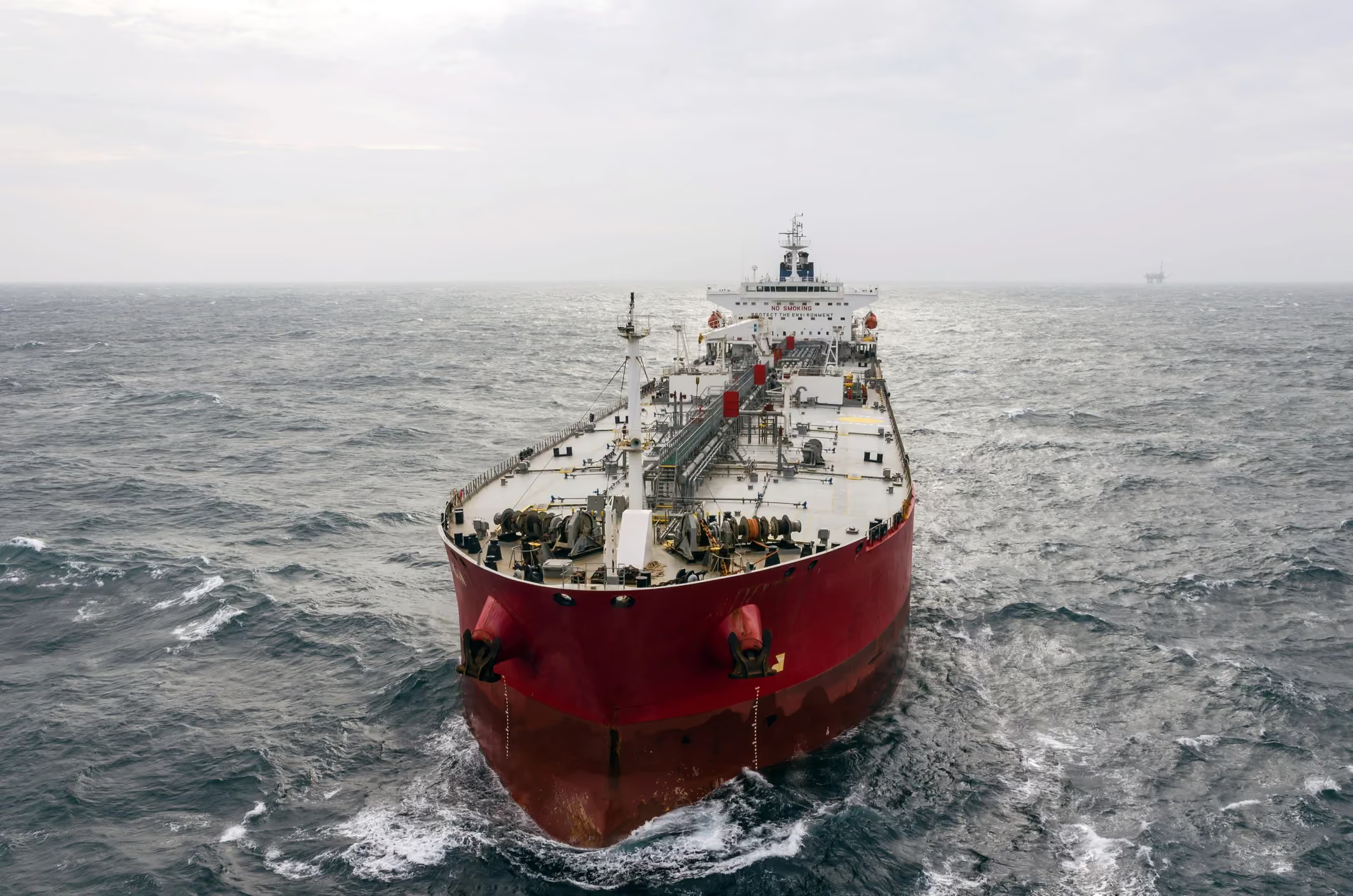
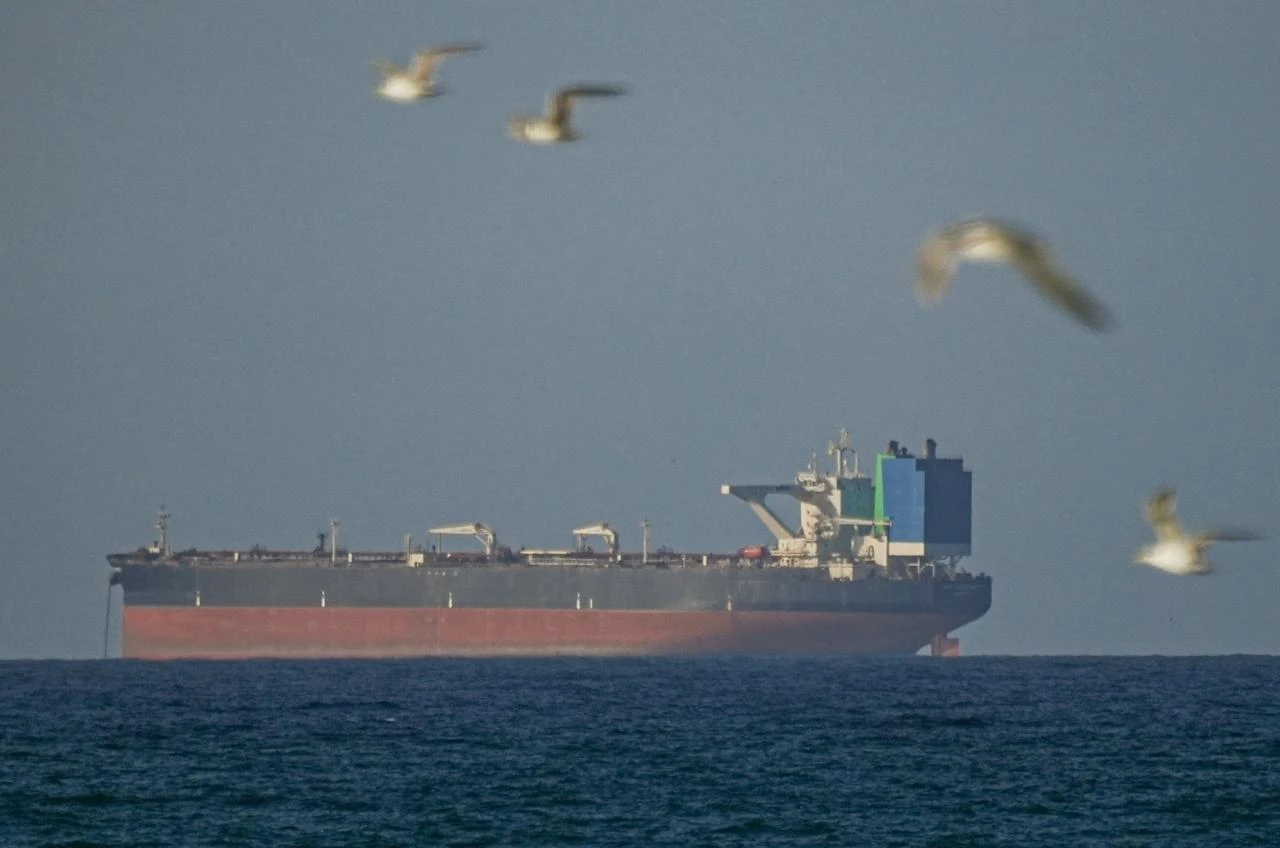
Frontline plc posted $559.1 million in net profit for Q1 2026, or $2.51 per share, marking its most profitable quarter since 2004 a windfall generated entirely by the effective closure of the Strait of Hormuz forcing crude oil onto routes 14-21 days longer than normal. The company achieved time charter equivalent (TCE) rates of $103,500 per day for VLCCs, $72,400 per day for Suezmax, and $50,700 per day for LR2/Aframax fleets. For context, a VLCC earning $103,500 per day on a 35 day voyage from the Persian Gulf to China via the Cape of Good Hope generates $3.6 million in gross freight revenue roughly double the earnings on the pre-crisis direct route through Hormuz, which took 20-25 days and earned approximately $50,000-60,000 per day. This $2.5 million per-voyage margin expansion is not operational efficiency it is pure time-distance arbitrage.
The Strait of Hormuz has been largely blocked by Iran since 28 February 2026, when the United States and Israel launched an air war against Iran, with the Iranian Revolutionary Guard Corps issuing warnings forbidding passage through the strait, boarding and attacking merchant ships, and laying sea mines. War-risk ship insurance premiums for the strait increased from 0.125% to between 0.2% and 0.4% of the ship insurance value per transit for very large oil tankers, this is an increase of a quarter of a million dollars. The IRGC confirmed the closure on March 2, 2026, and tanker traffic dropped to near zero, with protection and indemnity insurance cancelled from March 5, forcing all major carriers, including Maersk, CMA CGM, MSC, and Hapag-Lloyd, to suspend transits. The commercial calculation is simple: no insurance means no trade. Oil cargoes worth $100-200 million cannot move without coverage.
The margin concentration reveals itself in the financing structure. Adjusted profit increased by $114.5 million from the previous quarter, primarily driven by a $112 million rise in time charter earnings to $536.5 million from $424.5 million in Q4 2025. This means 98% of Frontline's quarter on quarter profit improvement came directly from higher day rates the textbook definition of freight-driven margin concentration. Oil trading houses absorb the financing cost of longer voyages while vessel owners capture the time premium. A cargo that previously required 20 days of financing now requires 35 days, increasing working capital costs by 75%. Meanwhile, VLCC owners earn 100% more per day and operate vessels 75% longer. The asymmetry is stark.
On the buy side, Asian refiners face a double squeeze. WTI crude oil futures fell below $88 per barrel on Friday, ending May down 16.2%, while Brent crude oil futures fell about 2% to $91.2 per barrel, putting them on track for a 17% decline in May following reports of potential US-Iran ceasefire talks. However, freight costs have tripled. Consider a Japanese refiner importing 2 million barrels of Saudi crude. Before the crisis, freight cost approximately $1.20 per barrel on a 20 day VLCC voyage at $50,000 per day. Today, the same cargo costs $3.60 per barrel on a 35 day voyage at $103,500 per day a $4.8 million increase for a single cargo. Even with crude prices falling $20 per barrel, the freight surcharge erases $10 per barrel of that savings.
On the sell side, Gulf producers confront storage constraints and shut-in risk. Iraq started shutting down operations at the Rumaila oil field due to a lack of storage space, as tankers were unable to leave the strait, with many oil producers, starting with Iraq and Kuwait, curtailing production in early March 2026. A complete cessation of oil exports from the Gulf region amounts to removing close to 20 percent of global oil supplies from the market. Producers with alternative export routes notably Saudi Arabia via its Yanbu terminal on the Red Sea command premiums. Those without face the stark choice between production cuts or storage overflow. For an integrated oil company like Saudi Aramco, this creates arbitrage opportunities. For smaller Gulf producers like Oman, it creates existential cash flow pressure.
For large integrated trading houses Vitol, Trafigura, or NOCs with substantial derivative books the strategy is clear: hedge time-charter exposure through freight derivatives. The Baltic Dirty Tanker Index (BDTI), which tracks VLCC rates, has surged alongside physical day rates. A trader financing $200 million worth of Middle East crude can hedge voyage extension risk by buying VLCC forward freight agreements (FFAs) or time charter swaps. The protection costs approximately 2-3% of cargo value but eliminates duration risk. Frontline cited $945 million in liquidity and estimated about $1.5 billion in cash generation potential over the next 12 months, or roughly $7 per share. This cash accumulation reflects the finite nature of the disruption.
For smaller regional operators independent oil importers, mid-sized refiners, or fuel distributors hedging access is limited. The practical equivalent involves bilateral contract restructuring: fixing term agreements with suppliers to cap freight escalation, diversifying crude sourcing to include Atlantic Basin grades accessible without Hormuz transit, or building inventory during rate dips. A regional fuel distributor in Southeast Asia, for example, might pre-purchase refined products from Singapore or shift to West African crude imports. These adjustments sacrifice volume efficiency for supply security but offer protection unavailable through financial instruments.
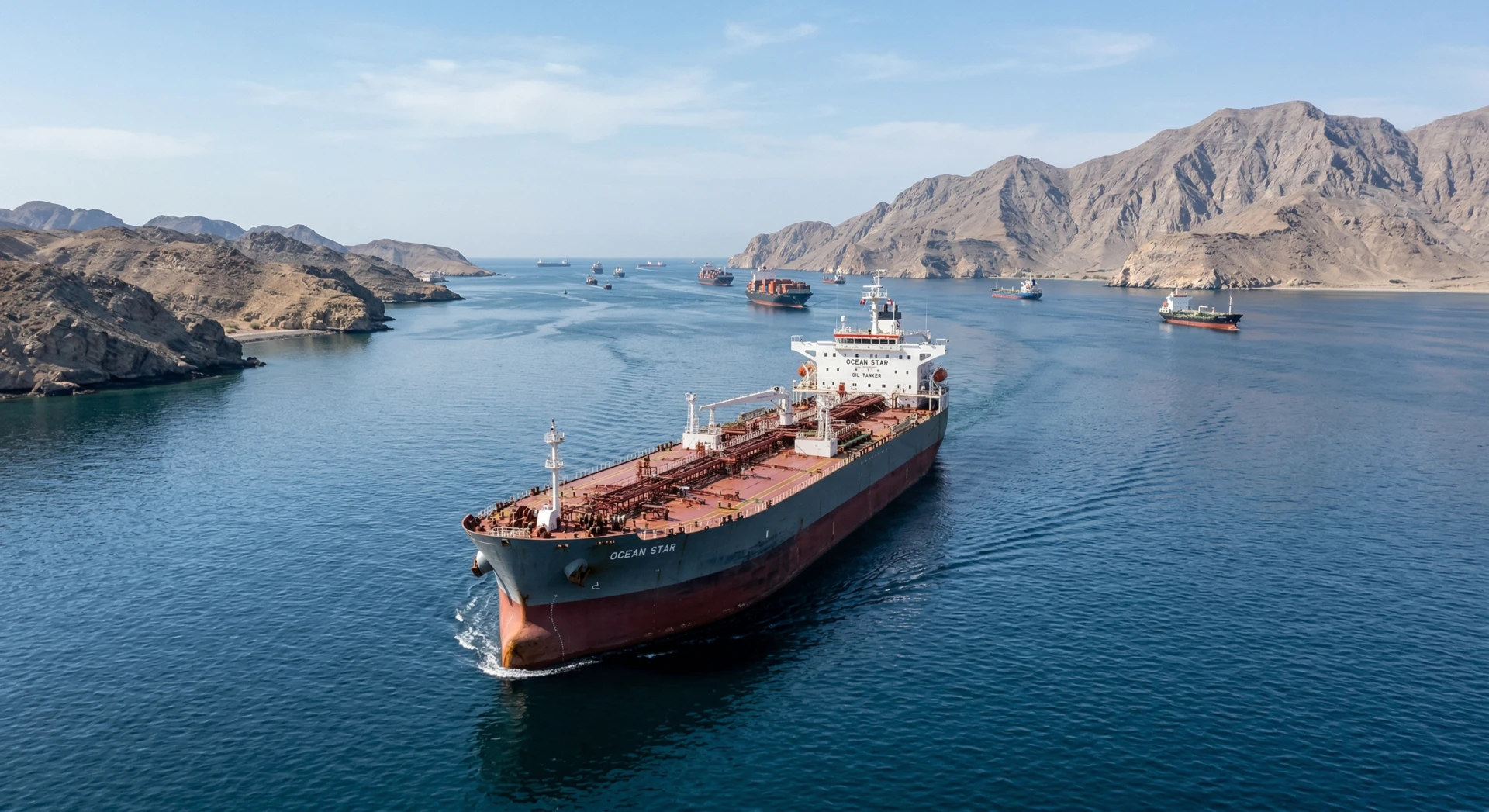
The physical supply chain adjustment illuminates where margin concentrates. Iran's closure of the Strait of Hormuz disrupted 20% of global oil supplies, with exports from the region typically going to Asian countries, with China, India, Japan and South Korea accounting for 75% of oil exports. Crude oil from Abu Dhabi previously loaded onto a VLCC at Jebel Ali, transited the 33 kilometre wide Strait of Hormuz, and arrived 20-25 days later at a Japanese refinery. Today, the same cargo loads at Fujairah, routes around the Cape of Good Hope adding 8,000 nautical miles and arrives 35-40 days later. The additional 15 days per voyage removes approximately 30% of global VLCC capacity from circulation, creating the scarcity premium that flows to vessel owners.
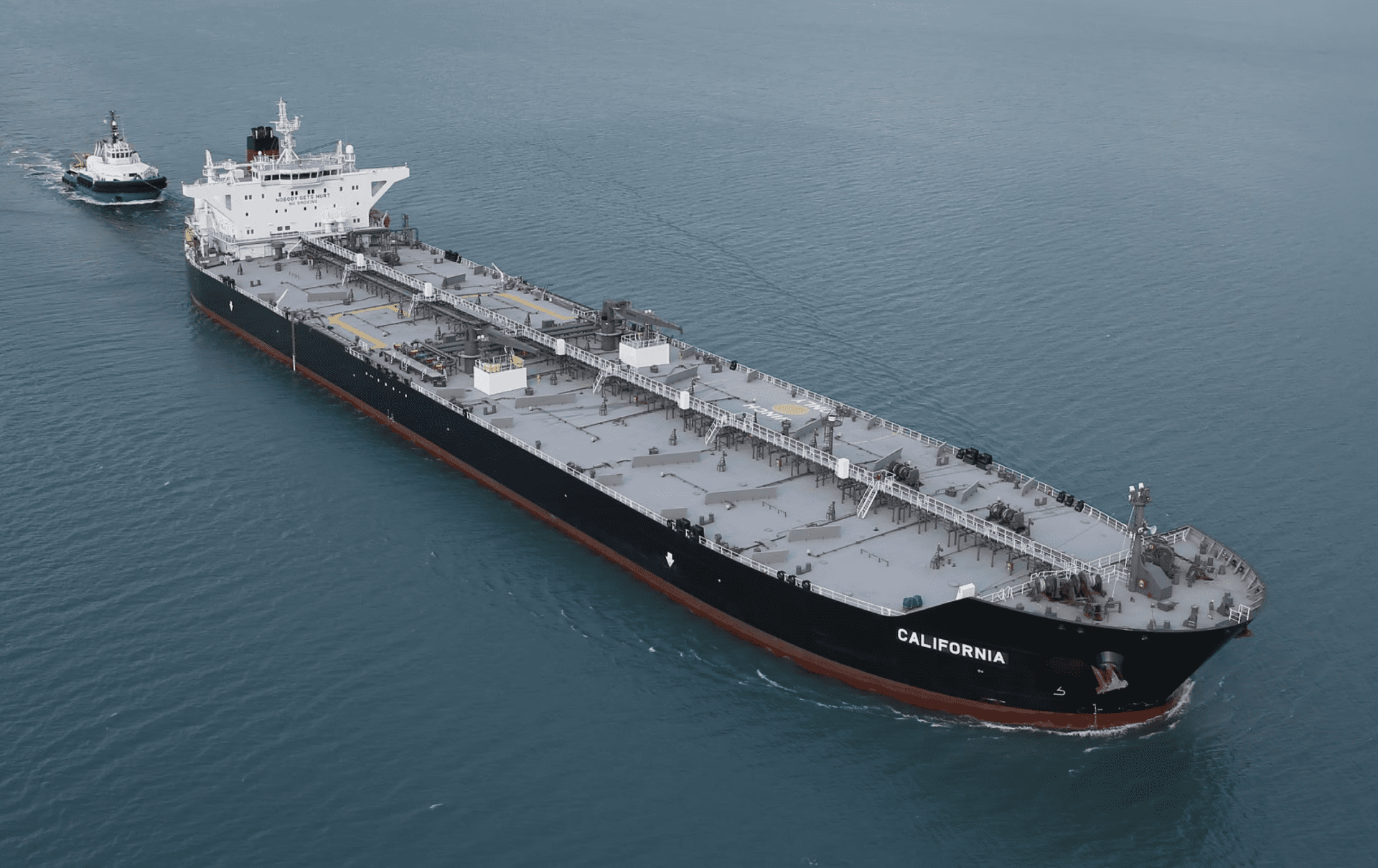
For Q2 2026 to date, 82% of VLCC days are booked at $181,700 per day, 79% of Suezmax days at $131,300 per day, and 68% of LR2/Aframax days at $125,000 per day. These rates represent a 75% increase over Q1 averages, suggesting the margin concentration is accelerating. However, the financing structure reveals vulnerability. Remaining newbuilding commitments at the end of the quarter were $925 million, related to the acquisition of nine newbuildings from affiliates of Hemen, with Frontline securing newbuilding financing of up to $737 million. Tanker owners are leveraging current cash generation to fund fleet expansion just as the crisis that created their windfall shows signs of resolution.
Historical comparison suggests margin concentration will reverse rapidly once Hormuz reopens. During the Iran-Iraq "tanker war" of the 1980s, VLCC rates tripled within weeks of major attacks but collapsed within months once alternative arrangements stabilized. Reports indicate the US and Iran have reached a preliminary agreement to extend a ceasefire and ease restrictions on shipping through the Strait of Hormuz, with expectations of an eventual end to restrictions, though clearing mines, repairing damaged infrastructure, and restarting shut-in production would limit supply restoration speed. The asymmetric risk is clear: tanker owners benefit from extended closure but face rapid margin compression upon reopening. Oil buyers and sellers gain from normalized freight costs but absorb extended disruption costs.
For observers, the signal to monitor is the Baltic Dirty Tanker Index (BDTI) against WTI/Brent crude spreads. When crude prices fall faster than freight rates decline, the disruption is ending but supply chain normalization lags. When freight rates and crude prices move in tandem, expect prolonged disruption. Current WTI below $88 per barrel and Brent at $91.2 per barrel, both down 16-17% for May, alongside reports of potential ceasefire extensions suggest the freight premium may contract within 60-90 days. VLCC owners capturing $2.5 million per voyage margins today should prioritize cash extraction over fleet expansion. The Hormuz disruption has created the most profitable tanker environment since 2004, but it remains precisely that a disruption, not a structural shift.
.jpg)


'%3e%3cg id='Final-Copy-2_2_' transform='translate(1275.000000, 200.000000)'%3e%3cpath class='st0' d='M7.4,12.8h6.8l3.1-11.6H7.4C4.2,1.2,1.6,3.8,1.6,7S4.2,12.8,7.4,12.8z'/%3e%3c/g%3e%3c/g%3e%3c/g%3e%3cg id='final---dec.11-2020'%3e%3cg id='_x30_208-our-toggle' transform='translate(-1275.000000, -200.000000)'%3e%3cg id='Final-Copy-2' transform='translate(1275.000000, 200.000000)'%3e%3cpath class='st1' d='M22.6,0H7.4c-3.9,0-7,3.1-7,7s3.1,7,7,7h15.2c3.9,0,7-3.1,7-7S26.4,0,22.6,0z M1.6,7c0-3.2,2.6-5.8,5.8-5.8 h9.9l-3.1,11.6H7.4C4.2,12.8,1.6,10.2,1.6,7z'/%3e%3cpath id='x' class='st2' d='M24.6,4c0.2,0.2,0.2,0.6,0,0.8l0,0L22.5,7l2.2,2.2c0.2,0.2,0.2,0.6,0,0.8c-0.2,0.2-0.6,0.2-0.8,0 l0,0l-2.2-2.2L19.5,10c-0.2,0.2-0.6,0.2-0.8,0c-0.2-0.2-0.2-0.6,0-0.8l0,0L20.8,7l-2.2-2.2c-0.2-0.2-0.2-0.6,0-0.8 c0.2-0.2,0.6-0.2,0.8,0l0,0l2.2,2.2L23.8,4C24,3.8,24.4,3.8,24.6,4z'/%3e%3cpath id='y' class='st3' d='M12.7,4.1c0.2,0.2,0.3,0.6,0.1,0.8l0,0L8.6,9.8C8.5,9.9,8.4,10,8.3,10c-0.2,0.1-0.5,0.1-0.7-0.1l0,0 L5.4,7.7c-0.2-0.2-0.2-0.6,0-0.8c0.2-0.2,0.6-0.2,0.8,0l0,0L8,8.6l3.8-4.5C12,3.9,12.4,3.9,12.7,4.1z'/%3e%3c/g%3e%3c/g%3e%3c/g%3e%3c/g%3e%3c/svg%3e) Privacy Choices
Privacy Choices