.avif)

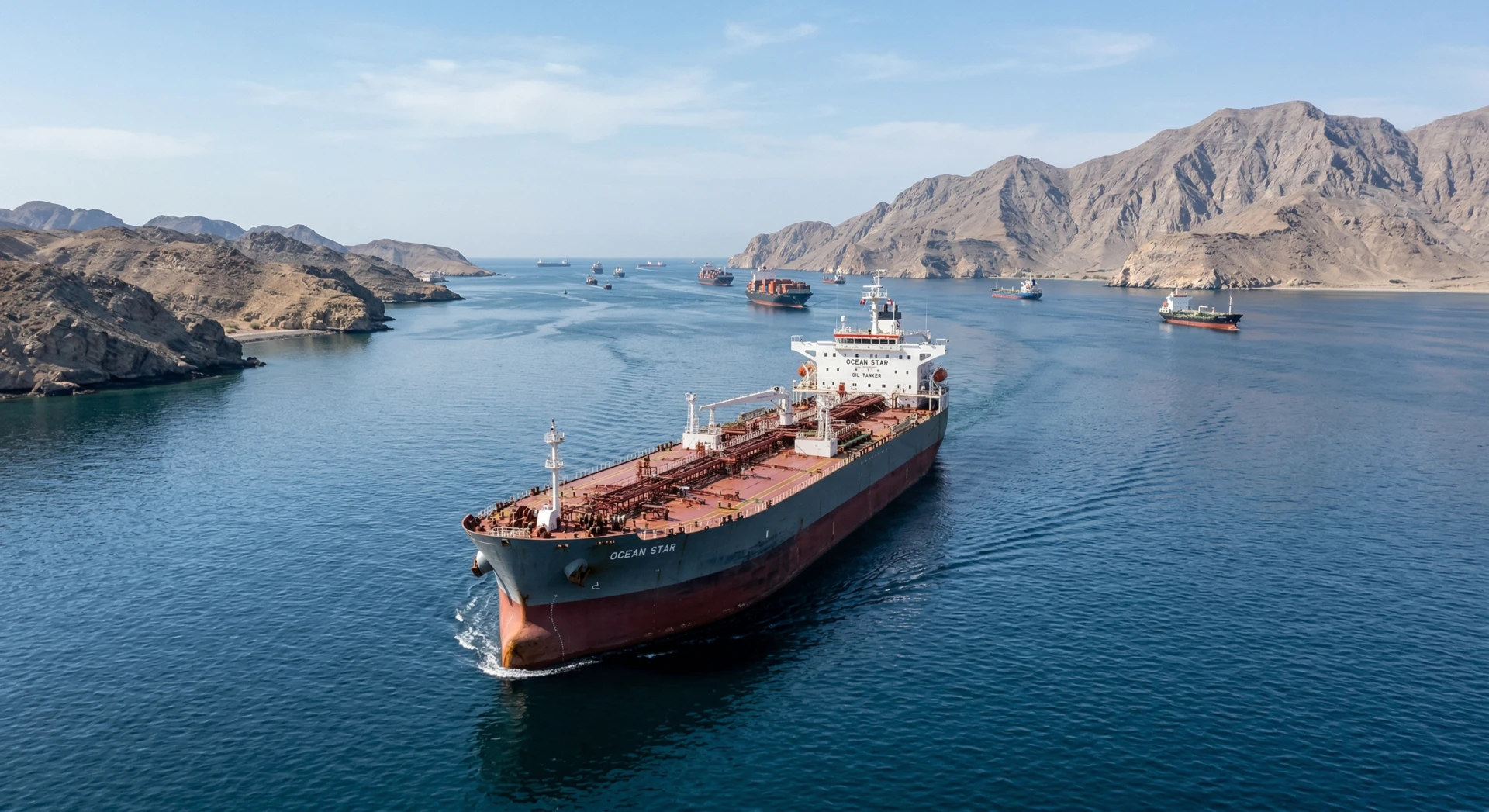
Westports Holdings reported a 47% jump in net profit to RM326.5 million for the first quarter ended March 31, 2026, but the Malaysian container port operator faces a margin squeeze from unhedged diesel costs that could erase gains if current fuel price spikes persist. Singapore gasoil futures the benchmark for regional diesel pricing closed at $157.45/barrel, up 3.26% in a single day, while Iran's closure of the Strait of Hormuz since March 4 has forced shipping lines to divert container routes, threatening Westports' transshipment volumes to Singapore and other regional competitors. The earnings beat masks a structural vulnerability: Westports uses unsubsidised diesel indexed to Platts pricing without fuel adjustment mechanisms that protect competitors, leaving the port operator directly exposed to energy cost volatility in an increasingly disrupted trade environment.
Container throughput the movement of standardised cargo boxes between ships, trucks, and trains at port terminals drove revenue growth to RM896.3 million as operational activity recovered from previous quarters. But Westports warned that shipping traffic through the Strait of Hormuz, which normally carries 25% of the world's seaborne oil trade and 20% of global LNG, has been largely blocked since February 28 when US-Israeli strikes triggered Iranian retaliation. The port operator specifically flagged that container shipping lines are already adjusting routes and diverting port calls to avoid Persian Gulf waters, adding uncertainty to trade volumes. Port Klang, Westports' base, sits at the intersection of major Asia-Europe shipping lanes but those same routes now face extended transit times and higher fuel costs as vessels reroute around Africa's Cape of Good Hope, adding 10-14 days to each voyage and consuming additional bunker fuel.
Consider Westports' diesel cost exposure through a specific operational example. The port consumes approximately 15,000-20,000 tonnes of diesel annually across container handling equipment, tugboats, and terminal operations. At current Platts pricing around $580/tonne (derived from $157.45/barrel converted to metric tonnes), annual fuel costs approach $11.6 million. War risk surcharges have reached up to $1,500 per TEU (twenty foot equivalent unit) for Gulf linked shipping lanes, while emergency bunker surcharges triggered by fuel price doubling are being passed through supply chains. A 30% spike in diesel costs not unprecedented given current volatility would add $3.5 million to Westports' annual operating expenses, equivalent to roughly 1% of quarterly revenue. The port cannot immediately pass these costs to shipping line customers through fuel adjustment clauses like competitors Singapore's PSA or Dubai's DP World, creating a direct margin impact that compounds with each month of elevated pricing.
On the buy side, major shipping lines including Maersk, MSC, Hapag-Lloyd and CMA CGM have all suspended operations through the Strait of Hormuz, forcing cargo to discharge at alternative transshipment hubs before reaching final destinations. Regional ports like Singapore's Tanjong Pagar, Colombo, and Nhava Sheva are capturing diverted volumes as lines seek reliable alternatives to Persian Gulf routing. On the sell side, Westports faces direct competition from these same hubs while managing higher operational costs without corresponding tariff increases. Jebel Ali Port in Dubai, the largest container port in the Middle East, is experiencing congestion from vessels that diverted after the closure, creating temporary capacity constraints that could benefit Malaysian ports but only if shipping lines maintain confidence in Southeast Asian routing stability. For traders and freight forwarders, the arbitrage concentrates in securing reliable transshipment capacity outside crisis zones, with Malaysia competing against Singapore's established infrastructure and Dubai's strategic location advantages.
For large integrated shipping lines (Maersk, CMA CGM, MSC) with comprehensive fuel hedging programs, the diesel cost spike represents a managed risk absorbed through derivatives positions and customer fuel surcharges implemented across their networks. For smaller regional container operators independent feeder services, regional port authorities, logistics cooperatives without access to sophisticated hedging instruments, the practical response involves fixing bilateral fuel escalation clauses with shipping line customers, diversifying supplier networks across multiple bunker providers, and adjusting inventory timing to benefit from price volatility. For observers monitoring regional port competition, watch the Malaysia-Singapore container throughput differential in June monthly data from both countries' port authorities: if Westports' volumes decline while Singapore volumes rise, it signals structural route diversion accelerating beyond temporary disruptions. The key indicator emerges within 45 days when Q2 earnings guidance revisions or container tariff adjustments reveal whether Westports can protect margins or must absorb the diesel cost differential that competitors have hedged.
.jpg)


'%3e%3cg id='Final-Copy-2_2_' transform='translate(1275.000000, 200.000000)'%3e%3cpath class='st0' d='M7.4,12.8h6.8l3.1-11.6H7.4C4.2,1.2,1.6,3.8,1.6,7S4.2,12.8,7.4,12.8z'/%3e%3c/g%3e%3c/g%3e%3c/g%3e%3cg id='final---dec.11-2020'%3e%3cg id='_x30_208-our-toggle' transform='translate(-1275.000000, -200.000000)'%3e%3cg id='Final-Copy-2' transform='translate(1275.000000, 200.000000)'%3e%3cpath class='st1' d='M22.6,0H7.4c-3.9,0-7,3.1-7,7s3.1,7,7,7h15.2c3.9,0,7-3.1,7-7S26.4,0,22.6,0z M1.6,7c0-3.2,2.6-5.8,5.8-5.8 h9.9l-3.1,11.6H7.4C4.2,12.8,1.6,10.2,1.6,7z'/%3e%3cpath id='x' class='st2' d='M24.6,4c0.2,0.2,0.2,0.6,0,0.8l0,0L22.5,7l2.2,2.2c0.2,0.2,0.2,0.6,0,0.8c-0.2,0.2-0.6,0.2-0.8,0 l0,0l-2.2-2.2L19.5,10c-0.2,0.2-0.6,0.2-0.8,0c-0.2-0.2-0.2-0.6,0-0.8l0,0L20.8,7l-2.2-2.2c-0.2-0.2-0.2-0.6,0-0.8 c0.2-0.2,0.6-0.2,0.8,0l0,0l2.2,2.2L23.8,4C24,3.8,24.4,3.8,24.6,4z'/%3e%3cpath id='y' class='st3' d='M12.7,4.1c0.2,0.2,0.3,0.6,0.1,0.8l0,0L8.6,9.8C8.5,9.9,8.4,10,8.3,10c-0.2,0.1-0.5,0.1-0.7-0.1l0,0 L5.4,7.7c-0.2-0.2-0.2-0.6,0-0.8c0.2-0.2,0.6-0.2,0.8,0l0,0L8,8.6l3.8-4.5C12,3.9,12.4,3.9,12.7,4.1z'/%3e%3c/g%3e%3c/g%3e%3c/g%3e%3c/g%3e%3c/svg%3e) Privacy Choices
Privacy Choices