.avif)
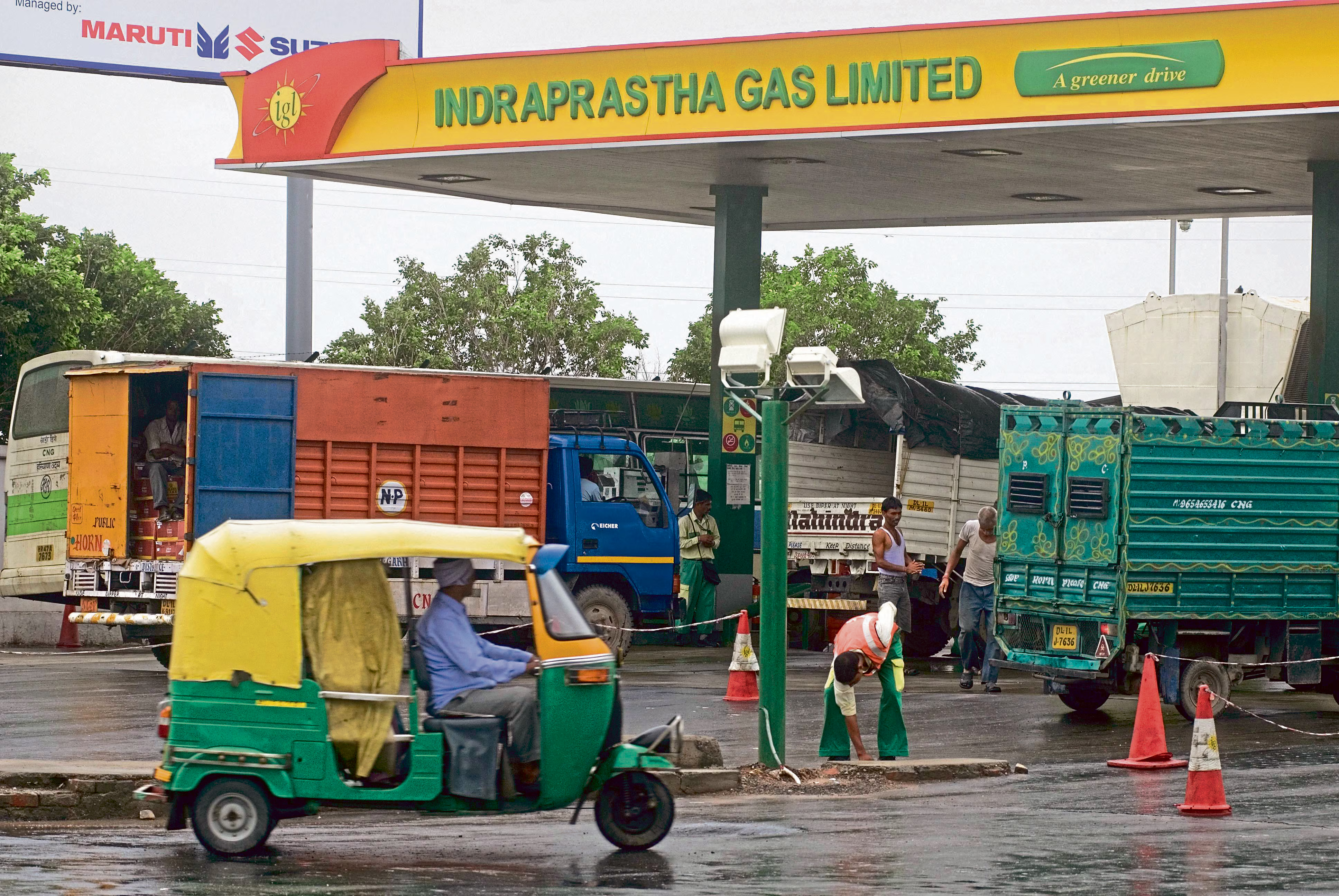
India's city gas distributors are absorbing a 21% profit decline despite 6% volume growth as the Strait of Hormuz crisis drives input costs beyond their ability to pass through regulated tariffs immediately. Indraprastha Gas Limited (IGL), the country's largest city gas retailer, saw total expenses rise to Rs 4,300.8 crore in Q4 FY26 as Iran's closure of the Strait of Hormuz since March 4 disrupted LNG flows and tightened gas supply. The company's EBITDA margins fell to Rs 4.8 per standard cubic metre (scm) from Rs 5.8 per scm, representing a 17% compression that highlights the structural lag between input cost spikes and tariff recovery in regulated markets. This timing mismatch where distributors absorb cost increases while awaiting regulatory approval for tariff adjustments is concentrating margin pressure across India's city gas sector.
The margin anatomy reveals why city gas distributors cannot absorb sustained input cost increases. IGL's gas costs rose 2.8% to Rs 36.8 per scm from Rs 35.8 per scm, but the company operates under regulated tariff structures that prevent immediate cost pass-through to consumers. A city gas distributor purchasing 10 million scm monthly at the increased cost faces an additional Rs 10 million monthly burden approximately Rs 120 million annually that cannot be recovered until regulatory authorities approve CNG price hikes. IGL managed to increase gas prices by Rs 3 per scm, helping pass on nearly 90% of the additional cost burden, but this adjustment came only in mid-May 2026, weeks after the cost spike began. The Rs 1.0 per scm margin compression across the sector represents roughly Rs 3.65 billion in quarterly earnings impact for India's major city gas distributors combined.
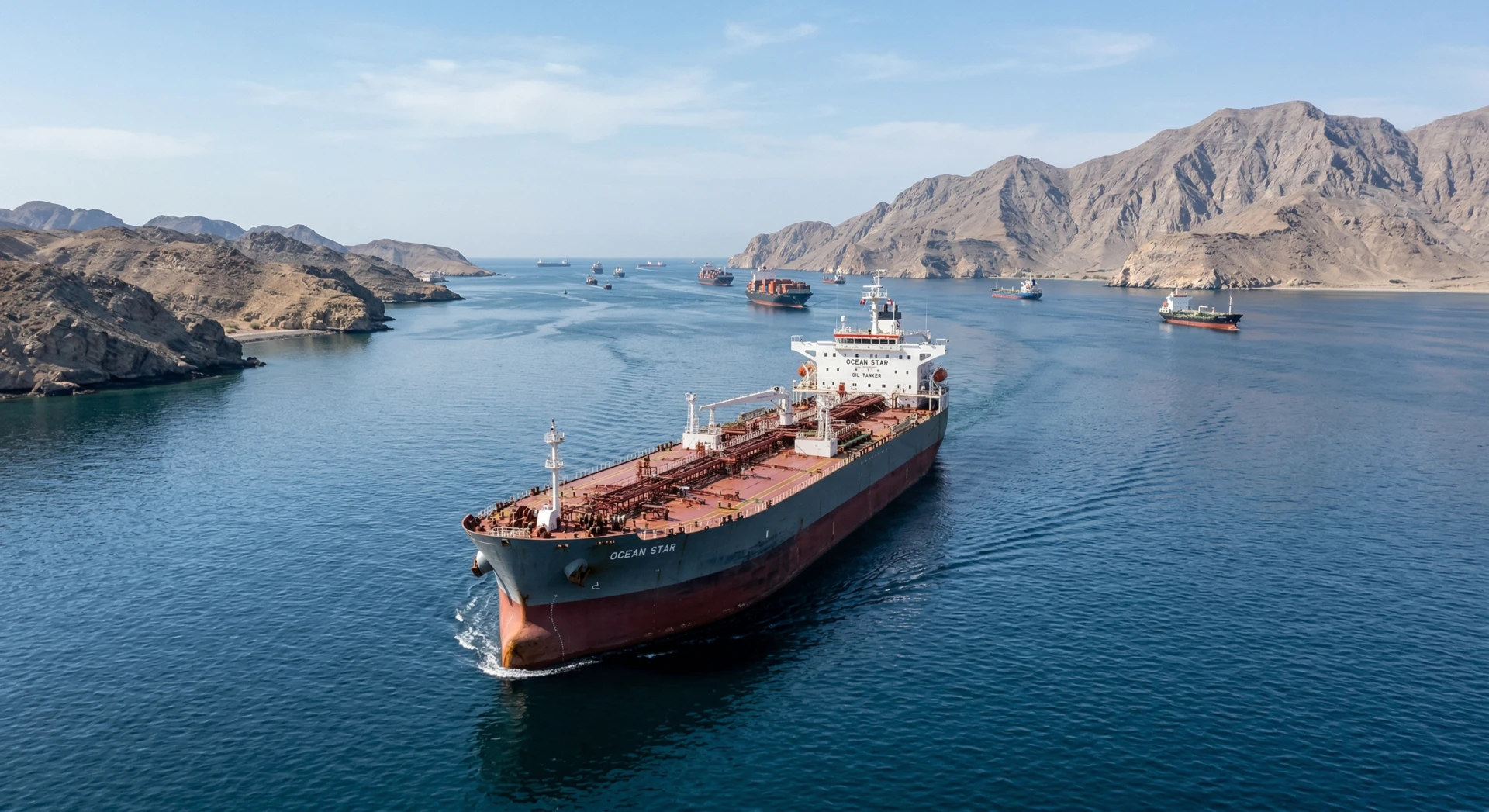
The physical supply chain disruption demonstrates how a single maritime chokepoint concentrates risk across Asian gas markets. The Strait of Hormuz normally handles about 25% of world seaborne oil trade and 20% of global LNG, with almost 90% of Gulf LNG destined for Asia. QatarEnergy, the world's largest LNG producer, halted production after Iranian attacks on facilities in Ras Laffan Industrial City, with missile strikes knocking out about 17% of LNG export capacity. For Indian city gas distributors sourcing LNG through long-term contracts linked to oil prices or spot markets, this supply disruption translates directly into higher input costs. Asian spot LNG prices (JKM) rose from low-USD 17s/MMBtu to low-USD 18s/MMBtu in late April before falling to high-USD 16s/MMBtu in early May, but the volatility creates procurement uncertainty that distributors cannot hedge without derivative access.
On the buy side, large integrated oil companies with derivative access can hedge against LNG price volatility through financial instruments. A major Indian refiner like Indian Oil Corporation can use JKM swaps cleared through CME Group to lock in forward prices, typically paying a premium of $0.50-1.00/MMBtu for this protection but securing predictable input costs. These operators can also diversify supply sources, contracting LNG from US Gulf Coast projects at Henry Hub plus liquefaction fees (currently around $8.80/MMBtu delivered to Asia) as an alternative to Gulf supply. For such buyers, the Iran crisis creates opportunity with JKM at recent levels, traders can earn $4.70/MMBtu gross margin before financing and risk costs by arbitraging US supply against Asian demand.
On the sell side, alternative LNG suppliers outside the Hormuz transit route gain significant pricing power. US LNG exporters like Cheniere Energy and Venture Global can command premiums of $2-4/MMBtu above previous contract terms when negotiating with Asian buyers seeking supply security. LNG project developers in the Atlantic Basin, Pacific Basin, and East Africa now operate where the absence of Hormuz dependency is itself a marketable differentiator, with projects that previously struggled against efficient Qatari supply now having a structural argument for long-term contract allocation from security conscious Asian buyers. Australian LNG producers benefit similarly, with their proximity to Asian markets and absence of geopolitical transit risk allowing premium pricing during supply disruptions.
For smaller regional city gas distributors without derivative access, the margin compression becomes an existential threat rather than a hedging opportunity. A mid-sized distributor like Gujarat Gas Company, serving industrial and residential customers across Gujarat state, cannot access CME-cleared swaps or negotiate alternative supply sources with the same leverage as integrated oil companies. These operators face the same input cost spikes but lack the financial instruments or procurement scale to manage volatility. Their practical equivalent involves bilateral supply agreements with domestic producers like ONGC, accepting price volatility in exchange for supply security, and adjusting inventory management to minimize exposure during price spikes. The regulatory approval process for tariff increases typically requiring 30-45 days for state utility commissions to review and approve means smaller distributors absorb the full cost impact during the approval window.
For intermediaries and traders, the margin concentration follows the arbitrage opportunities created by supply disruption. Physical LNG traders with storage access in Asian markets can profit from the price volatility by building inventory during supply disruptions and releasing it when spot prices spike. A trader with 100,000 cubic metres of LNG storage capacity purchasing at $16/MMBtu and selling at $18/MMBtu during supply tightness earns approximately $2 million gross margin per storage cycle. Financial traders without physical assets can profit through JKM-Henry Hub spread trades, capturing the price differential between Asian demand and US supply. The key constraint is timing the concentration of impact in 2026 and 2027 means rebalancing arrives after buyers have already absorbed the most acute disruption phase.
The broader market implications extend beyond immediate margin pressure to structural changes in LNG contracting. The IEA projects damage to Qatar's liquefaction infrastructure will delay the anticipated global LNG supply wave by at least two years, with cumulative supply loss of around 120 bcm between 2026 and 2030. This supply constraint will sustain higher LNG prices even after the immediate crisis resolves, particularly affecting Asian buyers who relied heavily on Gulf supply. LNG spot prices in Asia have already increased by over 140% since the crisis began, indicating that current cost pressures on city gas distributors represent the beginning rather than the peak of input cost inflation. The regulatory lag in tariff adjustments means distributors will face sustained margin compression until supply normalizes or regulatory frameworks adapt to volatile input costs.
For observers monitoring city gas distributor resilience, track the Gas Authority of India Limited's (GAIL) monthly pricing announcements, typically released on the first business day of each month, which set benchmark rates for domestic gas allocation. A sustained increase above Rs 40 per scm indicates that input cost pressures are becoming structural rather than temporary. Monitor also the Petroleum and Natural Gas Regulatory Board's tariff approval timelines any extension beyond the typical 45 day review period suggests regulatory recognition that current pricing mechanisms cannot accommodate volatile input costs. The spread between spot JKM prices and Indian domestic gas rates, when it exceeds $4/MMBtu for more than 60 days, signals that import-dependent distributors face margin compression that tariff adjustments cannot fully address within regulatory constraints.




'%3e%3cg id='Final-Copy-2_2_' transform='translate(1275.000000, 200.000000)'%3e%3cpath class='st0' d='M7.4,12.8h6.8l3.1-11.6H7.4C4.2,1.2,1.6,3.8,1.6,7S4.2,12.8,7.4,12.8z'/%3e%3c/g%3e%3c/g%3e%3c/g%3e%3cg id='final---dec.11-2020'%3e%3cg id='_x30_208-our-toggle' transform='translate(-1275.000000, -200.000000)'%3e%3cg id='Final-Copy-2' transform='translate(1275.000000, 200.000000)'%3e%3cpath class='st1' d='M22.6,0H7.4c-3.9,0-7,3.1-7,7s3.1,7,7,7h15.2c3.9,0,7-3.1,7-7S26.4,0,22.6,0z M1.6,7c0-3.2,2.6-5.8,5.8-5.8 h9.9l-3.1,11.6H7.4C4.2,12.8,1.6,10.2,1.6,7z'/%3e%3cpath id='x' class='st2' d='M24.6,4c0.2,0.2,0.2,0.6,0,0.8l0,0L22.5,7l2.2,2.2c0.2,0.2,0.2,0.6,0,0.8c-0.2,0.2-0.6,0.2-0.8,0 l0,0l-2.2-2.2L19.5,10c-0.2,0.2-0.6,0.2-0.8,0c-0.2-0.2-0.2-0.6,0-0.8l0,0L20.8,7l-2.2-2.2c-0.2-0.2-0.2-0.6,0-0.8 c0.2-0.2,0.6-0.2,0.8,0l0,0l2.2,2.2L23.8,4C24,3.8,24.4,3.8,24.6,4z'/%3e%3cpath id='y' class='st3' d='M12.7,4.1c0.2,0.2,0.3,0.6,0.1,0.8l0,0L8.6,9.8C8.5,9.9,8.4,10,8.3,10c-0.2,0.1-0.5,0.1-0.7-0.1l0,0 L5.4,7.7c-0.2-0.2-0.2-0.6,0-0.8c0.2-0.2,0.6-0.2,0.8,0l0,0L8,8.6l3.8-4.5C12,3.9,12.4,3.9,12.7,4.1z'/%3e%3c/g%3e%3c/g%3e%3c/g%3e%3c/g%3e%3c/svg%3e) Privacy Choices
Privacy Choices