.avif)
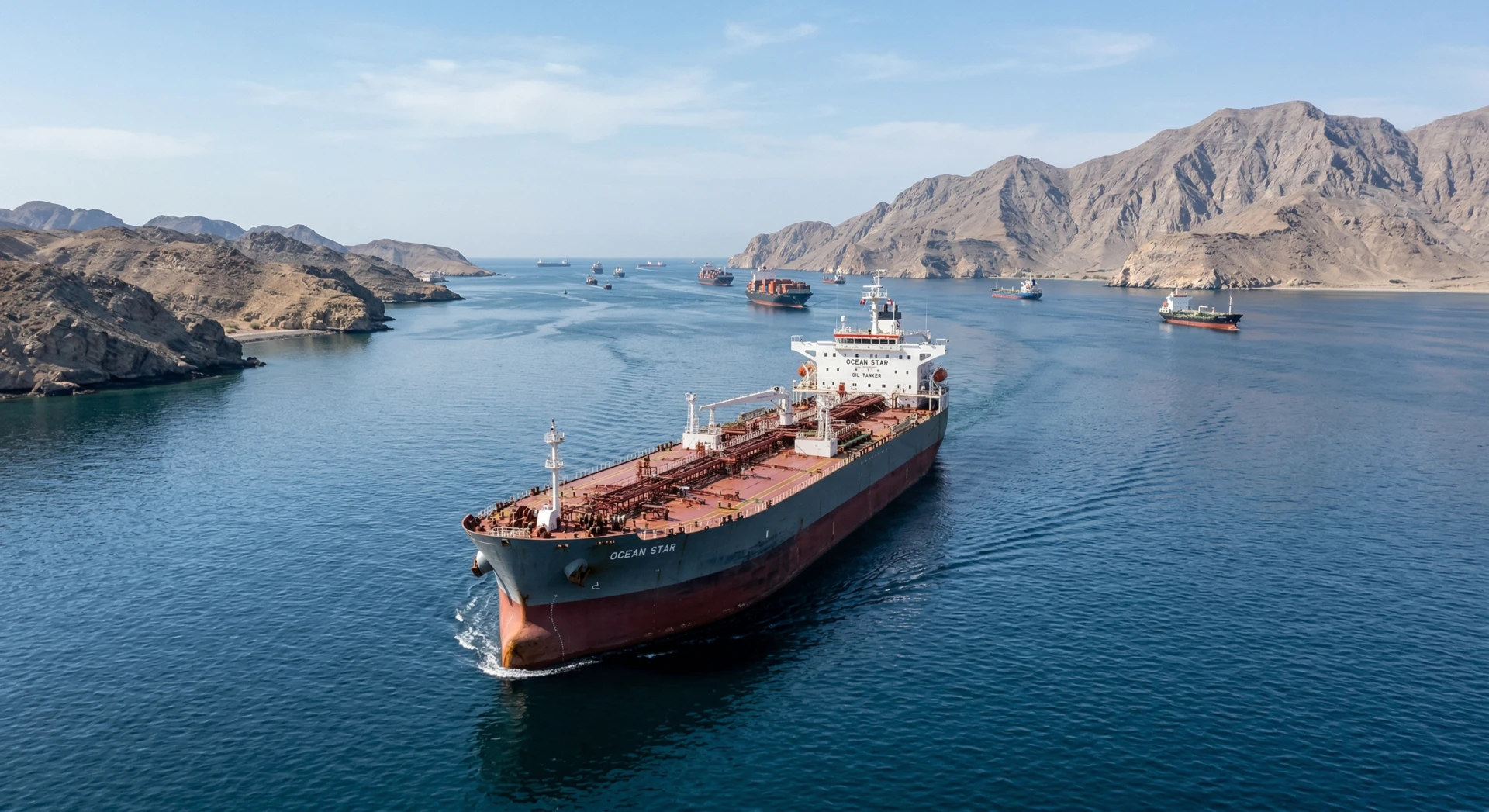
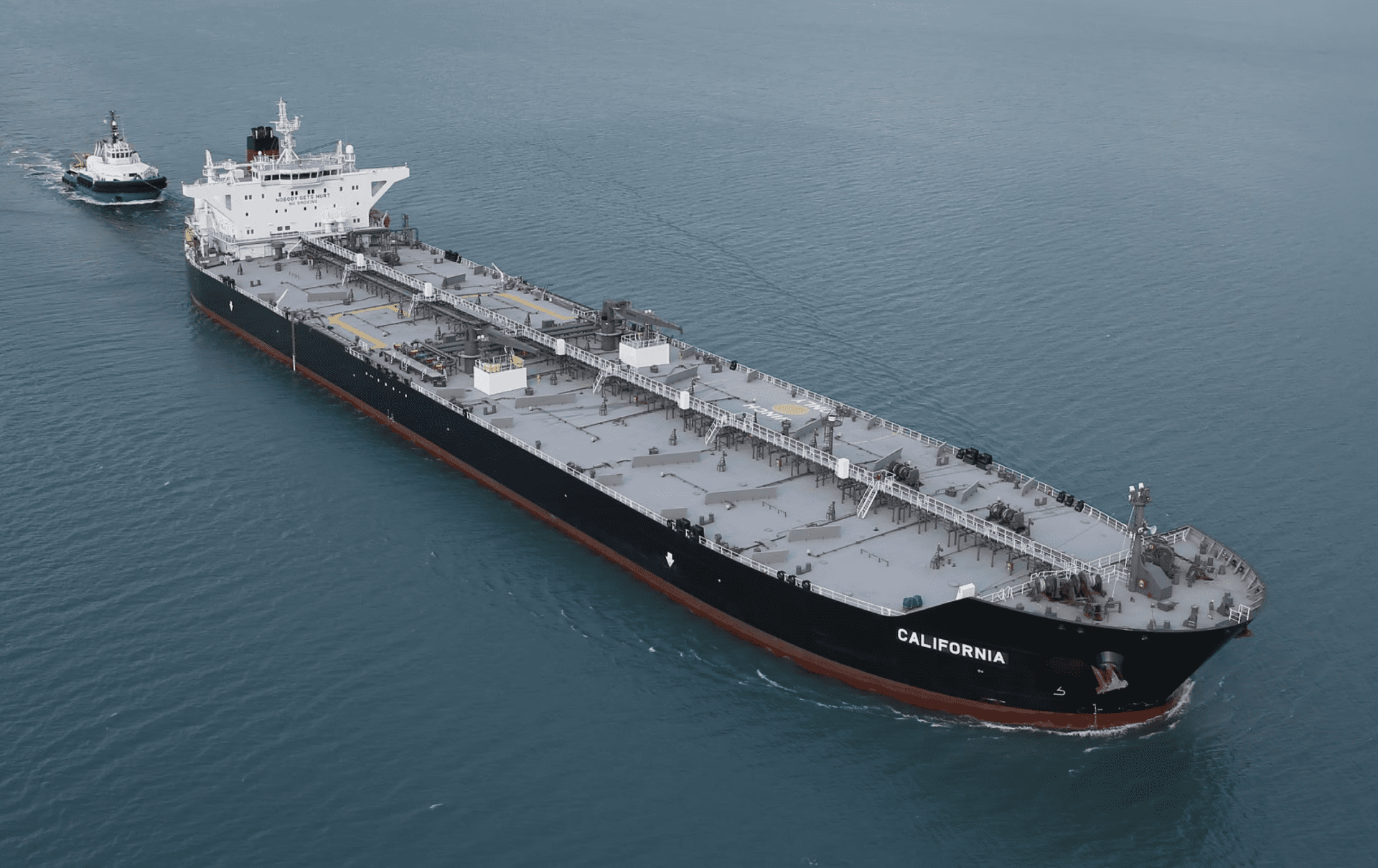
FOB crude sellers operating out of the Persian Gulf face margin compression of 15-25% if Iran activates a dual-chokepoint scenario affecting both the Strait of Hormuz and Bab el-Mandeb, according to reports that Iranian Parliament Speaker Mohammad Bagher Ghalibaf has signaled potential maritime pressure extending beyond Hormuz to the Red Sea connector. A typical Saudi crude cargo to Asia — 2 million barrels on a VLCC (Very Large Crude Carrier) — currently yields sellers margins of $8-12 per barrel after production costs, shipping, and insurance. Under dual chokepoint activation, freight costs alone would surge from the current $2.50/barrel to an estimated $6-8/barrel via the Cape of Good Hope route, while war risk insurance premiums could triple from $0.15/barrel to $0.45/barrel. The mechanism works through route multiplication: Asian buyers who currently receive Middle Eastern crude in 12-15 days via Suez would face 25-30 day voyages around Africa, creating vessel shortage and exploding day rates. For Saudi Aramco or other Gulf NOCs (National Oil Companies) selling term contracts, this compression hits immediately — the seller absorbs the freight differential while buyers maintain their agreed delivered prices.
The freight dimension reveals where value transfers in this scenario. VLCC owners — the vessel operators who control the physical movement of crude — emerge as the primary beneficiaries, with daily charter rates potentially spiking from current levels of $35,000-45,000 per day to $130,000-150,000 per day under dual chokepoint stress. This represents a fundamental shift in margin concentration from cargo owners to freight controllers. Euronav, Frontline, and other major tanker operators with large VLCC fleets would capture windfall profits exceeding $100,000 daily per vessel. Meanwhile, the Cape route's 6,000 additional nautical miles creates secondary beneficiaries: South African bunker fuel suppliers in Durban and Cape Town, who would see demand surge for the heavy fuel oil and marine gas oil needed for the extended voyage. The arithmetic is stark — a Cape route voyage burns approximately 1,800 additional tonnes of bunker fuel versus the Suez passage, at current prices adding $1.1 million in fuel costs per cargo. Smaller traders without long-term freight arrangements get squeezed hardest, facing spot charter rates that could exceed their entire cargo margins.
On the buy side, Asian refiners confront the most severe impact, with crude acquisition costs rising $4-6 per barrel solely from freight premiums. China's independent refiners (teapots) — already operating on thin margins of $3-5/barrel processing spreads — would see their economics turned upside down. Shandong Chambroad Petrochemicals or Hengli Petrochemical, buying 1-2 million barrel cargoes monthly, would face additional costs of $8-12 million per cargo solely from freight. These operators lack the derivative instruments and long-term contracts that protect integrated majors, forcing them to absorb spot market volatility. Indian refiners like Reliance or Indian Oil face a different calculation — their coastal refinery locations provide some flexibility to source alternative crudes from West Africa or the Americas, but at the cost of reconfiguring their crude slates and potentially lower yields. European refiners encounter parallel pressure, losing the Suez shortcut that typically delivers Middle Eastern crude to Rotterdam in 18-20 days, now facing 35-40 day voyages that tie up working capital and reduce delivery flexibility.
On the sell side, Gulf producers face asymmetric pressures depending on their infrastructure alternatives. Saudi Arabia possesses the East-West Pipeline (Petroline) terminating at Yanbu on the Red Sea, capable of transporting 7 million barrels daily — theoretically allowing Aramco to bypass Hormuz entirely by pumping crude across the kingdom to Red Sea export terminals. However, this solution only works if Bab el-Mandeb remains open; dual chokepoint activation would strand this bypass capacity. Iraq, pumping 3.3 million barrels daily from Basra terminals, lacks comparable pipeline alternatives and would absorb the full freight impact. The mechanism becomes self-reinforcing: as Gulf crude becomes more expensive delivered to Asia, West African producers like Angola's Sonangol or Nigeria's NNPC gain pricing power. Bonny Light or Angolan Cabinda crude — typically trading at premiums to Brent — would see their differentials expand dramatically as they become the marginal supply source for Asian refiners unwilling to pay Cape route premiums on Gulf grades. This arbitrage shift could persist months beyond any chokepoint resolution as supply chains adjust.
The structural constraint that most analysis ignores is Iran's limited operational control over Bab el-Mandeb execution. Unlike the Strait of Hormuz, where Iran's Revolutionary Guard Navy operates directly from bases in Bandar Abbas and controls the northern shore, Bab el-Mandeb intervention requires sustained Houthi cooperation and coordination. The Houthis — officially Ansar Allah — maintain their own tactical priorities focused on Gaza solidarity messaging and Saudi pressure, which may not align with broader Iranian chokepoint strategy. Their current Red Sea campaign has already reduced traffic by an estimated 40% since November 2023, but this represents opportunistic harassment rather than systematic closure. Iran would need to provide advanced anti-ship missiles, sophisticated radar systems, and real-time intelligence sharing to enable effective Bab el-Mandeb interdiction. The 20-kilometer strait width between Yemen and Djibouti creates different operational challenges than Hormuz's narrower 34-kilometer span — requiring different weapons systems and tactical approaches. Additionally, the presence of French, US, and Chinese naval forces in Djibouti complicates any sustained closure attempt, creating escalation risks that Iran may be unwilling to accept.
Large integrated traders with derivatives access can hedge against this scenario through freight derivative instruments and strategic storage positioning. Vitol, Trafigura, or Glencore typically maintain positions in Forward Freight Agreements (FFAs) — derivatives contracts that allow fixing future tanker charter rates. A large trader could buy VLCC FFAs for key routes like Persian Gulf-China at current rates around $40,000 daily, protecting against the $100,000+ spikes under dual chokepoint activation. These operators also maintain floating storage positions — chartered VLCCs used as temporary tanks — that become extremely valuable during supply disruptions. Additionally, major traders can activate alternative sourcing from their global portfolios: Vitol's West African crude positions or Trafigura's Latin American supply chains provide natural hedges against Gulf crude premium expansion. Smaller regional importers lack these sophisticated instruments and face binary choices: pay elevated freight premiums or halt procurement entirely. A mid-sized Indian fuel oil importer typically buying 500,000-barrel cargoes monthly cannot access FFA markets and must negotiate freight bilaterally with vessel owners who hold all pricing power during chokepoint stress.
The forward signal emerges through Baltic Exchange indices and bunker fuel demand patterns, providing 2-3 weeks advance warning of chokepoint activation. The Baltic Dirty Tanker Index (BDTI) — which measures VLCC charter rates globally — typically shows initial spikes when charterers begin positioning for alternative routes. Similarly, bunker fuel demand at Cape Town and Durban terminals provides early indication of route diversions, as ship operators place advance orders for the additional fuel required for extended Africa passages. Insurance markets offer another early indicator: war risk premiums quoted by Lloyd's of London syndicates typically begin rising 10-14 days before physical disruptions as underwriters price in escalating risks. For crude buyers, the practical deadline becomes the 25-30 day voyage time around Africa — decisions made today determine supply availability in late April/early May. Asian refiners maintaining typical 30-45 day crude inventory levels face immediate procurement pressure if chokepoint risks materialize, while European buyers with 45-60 day stock levels possess slightly more flexibility to await resolution or alternative supply arrangements.
.jpg)
'%3e%3cg id='Final-Copy-2_2_' transform='translate(1275.000000, 200.000000)'%3e%3cpath class='st0' d='M7.4,12.8h6.8l3.1-11.6H7.4C4.2,1.2,1.6,3.8,1.6,7S4.2,12.8,7.4,12.8z'/%3e%3c/g%3e%3c/g%3e%3c/g%3e%3cg id='final---dec.11-2020'%3e%3cg id='_x30_208-our-toggle' transform='translate(-1275.000000, -200.000000)'%3e%3cg id='Final-Copy-2' transform='translate(1275.000000, 200.000000)'%3e%3cpath class='st1' d='M22.6,0H7.4c-3.9,0-7,3.1-7,7s3.1,7,7,7h15.2c3.9,0,7-3.1,7-7S26.4,0,22.6,0z M1.6,7c0-3.2,2.6-5.8,5.8-5.8 h9.9l-3.1,11.6H7.4C4.2,12.8,1.6,10.2,1.6,7z'/%3e%3cpath id='x' class='st2' d='M24.6,4c0.2,0.2,0.2,0.6,0,0.8l0,0L22.5,7l2.2,2.2c0.2,0.2,0.2,0.6,0,0.8c-0.2,0.2-0.6,0.2-0.8,0 l0,0l-2.2-2.2L19.5,10c-0.2,0.2-0.6,0.2-0.8,0c-0.2-0.2-0.2-0.6,0-0.8l0,0L20.8,7l-2.2-2.2c-0.2-0.2-0.2-0.6,0-0.8 c0.2-0.2,0.6-0.2,0.8,0l0,0l2.2,2.2L23.8,4C24,3.8,24.4,3.8,24.6,4z'/%3e%3cpath id='y' class='st3' d='M12.7,4.1c0.2,0.2,0.3,0.6,0.1,0.8l0,0L8.6,9.8C8.5,9.9,8.4,10,8.3,10c-0.2,0.1-0.5,0.1-0.7-0.1l0,0 L5.4,7.7c-0.2-0.2-0.2-0.6,0-0.8c0.2-0.2,0.6-0.2,0.8,0l0,0L8,8.6l3.8-4.5C12,3.9,12.4,3.9,12.7,4.1z'/%3e%3c/g%3e%3c/g%3e%3c/g%3e%3c/g%3e%3c/svg%3e) Privacy Choices
Privacy Choices