.avif)
Crude oil traders operating in Middle East Gulf (MEG) routes face immediate margin elimination as the U.S. began blocking ships from entering or exiting Iranian ports in the Strait of Hormuz at 10am ET Monday, with a White House official confirming the blockade has taken effect. The blockade follows the collapse of U.S.-Iran peace talks in Islamabad, where Vice President Vance said the U.S. delegation would return home without a deal after Iran refused to agree not to seek or develop a nuclear weapon. WTI crude futures jumped to $104.32 from a previous close of $96.57, while Brent Oil futures rose to $102.38 from $95.20 — a $7.75 and $7.18 per barrel spike respectively that entirely erases operational margins for mid-sized regional crude traders without hedging instruments.
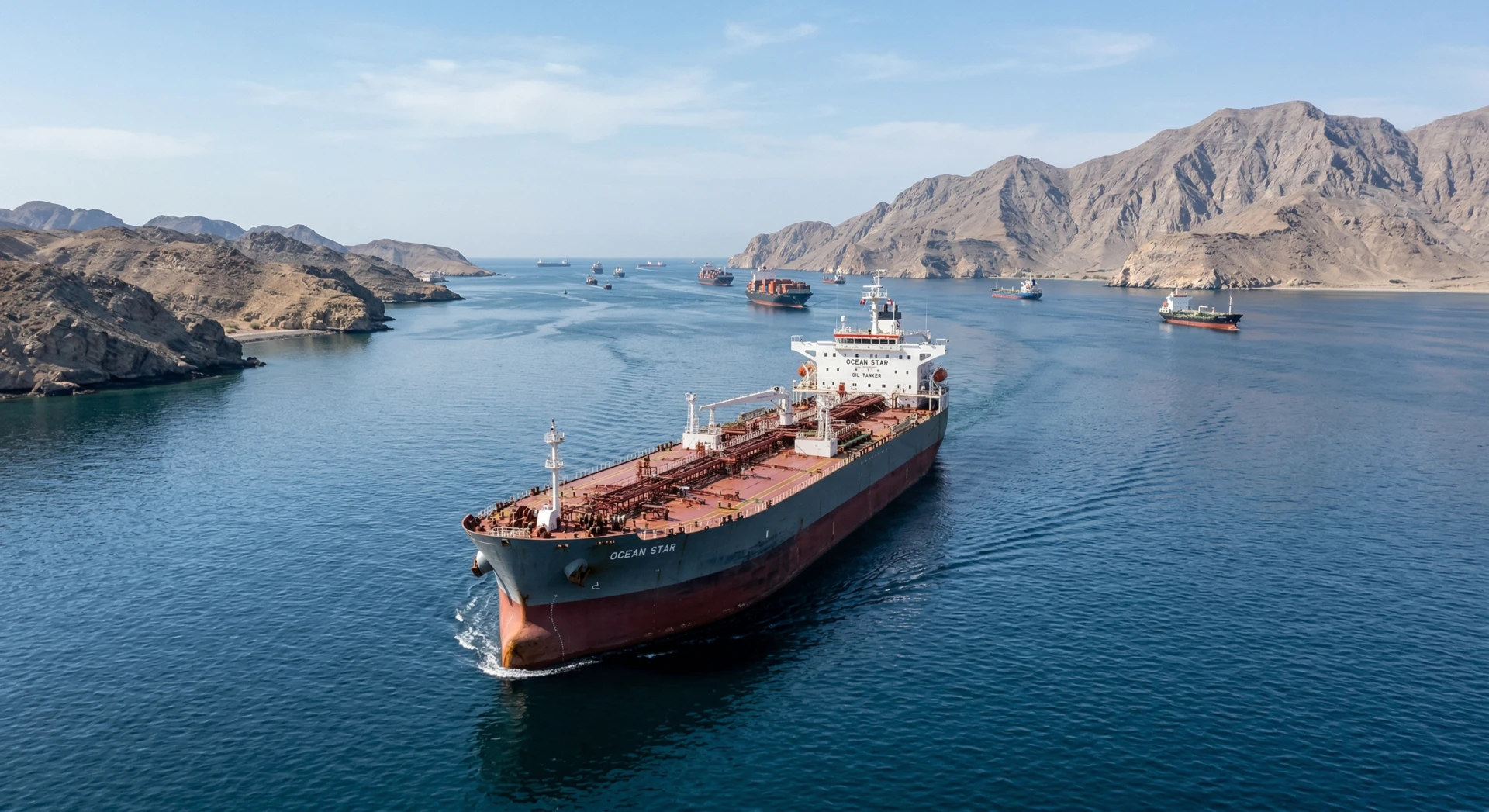
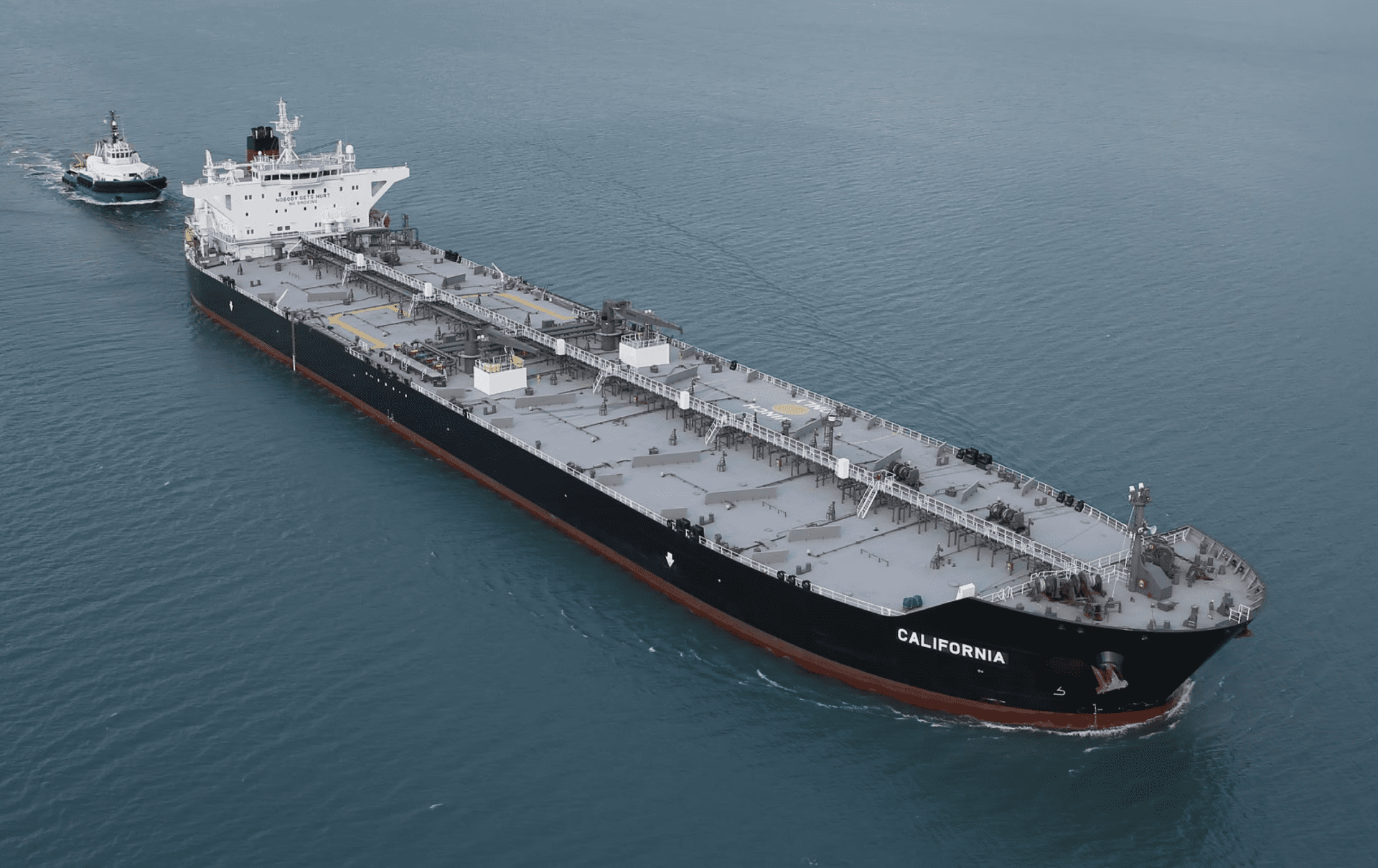
The Strait of Hormuz — a 33-kilometre-wide chokepoint through which roughly one-fifth of the world's oil supply flows daily — becomes the focal point where physical supply chain disruption meets financial market repricing. U.S. Central Command specified that American forces "will not impede freedom of navigation for vessels transiting the Strait of Hormuz to and from non-Iranian ports," with the blockade enforced "impartially against vessels of all nations entering or departing Iranian ports and coastal areas". This selective blockade creates a two-tier pricing structure where Iranian crude faces complete route closure while Saudi, UAE, and Kuwaiti exports maintain physical access but carry elevated risk premiums. For a VLCC (Very Large Crude Carrier — a supertanker capable of carrying 2 million barrels) loading at Ras Tanura, the vessel operator now captures both higher freight rates and geopolitical risk premia that previously concentrated in the cargo owner's margin.
MEG crude exporters without Iranian exposure gain immediate pricing power as buyers scramble for alternative supply sources. A Saudi Arabian Light cargo that previously competed with Iranian Heavy at Asian refineries now commands a $3-5/barrel premium purely from supply disruption, not quality differentials. Lloyd's List Intelligence analysts reported that Iran's Islamic Revolutionary Guard Corps "has imposed a de facto 'toll booth' regime in the Strait of Hormuz, requiring vessels to submit full documentation, obtain clearance codes and accept IRGC-escorted passage through a single controlled corridor" before the blockade began. The elimination of Iranian supply — approximately 2.5 million barrels per day of crude and condensate exports — forces Asian refiners to source from West African and Atlantic Basin alternatives, compressing the Brent-WTI spread as arbitrage flows redirect.
For large integrated traders — Vitol, Trafigura, a national oil company's trading arm — with derivatives access, the margin opportunity concentrates in time spreads and location arbitrage rather than outright crude trading. A Vitol trader can simultaneously purchase WTI Midland crude in Texas at current pricing, lock in Brent forward sales to Asian buyers, and capture the $8-12/barrel arbitrage that emerges when MEG supply tightens. The integrated trader's advantage stems from balance sheet capacity to finance floating storage, vessels to execute long-haul routes, and credit lines to hedge currency and freight exposure. Consider a specific trade structure: purchase 1 million barrels of WTI Midland at $105/barrel, charter a Suezmax tanker for $45,000/day on a 35-day voyage to Singapore, hedge currency exposure through dollar-yuan swaps, and deliver at $118/barrel equivalent Brent pricing. The gross margin of $13/barrel minus $1.50/barrel freight costs and $0.75/barrel financing yields approximately $10.75/barrel — roughly $10.75 million profit per cargo.
For smaller regional operators — mid-sized fuel importers, independent distributors, regional cooperatives — without derivatives access, the practical equivalent involves bilateral supply agreements with diversified MEG producers and inventory management rather than financial hedging. An independent fuel distributor in Thailand typically secures 60-day credit terms with Saudi Aramco Trading or UAE National Oil Company rather than spot purchases, providing natural price protection when markets spike. These operators adjust inventory strategies by increasing storage capacity utilization from 70% to 90%, extending supplier payment terms, and negotiating force majeure clauses that reference specific geopolitical events. The constraint is working capital — a regional distributor handling 50,000 barrels per month faces an additional $375,000 financing requirement when crude prices jump $7.50/barrel, often forcing reduced throughput rather than maintaining volumes at higher costs.
Freight becomes the decisive margin component as vessel capacity reallocates from disrupted MEG routes to longer Atlantic Basin alternatives. Oil prices immediately spiked again on news of the blockade, with the price of a barrel of Brent crude rising 8% to $104, but freight rates capture an independent premium as shipping patterns shift. A VLCC previously earning $18,000/day on the 7-day Ras Tanura to Singapore route now commands $55,000/day for the 25-day Corpus Christi to Singapore alternative. The additional $37,000/day over 18 extra days yields $666,000 incremental freight revenue per voyage. This freight premium accrues entirely to vessel operators — primarily Frontline, Euronav, and other independent tanker owners — not to crude producers or buyers. The freight market structure means that even if Iranian exports resume, tanker owners retain pricing power as Asian buyers maintain diversified supply chains to avoid future Hormuz dependency.
Financing structures determine which operators capture margin as credit availability tightens for Iranian-related transactions. Letters of credit (LCs) — bank guarantees that payment will be made once shipping documents are presented — become unavailable for any Iranian port destinations, forcing cash-only transactions that smaller traders cannot finance. Iran has indicated that it might seek to impose a toll on all ships passing through the strait under a long-term peace deal, creating permanent counterparty risk that banks factor into all MEG-related credit facilities. A regional trading house with $50 million credit lines discovers that 40% becomes unavailable for MEG trades due to bank risk limits, forcing reduced position sizes and higher financing costs for remaining transactions. Trade finance rates for MEG crude increase from LIBOR+150 basis points to LIBOR+400 basis points, adding approximately $1.25/barrel to carrying costs for typical 60-day payment terms.
Ultimatum-driven energy diplomacy creates structural repricing beyond immediate supply disruption as markets incorporate the precedent of political deadlines determining physical flows. Trump previously threatened that "a whole civilization will die tonight" if no deal was reached by his Tuesday evening deadline, establishing a pattern where U.S. energy policy operates through binary ultimatums rather than graduated economic pressure. This precedent means future Middle East crude carries a permanent political risk premium — traders must price the possibility that any regional producer could face similar ultimatum-driven shutdowns with 24-48 hours notice. The risk premium adds $2-4/barrel to all MEG crude grades regardless of specific producer geopolitical alignment, as buyers cannot distinguish between "safe" and "risky" suppliers when ultimatum diplomacy can target any regional government.
Physical storage becomes a strategic asset as buyers prepare for supply chain interruptions that financial hedging cannot address. Asian strategic petroleum reserves (SPRs) — government-controlled emergency stocks — provide the only buffer against complete supply cutoffs when shipping routes close entirely. Americans are already frustrated by high prices for food and housing and are now paying more than $4 a gallon on average for gasoline, with rising oil prices spiking the inflation rate to 3.3% in March from 2.4% in February. Countries with limited SPR capacity — Thailand, Vietnam, Bangladesh — face immediate energy security vulnerabilities when geopolitical events eliminate supply sources faster than alternative arrangements can be secured. The strategic implication is that energy importers must maintain higher inventory levels as insurance against supply disruption, increasing working capital requirements and storage infrastructure investments across Asia-Pacific markets.
Atlantic Basin crude exporters — Norway, Brazil, Guyana, U.S. shale producers — capture pricing power as Asian buyers shift from MEG dependence to diversified sourcing. Norwegian Brent crude typically trades at $2-3/barrel discount to Dubai crude for Asian delivery due to longer shipping distances, but supply disruption inverts this relationship. Equinor can now charge $1-2/barrel premium for Brent deliveries to South Korea as buyers prioritize supply security over transportation costs. Brazilian Lula crude faces similar demand surge as Petrobras redirects exports from European refineries to Asian markets. U.S. shale producers benefit most as their production costs remain unchanged while pricing reflects Middle East risk premiums — a Permian Basin operator producing at $45/barrel captures the full $60+/barrel risk premium as incremental margin.
The petrochemical sector faces dual disruption as both feedstock costs increase and Israeli strikes have taken 85% of Iran's petrochemical exports offline, with devastating strikes on utility plants taking more than 80% of capacity offline and repairs potentially taking years, causing Iran to lose a key export revenue stream. Naphtha — the primary petrochemical feedstock — typically correlates with crude oil but maintains independent supply-demand dynamics based on refinery operations and cracking capacity. With Iranian petrochemical exports eliminated, global naphtha prices spike independently of crude oil, creating margin compression for petrochemical producers worldwide. A mid-sized Korean petrochemical plant faces feedstock cost increases of $150-200/tonne while competing with remaining global producers for reduced naphtha availability. The sector concentration means that Iranian supply elimination disproportionately impacts global markets — Iran previously supplied approximately 15% of Middle East petrochemical exports, forcing buyers to source from higher-cost European and Asian producers.
Traders and intermediaries concentrate margin in volatility rather than directional crude oil exposure as price swings create opportunities independent of fundamental supply-demand balance. Commodity trading houses profit from bid-offer spreads that widen during volatile periods — spreads that typically range $0.25-0.50/barrel expand to $1.50-2.00/barrel when geopolitical events create information asymmetries between buyers and sellers. A Geneva-based trading house can simultaneously quote $103.50/barrel bid and $105.50/barrel offer for Brent crude when political uncertainty creates 2% intraday volatility, capturing margin on matched transactions without directional risk exposure. The trading opportunity requires real-time information flows, sophisticated risk management systems, and credit facilities to intermediate between end users who cannot efficiently price political risk and producers who need immediate cash flows regardless of market volatility.
Observers should monitor the WTI-Brent spread compression as the most reliable indicator of how quickly Asian buyers shift from MEG to Atlantic Basin sourcing. The spread typically ranges $3-7/barrel with Brent premium reflecting transportation costs to Asian markets, but supply disruption can invert this relationship when buyers prioritize access over transportation economics. If the spread compresses below $2/barrel within 10 trading days, it signals permanent demand destruction for MEG crude as Asian refineries reconfigure operations around Atlantic Basin alternatives. Conversely, spread widening above $8/barrel indicates that MEG supply disruption is temporary and buyers expect normal trade patterns to resume within 30-60 days. The spread serves as a real-time referendum on whether market participants believe Hormuz closure represents tactical negotiating pressure or strategic energy realignment.

.jpg)

'%3e%3cg id='Final-Copy-2_2_' transform='translate(1275.000000, 200.000000)'%3e%3cpath class='st0' d='M7.4,12.8h6.8l3.1-11.6H7.4C4.2,1.2,1.6,3.8,1.6,7S4.2,12.8,7.4,12.8z'/%3e%3c/g%3e%3c/g%3e%3c/g%3e%3cg id='final---dec.11-2020'%3e%3cg id='_x30_208-our-toggle' transform='translate(-1275.000000, -200.000000)'%3e%3cg id='Final-Copy-2' transform='translate(1275.000000, 200.000000)'%3e%3cpath class='st1' d='M22.6,0H7.4c-3.9,0-7,3.1-7,7s3.1,7,7,7h15.2c3.9,0,7-3.1,7-7S26.4,0,22.6,0z M1.6,7c0-3.2,2.6-5.8,5.8-5.8 h9.9l-3.1,11.6H7.4C4.2,12.8,1.6,10.2,1.6,7z'/%3e%3cpath id='x' class='st2' d='M24.6,4c0.2,0.2,0.2,0.6,0,0.8l0,0L22.5,7l2.2,2.2c0.2,0.2,0.2,0.6,0,0.8c-0.2,0.2-0.6,0.2-0.8,0 l0,0l-2.2-2.2L19.5,10c-0.2,0.2-0.6,0.2-0.8,0c-0.2-0.2-0.2-0.6,0-0.8l0,0L20.8,7l-2.2-2.2c-0.2-0.2-0.2-0.6,0-0.8 c0.2-0.2,0.6-0.2,0.8,0l0,0l2.2,2.2L23.8,4C24,3.8,24.4,3.8,24.6,4z'/%3e%3cpath id='y' class='st3' d='M12.7,4.1c0.2,0.2,0.3,0.6,0.1,0.8l0,0L8.6,9.8C8.5,9.9,8.4,10,8.3,10c-0.2,0.1-0.5,0.1-0.7-0.1l0,0 L5.4,7.7c-0.2-0.2-0.2-0.6,0-0.8c0.2-0.2,0.6-0.2,0.8,0l0,0L8,8.6l3.8-4.5C12,3.9,12.4,3.9,12.7,4.1z'/%3e%3c/g%3e%3c/g%3e%3c/g%3e%3c/g%3e%3c/svg%3e) Privacy Choices
Privacy Choices