.avif)
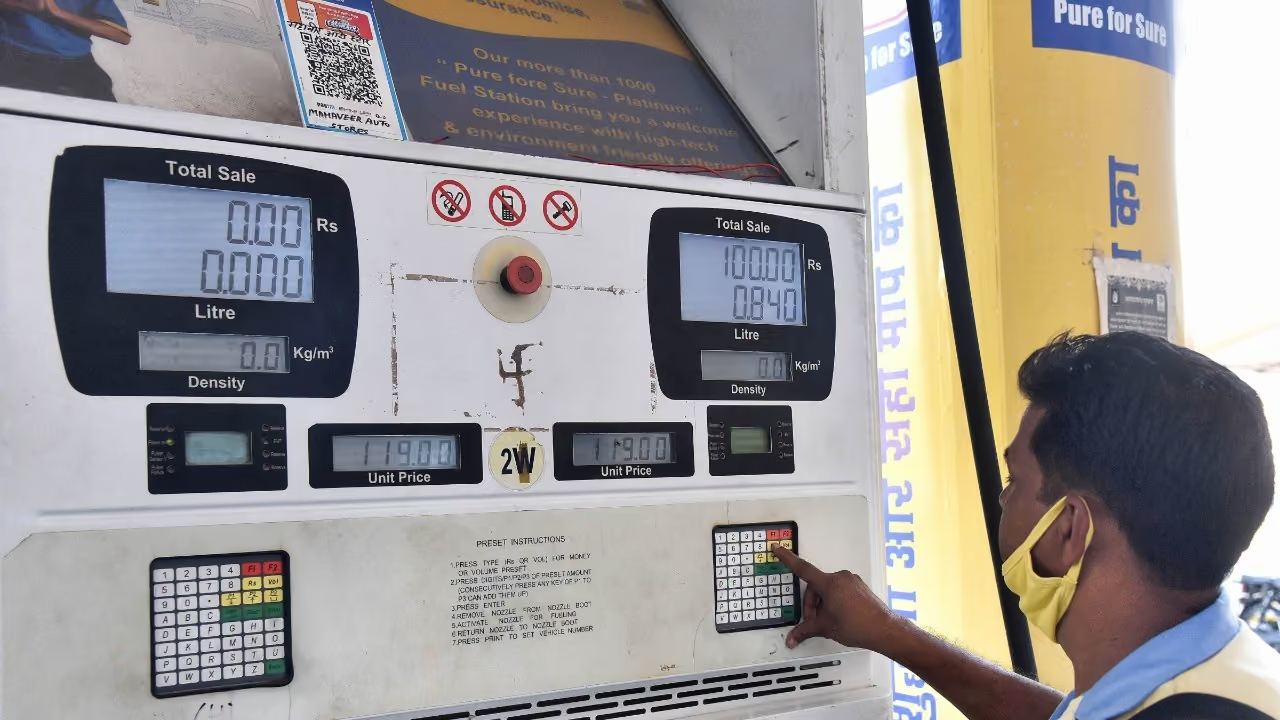
India's three state-run oil marketing companies Indian Oil Corporation, Bharat Petroleum, and Hindustan Petroleum face a combined under recovery burden of Rs 2.18 lakh crore (approximately $26 billion), and Union Petroleum Minister Hardeep Singh Puri confirmed on 2 July 2026 that no retail price cut is coming. For any buyer or counterparty pricing against OMC retail benchmarks, that ceiling is locked. For the OMCs themselves, every barrel sold at current administered prices prices set by government policy rather than market forces continues to crystallise a loss relative to what a market-linked refiner would charge. The commercial consequence is not abstract: at India's approximate throughput of 250 million metric tonnes per annum (MMTPA), even a $2 per barrel implied margin gap between OMC administered prices and export-parity prices compounds into billions of dollars in annual value destruction. The minister's statement is not a policy adjustment it is a confirmation that the constraint is structural and the timeline for relief is indefinite.
The mechanism behind the freeze begins with how OMCs purchase crude. India's state refiners buy crude oil the unprocessed petroleum extracted from the ground before any refining primarily on term contracts settled in arrears, meaning they are still carrying inventories procured during periods when Brent crude (the North Sea benchmark that prices most international oil trade) and Dubai crude (the Middle East marker used for Asian supply) were materially higher. Under-recovery the gap between the cost of producing and distributing a refined fuel and the price the government allows OMCs to charge at the pump is not a quarterly shortfall. At Rs 2.18 lakh crore accumulated, it represents years of below cost selling, now sitting on OMC balance sheets as a liability that must eventually be resolved through one of three mechanisms: a direct government recapitalisation transfer, equity dilution (issuing new shares that dilute existing shareholders), or a retail price correction. The minister's language rules out the third option for now. The first two remain unconfirmed.
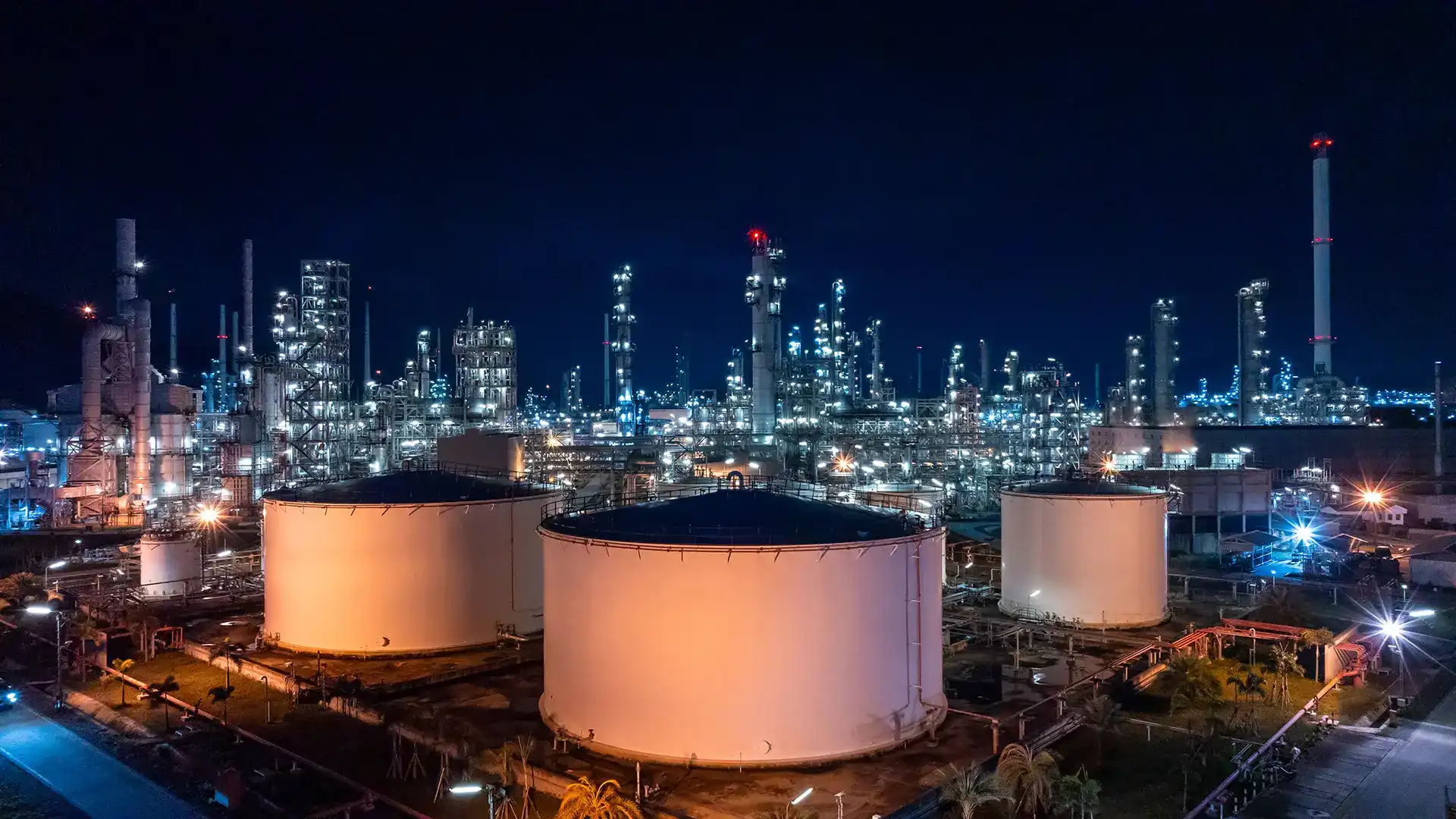
The margin anatomy here is unusually legible. Consider Indian Oil Corporation processing a 1 million barrel crude parcel bought six months ago at $88 per barrel Brent equivalent, now trading at approximately $72–75. The inventory loss on that parcel alone before a litre reaches a pump runs to roughly $13–16 per barrel, or $13–16 million on a single cargo. Spread across IOC's annual crude intake of approximately 70 MMTPA, the scale of legacy high-cost inventory drag becomes apparent. Meanwhile, Reliance Industries' Jamnagar complex the world's largest refining site by capacity, processing approximately 1.4 million barrels per day operates without OMC price obligations, exports a significant share of its refined output at market prices, and thus captures the spread between cheaper current cycle crude and export-parity product prices. Private refiners gain implicit margin protection every day OMC retail ceilings hold: their domestic sales price to dealers at or near the OMC ceiling, while their cost base reflects current, lower crude.
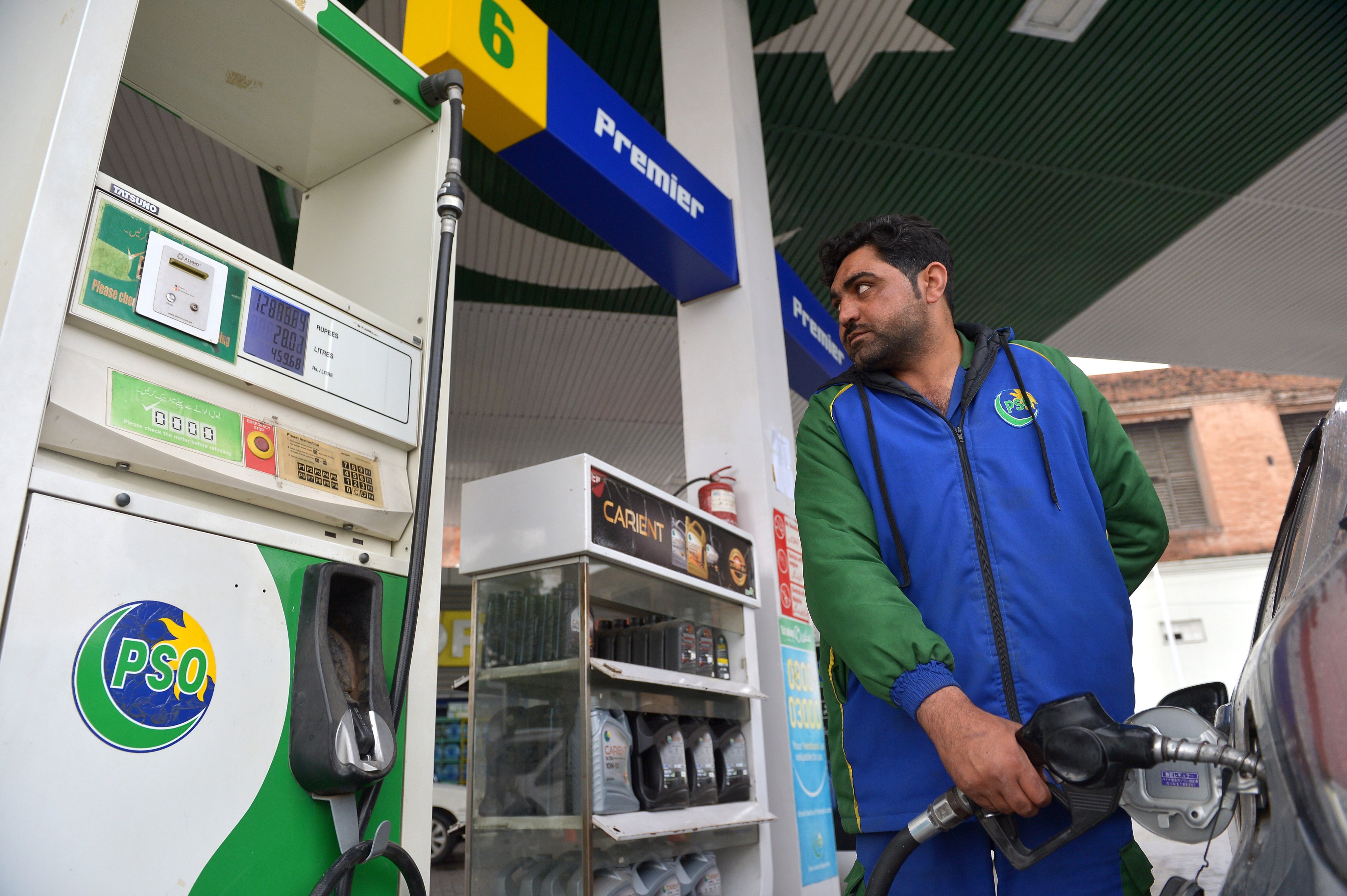
On the buy side, industrial diesel consumers fleet operators, power generators, agricultural users procuring through OMC retail channels pay a price that is, paradoxically, more stable than market dynamics would produce. That stability has a hidden cost: it is funded by OMC balance sheet impairment rather than by government budget transfers, which means the subsidy is invisible in headline fiscal accounts but acutely visible in OMC credit ratings and borrowing costs. A large Indian logistics company locking in diesel supply contracts for the next 12 months faces less price volatility risk than a comparable European peer, but faces a different risk: the sudden, politically triggered price correction that could arrive when the government determines the recapitalisation is no longer deferrable. On the sell side, OMCs are not neutral conduits they are financially constrained sellers, and that constraint directly limits their capacity to fund the refinery expansion projects the minister is simultaneously crediting as the sector's resilience story.
For large integrated operators a national oil company's trading arm, or a major international trader supplying crude to Indian refiners on term contracts the signal from the minister's statement is clear: OMC offtake volumes at existing price structures remain stable, so crude supply contracts to IOC, BPCL, and HPCL are not at immediate renegotiation risk. The hedging instrument of relevance here is the Brent-Dubai spread the differential between North Sea and Middle East crude prices which determines the landed cost of the Middle East grades (Arab Light, Arab Medium, Urals) dominating India's current import mix. At a Brent-Dubai spread of approximately $2–3 per barrel, Middle East crude remains competitive for Indian refiners, and no route shift is imminent. For a smaller regional fuel distributor or state cooperative without derivatives access, the practical equivalent is simpler: lock bilateral supply terms for 90 day windows rather than spot-priced arrangements, accepting a modest premium for price certainty in a period where any politically driven OMC price correction would be abrupt rather than gradual.
The resilience narrative the minister advances that not a single fuel outlet ran dry during Hormuz related disruption, and that India's network of approximately 1.07 lakh (107,000) retail outlets absorbed the shock is operationally credible. India has diversified its crude import mix significantly toward Russian Urals and multiple Middle East grades, reducing single-source dependency. Refining capacity expansion to 309.5 MMTPA by 2030, up from current levels, signals real downstream investment. But physical supply resilience and financial resilience are not the same variable. An OMC sector carrying $26 billion in under-recoveries, simultaneously asked to fund greenfield refinery projects, is being required to service two obligations from one constrained balance sheet. If crude prices spike again say, a return to $90+ Brent before recapitalisation occurs, OMCs face a compounding crisis: high-cost legacy inventory, no political headroom to raise retail prices, and insufficient internal capital for capacity expansion. The headline stability masks a balance sheet that is one crude-price cycle away from acute stress.
Observers should track two signals over the next 30–45 days. First, watch for any announcement of government equity infusion or budgetary transfer to OMCs in the Union Budget cycle a recapitalisation move would alter the margin calculus immediately and could precede a retail price adjustment. Second, monitor the IOC, BPCL, and HPCL quarterly earnings releases due in late July 2026: if implied refining margins the gross refining margin, or GRM, which measures profit per barrel of crude processed fall below $4–5 per barrel for any of the three, the financial constraint tightens to a level where political deferral of a price correction becomes harder to sustain. The GRM figures, reported in each company's investor presentation, are the most unambiguous single indicator of whether the minister's 'not feasible now' holds into Q3 2026 or begins to fracture under balance-sheet pressure.

.jpg)

'%3e%3cg id='Final-Copy-2_2_' transform='translate(1275.000000, 200.000000)'%3e%3cpath class='st0' d='M7.4,12.8h6.8l3.1-11.6H7.4C4.2,1.2,1.6,3.8,1.6,7S4.2,12.8,7.4,12.8z'/%3e%3c/g%3e%3c/g%3e%3c/g%3e%3cg id='final---dec.11-2020'%3e%3cg id='_x30_208-our-toggle' transform='translate(-1275.000000, -200.000000)'%3e%3cg id='Final-Copy-2' transform='translate(1275.000000, 200.000000)'%3e%3cpath class='st1' d='M22.6,0H7.4c-3.9,0-7,3.1-7,7s3.1,7,7,7h15.2c3.9,0,7-3.1,7-7S26.4,0,22.6,0z M1.6,7c0-3.2,2.6-5.8,5.8-5.8 h9.9l-3.1,11.6H7.4C4.2,12.8,1.6,10.2,1.6,7z'/%3e%3cpath id='x' class='st2' d='M24.6,4c0.2,0.2,0.2,0.6,0,0.8l0,0L22.5,7l2.2,2.2c0.2,0.2,0.2,0.6,0,0.8c-0.2,0.2-0.6,0.2-0.8,0 l0,0l-2.2-2.2L19.5,10c-0.2,0.2-0.6,0.2-0.8,0c-0.2-0.2-0.2-0.6,0-0.8l0,0L20.8,7l-2.2-2.2c-0.2-0.2-0.2-0.6,0-0.8 c0.2-0.2,0.6-0.2,0.8,0l0,0l2.2,2.2L23.8,4C24,3.8,24.4,3.8,24.6,4z'/%3e%3cpath id='y' class='st3' d='M12.7,4.1c0.2,0.2,0.3,0.6,0.1,0.8l0,0L8.6,9.8C8.5,9.9,8.4,10,8.3,10c-0.2,0.1-0.5,0.1-0.7-0.1l0,0 L5.4,7.7c-0.2-0.2-0.2-0.6,0-0.8c0.2-0.2,0.6-0.2,0.8,0l0,0L8,8.6l3.8-4.5C12,3.9,12.4,3.9,12.7,4.1z'/%3e%3c/g%3e%3c/g%3e%3c/g%3e%3c/g%3e%3c/svg%3e) Privacy Choices
Privacy Choices