.avif)
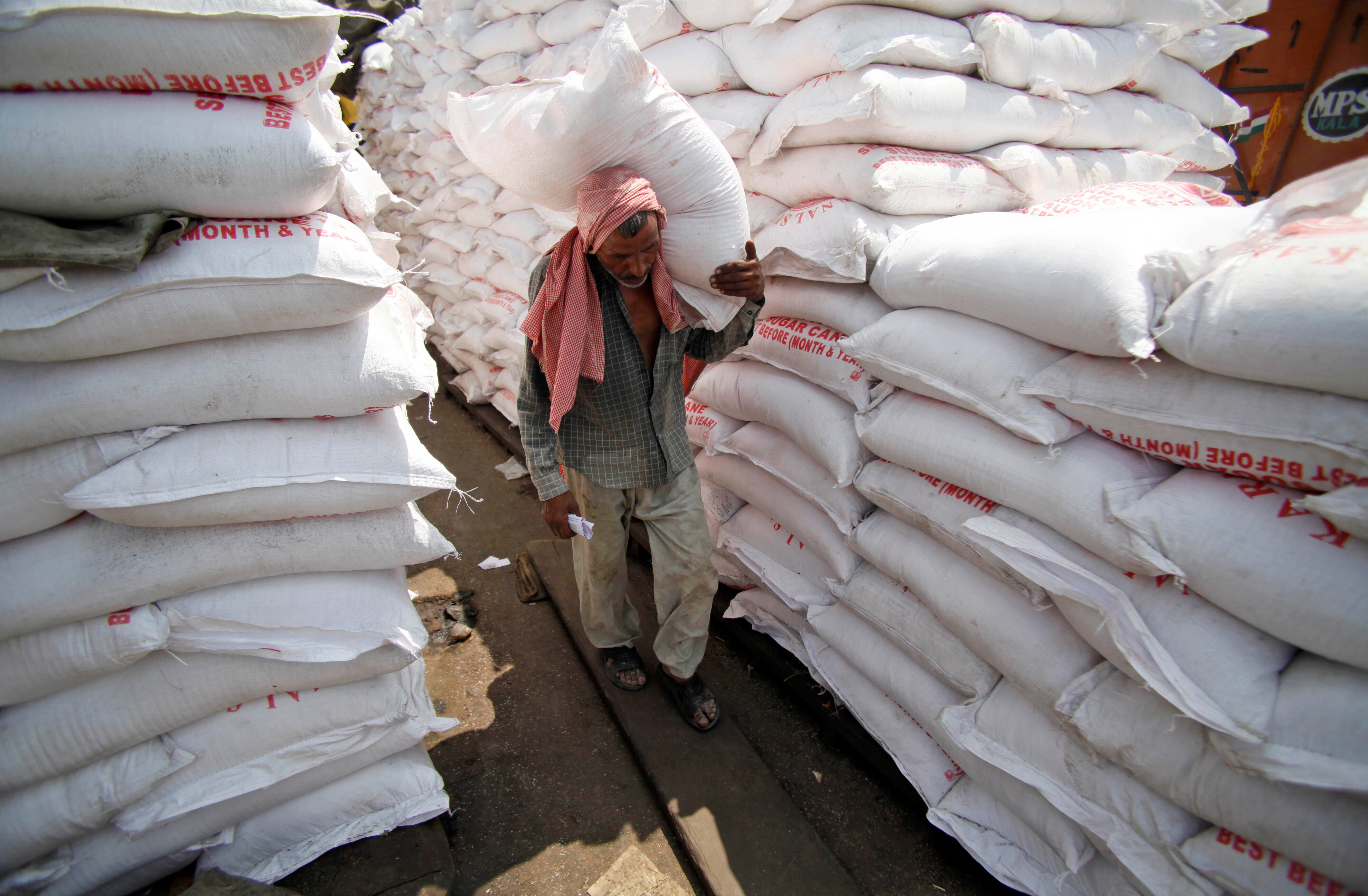
India's sugar import buyers across Asia, Africa, and the Middle East face a structural supply gap of 5–8 million metric tonnes per season beginning in the 2026/27 crop year, with no single alternative origin capable of replacing Indian volumes at equivalent cost or timeline.
El Niño the periodic warming of Pacific Ocean surface temperatures that suppresses monsoon rainfall across South Asia is forecast to weaken India's 2026 monsoon to its lowest intensity in more than a decade. June rainfall across key cane growing states is already running more than 40% below seasonal norms in several regions. This is not a short-cycle weather event. El Niño conditions typically persist across two to three agricultural seasons, meaning the planting decisions made right now or not made cascade forward into mill crush volumes through 2027 and potentially 2028. A farmer in Maharashtra's Sangli district, one of India's primary sugarcane belts, has already postponed planting long-duration cane varieties in favour of soybeans. That individual decision, replicated across hundreds of thousands of smallholder plots, is the mechanism through which a meteorological forecast becomes a global commodity supply event.
India's export absence is not simply a weather story. The country's accelerating ethanol blending programme a national mandate requiring petrol to contain a rising proportion of bioethanol, targeting 20% blending by 2030 is structurally diverting sugarcane and cane byproducts away from sugar production toward fuel. Ethanol is produced either from cane juice directly or from B-heavy molasses (a thick syrup drawn off early in the refining process, before full sugar crystallisation). Each litre of ethanol diverted from the refining chain represents cane that will not become exportable sugar. Analysts estimate ethanol mandates are already diverting the equivalent of 30–40% of cane throughput from sugar output. When weather compresses the total cane crop and policy simultaneously redirects a larger share of what remains, the arithmetic of exportable surplus collapses quickly.
To understand the margin anatomy, consider what India's export withdrawal means for a mid-sized Asian sugar refinery a Bangladeshi or Indonesian operator, for instance that has historically sourced 60,000–80,000 tonnes of raw sugar per season from Indian origin. Indian raw sugar has typically been delivered CIF (cost, insurance, and freight meaning the seller bears the cost of getting the cargo to the buyer's port) at approximately $20–40 per metric tonne below comparable Brazilian or Thai raw on equivalent quality. With India sidelined, that buyer must now source from Brazil's Center-South region. The freight difference is not trivial. India to Bangladesh is roughly 2,000 nautical miles; Brazil's Santos port to Chittagong is approximately 12,000 nautical miles. At current bulk sugar freight rates, the additional distance adds $15–25 per metric tonne to CIF cost. On a 60,000 tonne cargo, that is $900,000 to $1.5 million in additional freight per shipment before accounting for the loss of the Indian origin price discount. The total landed cost uplift for this buyer is $35–65/MT, or $2.1–3.9 million per annual supply programme. That is not a rounding error. That is a procurement budget line.
On the sell side, Brazilian sugar mills and the large commodity houses Sucden, Louis Dreyfus, Raízen, and Copersucar's trading arm with Brazilian origin books are the structural beneficiaries. Exportable Brazilian surplus that previously competed with Indian volumes at a price discount now faces no Indian competition for at least three seasons. Analysts estimate this dynamic supports a $15–30/MT price uplift on Brazilian origin exportable sugar, potentially adding $500 million to $1.5 billion to aggregate Brazilian mill revenues annually at scale. The critical constraint is that Brazil cannot conjure additional supply mid-cycle. Brazil's Center-South crushing season runs approximately April to November; the crop is agronomically fixed at planting. Furthermore, Brazil's own domestic ethanol blending mandates mean mills are continuously arbitraging between sugar and ethanol production in real time, responding to the sugar ethanol parity the price relationship determining whether it is more profitable to crystallise sugar or ferment ethanol. Strong international sugar prices pull more Brazilian cane toward sugar; weak oil prices pull it back toward ethanol. The floor on available Brazilian export volume is not unlimited.
Thailand, the other frequently cited alternative origin, offers limited relief. Thai mills have already committed the majority of the 2025/26 crop forward selling it in advance via forward contracts to Asian refiners at prices negotiated months ago. There is no meaningful spot availability to redirect toward buyers displaced from Indian supply. Thailand's total annual export capacity of roughly 8–10 million tonnes is substantially smaller than India's typical 5–8 million tonne seasonal export programme, and Thai crop performance itself carries El Niño exposure. The substitution story Brazil and Thailand absorb Indian volumes is analytically incomplete. What the global market faces is a genuine structural supply gap, not a price-adjustable substitution problem. Prices will do work, but not all the work.
The market structure implication concentrates in the white premium the price spread between London No. 5 white refined sugar and New York No. 11 raw sugar (the two global benchmarks for refined and unrefined sugar respectively). Indian exports have historically consisted largely of raw sugar destined for Asian and Middle Eastern refining capacity. With Indian raws unavailable, those refiners must either pay higher prices for Brazilian raws shipped over greater distances, or enter the refined white sugar market directly, competing with buyers who were already there. This demand pressure on whites, without equivalent additional white supply, widens the white premium. Traders positioned long white sugar and short raws a spread trade expressing the relative value of refining capacity are structurally advantaged. For large integrated operators with access to exchange traded instruments on ICE Futures Europe (London No. 5) and ICE Futures U.S. (New York No. 11), this spread is directly tradeable. A position entered at a white premium of $80/MT with a view to $120/MT as Asian demand for whites intensifies represents a specific, monetisable thesis.
For smaller regional operators independent sugar importers in East Africa, Gulf-based distributors, or South-East Asian food manufacturers without derivatives access the practical response is twofold. First, extend forward coverage now, locking bilateral supply agreements with Brazilian trading houses or Thai mills for 2026/27 volumes at current prices before the seasonal gap becomes consensus and prices reprice upward. Second, evaluate whether domestic refining economics justify a shift from buying refined white to buying Brazilian raws, if refining infrastructure or tolling arrangements (processing agreements where a third party refines on your behalf for a fee) are accessible. The worst position for a regional buyer is spot dependence in a seasonally tight market with three seasons of Indian absence priced into buyer psychology but not yet into contracted supply. Government buyers in politically sensitive markets Egypt's GASC (General Authority for Supply Commodities), Bangladesh's Trading Corporation should be monitoring forward coverage ratios closely. Sugar is, as Indian officials understand well, politically sensitive: in low-income household budgets across the regions most exposed to Indian absence, sugar is a cheap calorie source, and a sustained price shock has social dimensions beyond commodity economics.
Observers should track two specific signals over the next 90 days. First, watch India's Directorate of Sugar export quota notifications any announcement of seasonal export approval or suspension for 2026/27 will serve as the formal on/off switch for Indian origin availability and will move the London No. 5 and New York No. 11 benchmarks on release. Second, monitor Brazil's Center-South sugar-ethanol parity data published weekly by UNICA (the Brazilian sugarcane industry association) specifically the share of cane crushed allocated to sugar versus ethanol production. If domestic Brazilian ethanol mandates or rising oil prices pull cane toward fuel, the export surplus available to fill the Indian gap narrows further, and the structural price support case strengthens materially. Both signals are public, named, and time-bound. Either can confirm or complicate the thesis within a single crop month.
.jpg)
'%3e%3cg id='Final-Copy-2_2_' transform='translate(1275.000000, 200.000000)'%3e%3cpath class='st0' d='M7.4,12.8h6.8l3.1-11.6H7.4C4.2,1.2,1.6,3.8,1.6,7S4.2,12.8,7.4,12.8z'/%3e%3c/g%3e%3c/g%3e%3c/g%3e%3cg id='final---dec.11-2020'%3e%3cg id='_x30_208-our-toggle' transform='translate(-1275.000000, -200.000000)'%3e%3cg id='Final-Copy-2' transform='translate(1275.000000, 200.000000)'%3e%3cpath class='st1' d='M22.6,0H7.4c-3.9,0-7,3.1-7,7s3.1,7,7,7h15.2c3.9,0,7-3.1,7-7S26.4,0,22.6,0z M1.6,7c0-3.2,2.6-5.8,5.8-5.8 h9.9l-3.1,11.6H7.4C4.2,12.8,1.6,10.2,1.6,7z'/%3e%3cpath id='x' class='st2' d='M24.6,4c0.2,0.2,0.2,0.6,0,0.8l0,0L22.5,7l2.2,2.2c0.2,0.2,0.2,0.6,0,0.8c-0.2,0.2-0.6,0.2-0.8,0 l0,0l-2.2-2.2L19.5,10c-0.2,0.2-0.6,0.2-0.8,0c-0.2-0.2-0.2-0.6,0-0.8l0,0L20.8,7l-2.2-2.2c-0.2-0.2-0.2-0.6,0-0.8 c0.2-0.2,0.6-0.2,0.8,0l0,0l2.2,2.2L23.8,4C24,3.8,24.4,3.8,24.6,4z'/%3e%3cpath id='y' class='st3' d='M12.7,4.1c0.2,0.2,0.3,0.6,0.1,0.8l0,0L8.6,9.8C8.5,9.9,8.4,10,8.3,10c-0.2,0.1-0.5,0.1-0.7-0.1l0,0 L5.4,7.7c-0.2-0.2-0.2-0.6,0-0.8c0.2-0.2,0.6-0.2,0.8,0l0,0L8,8.6l3.8-4.5C12,3.9,12.4,3.9,12.7,4.1z'/%3e%3c/g%3e%3c/g%3e%3c/g%3e%3c/g%3e%3c/svg%3e) Privacy Choices
Privacy Choices