.avif)

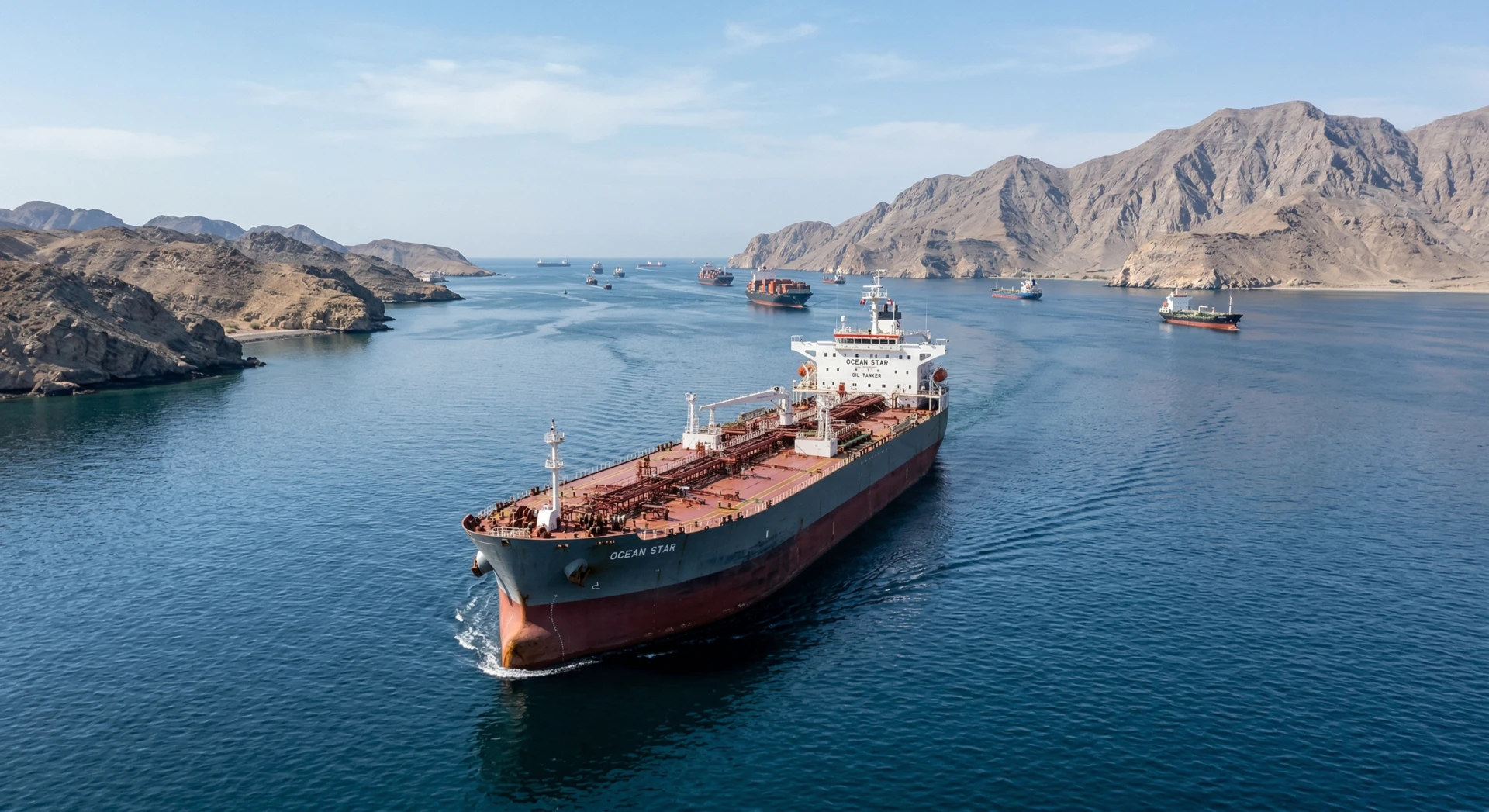
Indian LNG importers face a structural shift toward pipeline gas economics after oil marketing companies suffered ₹62,500 crore in under recoveries between mid-March and April 2026 alone, escalating to ₹1.98 lakh crore for Q1 2026 due to Strait of Hormuz disruptions. India's proposed ₹40,000 crore Oman-Gujarat pipeline a 2,000km undersea route at 3,450m depth targets this exact margin compression by replacing LNG spot cargoes with pipeline gas at $2–2.50/MMBtu savings, worth approximately $1 billion annually. The pipeline would supply 31 million metric standard cubic metres per day (MMSCMD) of natural gas directly into India, creating the world's deepest subsea gas pipeline and eliminating freight, insurance, and liquefaction costs entirely. This is not route diversification it is margin structure arbitrage.
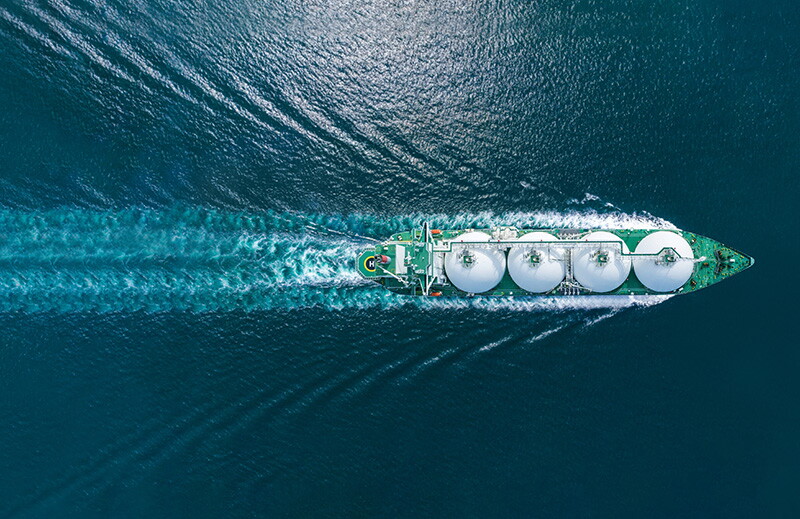
A liquefied natural gas (LNG) cargo typically 140,000–180,000 cubic metres of gas cooled to minus 162°C for ocean transport requires liquefaction costs, vessel charter rates, insurance premiums, and regasification fees that pipeline gas avoids entirely. Consider a mid-sized Indian LNG importer procuring 2 MMSCMD annually: at current JKM prices around $18.75/MMBtu versus Henry Hub at $2.81/MMBtu, the delivered cost including freight runs $12–15/MMBtu. Pipeline gas from Oman would eliminate the $3–4/MMBtu liquefaction and shipping premium, saving approximately $800–1,200 per day per MMSCMD of throughput. For the full 31 MMSCMD capacity, this represents $25–37 million in daily savings once operational. The arbitrage is structural, not cyclical.
On the buy side: Indian LNG importers currently managing supply disruptions as roughly 60% of imports typically pass through Hormuz, primarily from Qatar and UAE would gain direct pipeline access to Gulf gas reserves totaling approximately 2,500 trillion cubic feet across Oman, UAE, Saudi Arabia, Iran, Turkmenistan, and Qatar. This replaces volatile spot market exposure with long-term pipeline contracts at fixed transmission fees. On the sell side: Gulf gas producers avoid LNG liquefaction capital expenditure, operating costs, and vessel scheduling constraints. A billion cubic feet of gas delivered through pipeline generates higher netbacks than the same volume requiring liquefaction, loading, shipping, and regasification. Oman particularly gains as its gas bypasses Qatar's LNG export bottlenecks entirely.
For large integrated oil companies with derivatives access Indian Oil Corporation, BPCL, HPCL the pipeline creates hedging opportunities against JKM volatility through fixed-price pipeline contracts while maintaining LNG portfolio flexibility for demand swings. These companies can layer long-term pipeline baseload with spot LNG for peak requirements, reducing overall procurement risk. For smaller regional gas distributors without derivatives capabilities city gas distribution companies, industrial users, fertilizer producers who lack strategic gas reserves like those maintained for crude oil the pipeline provides supply security without complex financial hedging. Regional operators gain access to stable pricing and uninterrupted supply during maritime disruptions.
The financing structure remains undefined the critical execution risk that determines whether this actually happens. The Indian Ministry of Petroleum and Natural Gas has directed GAIL, Engineers India, and Indian Oil Corporation to prepare a detailed feasibility assessment, but who provides the ₹40,000 crore capital, takes completion risk at 3,450m depths, and owns the asset determines commercial viability. Deep-sea pipeline construction at these depths carries massive execution risk that could double costs and extend the projected five to seven year construction timeline. The 2006 Langeled pipeline from Norway to UK the world's longest subsea gas pipeline at 1,200km experienced significant cost overruns and technical challenges at far shallower depths.
The pipeline would fundamentally alter India's gas import geography, reducing dependence on the Strait of Hormuz which normally handles roughly one-fifth of global LNG supply. However, India's current gas demand of 190–195 MMSCMD, projected to reach nearly 300 MMSCMD by 2030, means the 31 MMSCMD pipeline capacity represents only 10–16% of total requirements. This creates a pathway for incremental supply security without eliminating LNG import dependence entirely. SAGE has already laid 3,000 metres of test pipeline along the proposed route, providing seabed condition data that reduces technical risk compared to greenfield projects.
For observers: monitor India's gas import mix shifts in Q4 2026 data from the Petroleum Planning and Analysis Cell (PPAC). If pipeline gas economics prove viable, expect formal project sanctions by mid-2027 with first gas delivery targeted for 2032-2034. Track GAIL's pipeline network utilization rates any systematic capacity constraints justify accelerated pipeline investment. The clearest signal will be formal engineering, procurement, and construction (EPC) tender announcements from GAIL, Indian Oil, or Engineers India within 12 months, indicating the project has moved from feasibility study to capital commitment phase.


'%3e%3cg id='Final-Copy-2_2_' transform='translate(1275.000000, 200.000000)'%3e%3cpath class='st0' d='M7.4,12.8h6.8l3.1-11.6H7.4C4.2,1.2,1.6,3.8,1.6,7S4.2,12.8,7.4,12.8z'/%3e%3c/g%3e%3c/g%3e%3c/g%3e%3cg id='final---dec.11-2020'%3e%3cg id='_x30_208-our-toggle' transform='translate(-1275.000000, -200.000000)'%3e%3cg id='Final-Copy-2' transform='translate(1275.000000, 200.000000)'%3e%3cpath class='st1' d='M22.6,0H7.4c-3.9,0-7,3.1-7,7s3.1,7,7,7h15.2c3.9,0,7-3.1,7-7S26.4,0,22.6,0z M1.6,7c0-3.2,2.6-5.8,5.8-5.8 h9.9l-3.1,11.6H7.4C4.2,12.8,1.6,10.2,1.6,7z'/%3e%3cpath id='x' class='st2' d='M24.6,4c0.2,0.2,0.2,0.6,0,0.8l0,0L22.5,7l2.2,2.2c0.2,0.2,0.2,0.6,0,0.8c-0.2,0.2-0.6,0.2-0.8,0 l0,0l-2.2-2.2L19.5,10c-0.2,0.2-0.6,0.2-0.8,0c-0.2-0.2-0.2-0.6,0-0.8l0,0L20.8,7l-2.2-2.2c-0.2-0.2-0.2-0.6,0-0.8 c0.2-0.2,0.6-0.2,0.8,0l0,0l2.2,2.2L23.8,4C24,3.8,24.4,3.8,24.6,4z'/%3e%3cpath id='y' class='st3' d='M12.7,4.1c0.2,0.2,0.3,0.6,0.1,0.8l0,0L8.6,9.8C8.5,9.9,8.4,10,8.3,10c-0.2,0.1-0.5,0.1-0.7-0.1l0,0 L5.4,7.7c-0.2-0.2-0.2-0.6,0-0.8c0.2-0.2,0.6-0.2,0.8,0l0,0L8,8.6l3.8-4.5C12,3.9,12.4,3.9,12.7,4.1z'/%3e%3c/g%3e%3c/g%3e%3c/g%3e%3c/g%3e%3c/svg%3e) Privacy Choices
Privacy Choices