.avif)
Asian energy importers face immediate financing pressure as Japan's $10 billion AZEC 2.0 framework — equivalent to 1.2 billion barrels of oil or roughly one year's worth of ASEAN crude imports — begins operations amid Middle East supply disruptions. The concessional financing mechanism offers credit lines for crude oil, refined fuel, and essential imports, but operational details remain opaque. Who qualifies for these preferential rates, what collateral structures apply, and whether this competes with or complements existing trade finance from Singapore banks and commodity trading houses will determine commercial viability. Thailand's Prime Minister Anutin Charnvirakul endorsed the initiative at the AZEC Plus Online Summit, signaling regional appetite for alternative financing structures as traditional energy procurement faces mounting pressure.
AZEC 2.0 — Asia Zero-Emission Community version 2.0 — represents Japan's diplomatic response to structural energy vulnerability across the region. Launched by Japan in 2023, AZEC promotes decarbonisation while maintaining energy security, based on 'one goal, various pathways' with a 'triple breakthrough' in emissions reduction, economic growth, and energy stability. The new framework channels through state-backed institutions JBIC (Japan Bank for International Cooperation) and NEXI (Nippon Export and Investment Insurance), creating a policy-driven alternative to commercial energy trade finance. The timing reflects immediate crisis response: the Strait of Hormuz remains effectively closed, disrupting roughly 20% of world traded oil, while Brent crude futures swing around $95 per barrel amid persistent volatility.
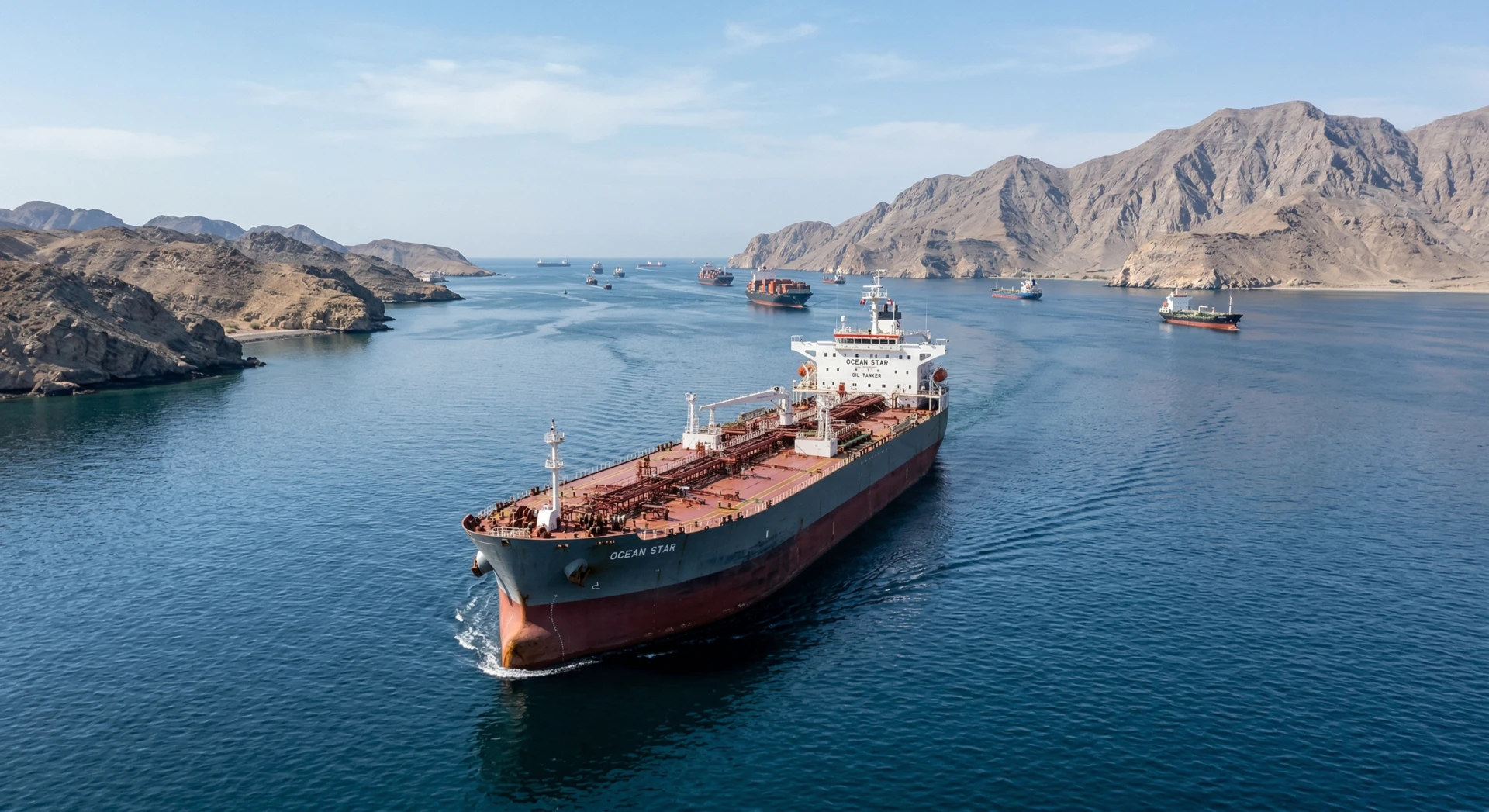
Around 80% of crude oil and oil products shipped through the Strait of Hormuz are destined for Asia, as is nearly 90% of LNG. Consider a mid-sized Thai fuel importer securing a 50,000-tonne diesel cargo from the Middle East. At current financing rates, a 90-day letter of credit — a bank guarantee that payment will be made once shipping documents are presented — typically costs 2-3% annually plus documentary fees. AZEC 2.0's concessional terms could reduce this cost structure by 100-150 basis points, saving approximately $75,000-115,000 per cargo on financing alone. However, the credit remains denominated in a currency (likely yen or dollars) that the importer must service, creating foreign exchange exposure that traditional Gulf suppliers often accommodate through flexible payment terms. A shock at Hormuz quickly feeds into pump prices, power costs and inflation from Manila to Bangkok.
On the buy side, smaller regional operators — independent fuel distributors, industrial consumers without derivatives access, state-owned utilities in developing AZEC members — gain potential access to preferential financing that could offset elevated energy costs. Southeast Asian countries typically maintain between 20 to 90 days of oil reserves versus Japan's 200–250 days, creating structural vulnerability that concessional financing partially addresses through improved cash flow management. On the sell side, established commodity trading houses and integrated oil companies may find margin compression as subsidised competition enters pricing negotiations. Japanese policy banks and trading houses position themselves to capture relationship capital and future deal flow, while commercial trade finance providers lose spread opportunities on regional energy imports. Supporting Asian countries' supply chains would in turn bolster Japan's own economy, creating mutual dependency that extends beyond pure financing.
For large integrated operators — Japanese trading houses like JXTG or Itochu, regional NOCs with government backing, multinational oil companies with Asian downstream exposure — AZEC 2.0 provides relationship capital and potential co-financing opportunities that complement existing credit facilities. For smaller regional operators without established trade finance relationships, the framework offers market entry that bypasses traditional banking requirements but introduces sovereign credit risk tied to Japanese policy continuity. For observers, monitor the Japan-Korea crude oil import differential through May 2026: if Japanese financing advantages translate to preferential pricing for AZEC members, the spread will compress as regional buyers access alternative credit structures. There was no sign that a recent agreement to lift the Iranian blockade of Strait of Hormuz was being implemented, with 230 loaded oil tankers waiting inside the Gulf, indicating the structural financing need extends beyond immediate crisis response.



'%3e%3cg id='Final-Copy-2_2_' transform='translate(1275.000000, 200.000000)'%3e%3cpath class='st0' d='M7.4,12.8h6.8l3.1-11.6H7.4C4.2,1.2,1.6,3.8,1.6,7S4.2,12.8,7.4,12.8z'/%3e%3c/g%3e%3c/g%3e%3c/g%3e%3cg id='final---dec.11-2020'%3e%3cg id='_x30_208-our-toggle' transform='translate(-1275.000000, -200.000000)'%3e%3cg id='Final-Copy-2' transform='translate(1275.000000, 200.000000)'%3e%3cpath class='st1' d='M22.6,0H7.4c-3.9,0-7,3.1-7,7s3.1,7,7,7h15.2c3.9,0,7-3.1,7-7S26.4,0,22.6,0z M1.6,7c0-3.2,2.6-5.8,5.8-5.8 h9.9l-3.1,11.6H7.4C4.2,12.8,1.6,10.2,1.6,7z'/%3e%3cpath id='x' class='st2' d='M24.6,4c0.2,0.2,0.2,0.6,0,0.8l0,0L22.5,7l2.2,2.2c0.2,0.2,0.2,0.6,0,0.8c-0.2,0.2-0.6,0.2-0.8,0 l0,0l-2.2-2.2L19.5,10c-0.2,0.2-0.6,0.2-0.8,0c-0.2-0.2-0.2-0.6,0-0.8l0,0L20.8,7l-2.2-2.2c-0.2-0.2-0.2-0.6,0-0.8 c0.2-0.2,0.6-0.2,0.8,0l0,0l2.2,2.2L23.8,4C24,3.8,24.4,3.8,24.6,4z'/%3e%3cpath id='y' class='st3' d='M12.7,4.1c0.2,0.2,0.3,0.6,0.1,0.8l0,0L8.6,9.8C8.5,9.9,8.4,10,8.3,10c-0.2,0.1-0.5,0.1-0.7-0.1l0,0 L5.4,7.7c-0.2-0.2-0.2-0.6,0-0.8c0.2-0.2,0.6-0.2,0.8,0l0,0L8,8.6l3.8-4.5C12,3.9,12.4,3.9,12.7,4.1z'/%3e%3c/g%3e%3c/g%3e%3c/g%3e%3c/g%3e%3c/svg%3e) Privacy Choices
Privacy Choices