.avif)
Asian crude importers face immediate margin compression as geopolitical route disruptions force expensive supply chain pivots. Malaysia imports 52% of its crude oil requirements, with 38% of these imports transiting the Strait of Hormuz, exposing refiners to escalating freight costs and supply uncertainty. PETRONAS has extended fuel supply security through June 2026, but this represents just one month beyond its original May projection — a thin buffer against ongoing disruption.
The margin anatomy reveals where costs concentrate in this crisis. Brent crude prices plunged to below $90 per barrel on Friday after Iran announced the Strait of Hormuz is open to commercial traffic, but freight analysts confirm the strait remains effectively closed despite Iran's declaration, with the oil disruption growing worse daily. For a typical 2 million barrel VLCC — a Very Large Crude Carrier capable of transporting 2 million barrels — charter rates have increased from $25,000/day pre-crisis to approximately $65,000/day currently. This adds roughly $2.40/barrel in freight costs for a 20-day Middle East-to-Malaysia voyage, eroding refiner margins directly.
On the buy side, Asian refiners without long-term crude contracts face brutal spot market pricing. Malaysia's government faces pressure to maintain the RM1.99 per litre cap for RON95 petrol, with any prolonged disruption forcing purchases of expensive spot-market oil from other regions, potentially blowing the national subsidy budget. A mid-sized refiner processing 150,000 barrels per day — roughly half the capacity of PETRONAS's Pengerang complex — would pay an additional $360,000 daily in freight premiums alone at current rates. On the sell side, traditional Gulf crude suppliers face stranded volumes and lost market share as buyers diversify sourcing routes.
Russian crude offers a compelling arbitrage opportunity for Malaysian refiners, though compatibility remains uncertain. Urals crude — Russia's primary export grade — trades at a $12-15/barrel discount to Brent, creating immediate cost savings for refiners. However, Urals crude contains 1.3% sulfur versus 0.3% for typical Middle Eastern grades, requiring different processing parameters. Malaysian refiners configured for light, sweet crude may experience 2-3% yield losses when processing higher-sulfur Russian crude, partially offsetting the discount advantage.
For large integrated traders with derivatives access — Trafigura, Vitol, or national oil companies' trading arms — Russian crude provides hedging flexibility through intercontinental arbitrage. These operators can lock in the Brent-Urals spread through futures contracts while managing sulfur differential risk through product swaps. For smaller regional operators — independent Malaysian fuel distributors or regional cooperatives — without derivatives access, the practical equivalent involves negotiating flexible pricing terms with PETRONAS or securing bilateral supply agreements with Russian state entities through diplomatic channels.
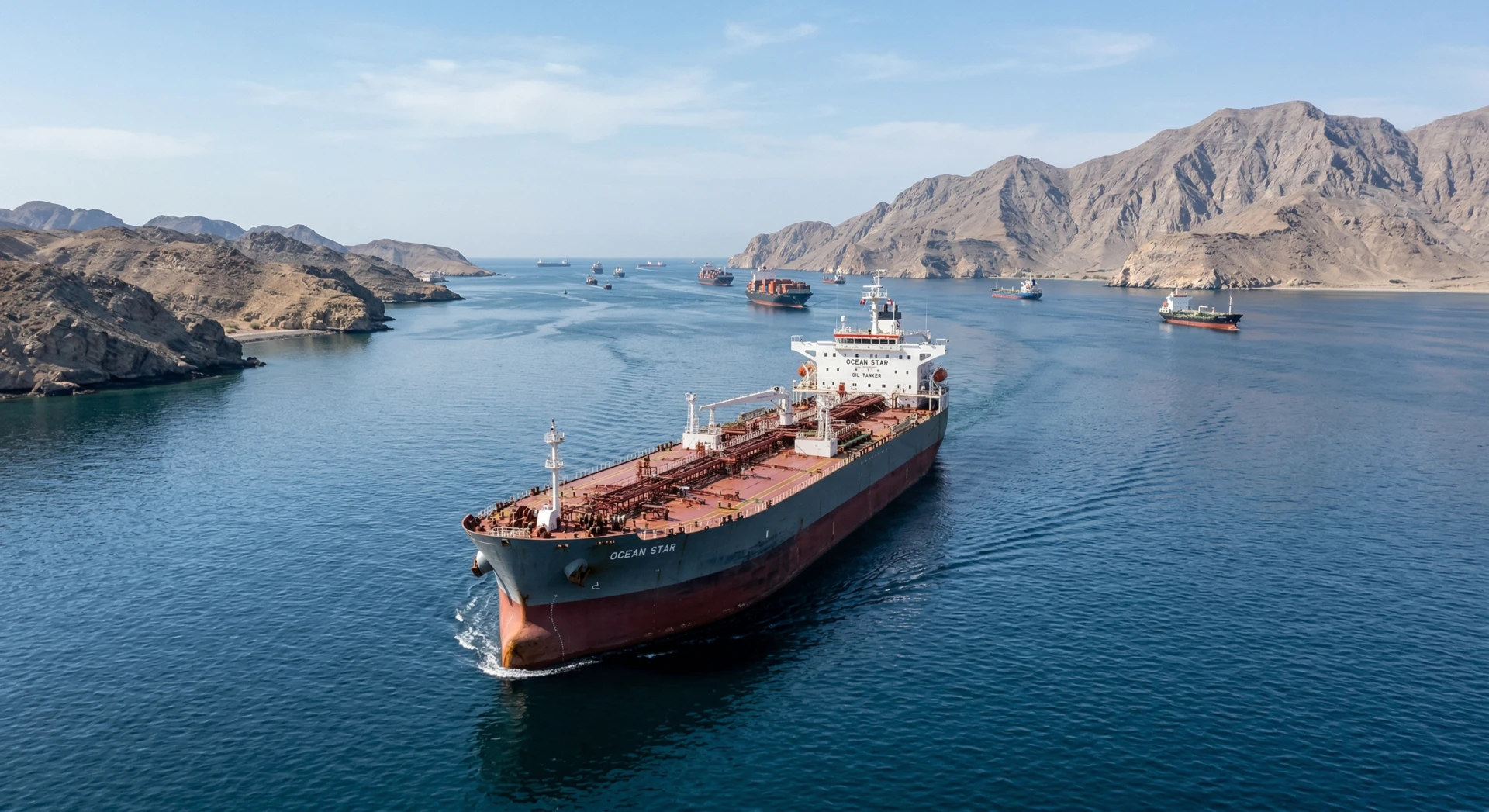
The physical supply chain reveals critical chokepoints. The Ocean Thunder tanker, chartered by PETRONAS subsidiary Petco, successfully delivered 1 million barrels of Iraqi crude from Basra to the Pengerang Integrated Complex. Crude oil from Russia's Primorsk terminal — loaded onto Aframax tankers capable of carrying 750,000 barrels — would transit the Suez Canal if accessible, arriving at Pengerang approximately 25-30 days later. Alternatively, Russian crude from Far Eastern terminals like Kozmino reaches Malaysian refineries in 12-15 days via the Pacific route, reducing working capital requirements for inventory financing.
Freight concentration determines where margin accrues in these disrupted trade lanes. War-risk insurance premiums for the Strait of Hormuz increased from 0.125% to between 0.2% and 0.4% of ship value per transit, adding a quarter million dollars for very large tankers. This premium flows entirely to shipowners and insurance underwriters, not cargo owners. Russian crude routes avoid this Hormuz war-risk premium, but Pacific freight rates have increased 40% as cargo flows redirect. The $15-20 million additional cost for a VLCC carrying 2 million barrels represents margin compression that refiners cannot pass through to subsidized fuel markets.
For observers monitoring this structural shift, watch the Platts Dubai-Moscow spread — the price differential between Middle Eastern crude delivered to Asia and Russian crude delivered to the same destination. If this spread exceeds $18/barrel for three consecutive months, expect permanent market share migration from Gulf suppliers to Russian exporters. President Trump announced a two-week ceasefire with Iran contingent on stopping tanker blockades, but resolution timelines remain uncertain. Malaysian refiners evaluating long-term supply security should monitor Kozmino crude loading schedules through December 2026 for early signals of strategic supply diversification.
.jpg)
.jpg)
'%3e%3cg id='Final-Copy-2_2_' transform='translate(1275.000000, 200.000000)'%3e%3cpath class='st0' d='M7.4,12.8h6.8l3.1-11.6H7.4C4.2,1.2,1.6,3.8,1.6,7S4.2,12.8,7.4,12.8z'/%3e%3c/g%3e%3c/g%3e%3c/g%3e%3cg id='final---dec.11-2020'%3e%3cg id='_x30_208-our-toggle' transform='translate(-1275.000000, -200.000000)'%3e%3cg id='Final-Copy-2' transform='translate(1275.000000, 200.000000)'%3e%3cpath class='st1' d='M22.6,0H7.4c-3.9,0-7,3.1-7,7s3.1,7,7,7h15.2c3.9,0,7-3.1,7-7S26.4,0,22.6,0z M1.6,7c0-3.2,2.6-5.8,5.8-5.8 h9.9l-3.1,11.6H7.4C4.2,12.8,1.6,10.2,1.6,7z'/%3e%3cpath id='x' class='st2' d='M24.6,4c0.2,0.2,0.2,0.6,0,0.8l0,0L22.5,7l2.2,2.2c0.2,0.2,0.2,0.6,0,0.8c-0.2,0.2-0.6,0.2-0.8,0 l0,0l-2.2-2.2L19.5,10c-0.2,0.2-0.6,0.2-0.8,0c-0.2-0.2-0.2-0.6,0-0.8l0,0L20.8,7l-2.2-2.2c-0.2-0.2-0.2-0.6,0-0.8 c0.2-0.2,0.6-0.2,0.8,0l0,0l2.2,2.2L23.8,4C24,3.8,24.4,3.8,24.6,4z'/%3e%3cpath id='y' class='st3' d='M12.7,4.1c0.2,0.2,0.3,0.6,0.1,0.8l0,0L8.6,9.8C8.5,9.9,8.4,10,8.3,10c-0.2,0.1-0.5,0.1-0.7-0.1l0,0 L5.4,7.7c-0.2-0.2-0.2-0.6,0-0.8c0.2-0.2,0.6-0.2,0.8,0l0,0L8,8.6l3.8-4.5C12,3.9,12.4,3.9,12.7,4.1z'/%3e%3c/g%3e%3c/g%3e%3c/g%3e%3c/g%3e%3c/svg%3e) Privacy Choices
Privacy Choices