.avif)

Pakistani petroleum product importers are securing April cargos ahead of schedule as fuel shortages force the Pakistan Cricket Board (PCB) to hold Pakistan Super League (PSL) matches behind closed doors, eliminating transport demand from expected crowds of 27,000 per match across six venues. The entertainment sector rationing reflects deeper supply constraints that importers estimate could tighten their April procurement by 15-20% versus normal seasonal demand. A 35,000-tonne gasoil cargo from Singapore typically yielding $18-25/MT margin for a mid-tier Pakistani importer now faces potential delays if letters of credit (LC) approval extends beyond the standard 7-10 day processing window. On the buy side, major importers like Hascol and Shell Pakistan are reportedly advancing their April fixture purchases to lock in supply before regional tightness spreads. On the sell side, Singapore refiners gain leverage as Pakistani buyers compete for fewer available cargos, with charter rates on MR tankers (45,000 tonne capacity) from Singapore to Karachi rising 12% week on week to Worldscale 95.
The margin anatomy reveals how fuel shortage transforms from import financing constraint into entertainment sector demand destruction. Pakistan's monthly petroleum product imports average 1.8 million tonnes, with gasoline representing 35% and gasoil 45% of the mix. When foreign exchange reserves force the State Bank of Pakistan to scrutinize LC approvals more strictly, importers face a choice, secure smaller volumes at higher unit costs or risk stockouts during peak summer driving season. For large integrated players with established banking relationships, the additional scrutiny adds 3-5 days to cargo financing but preserves access. For smaller independent distributors without standby credit facilities, the constraint becomes binary, either the LC gets approved or the cargo doesn't arrive. The PSL's shift to closed door matches eliminates an estimated 180,000 litres per day of transport fuel demand during the tournament, but this demand destruction concentrates in urban centres where supply is already tightest. Regional distributors in Punjab and Sindh provinces, who typically stock up before major sporting events, now find themselves with excess inventory just as procurement costs rise.
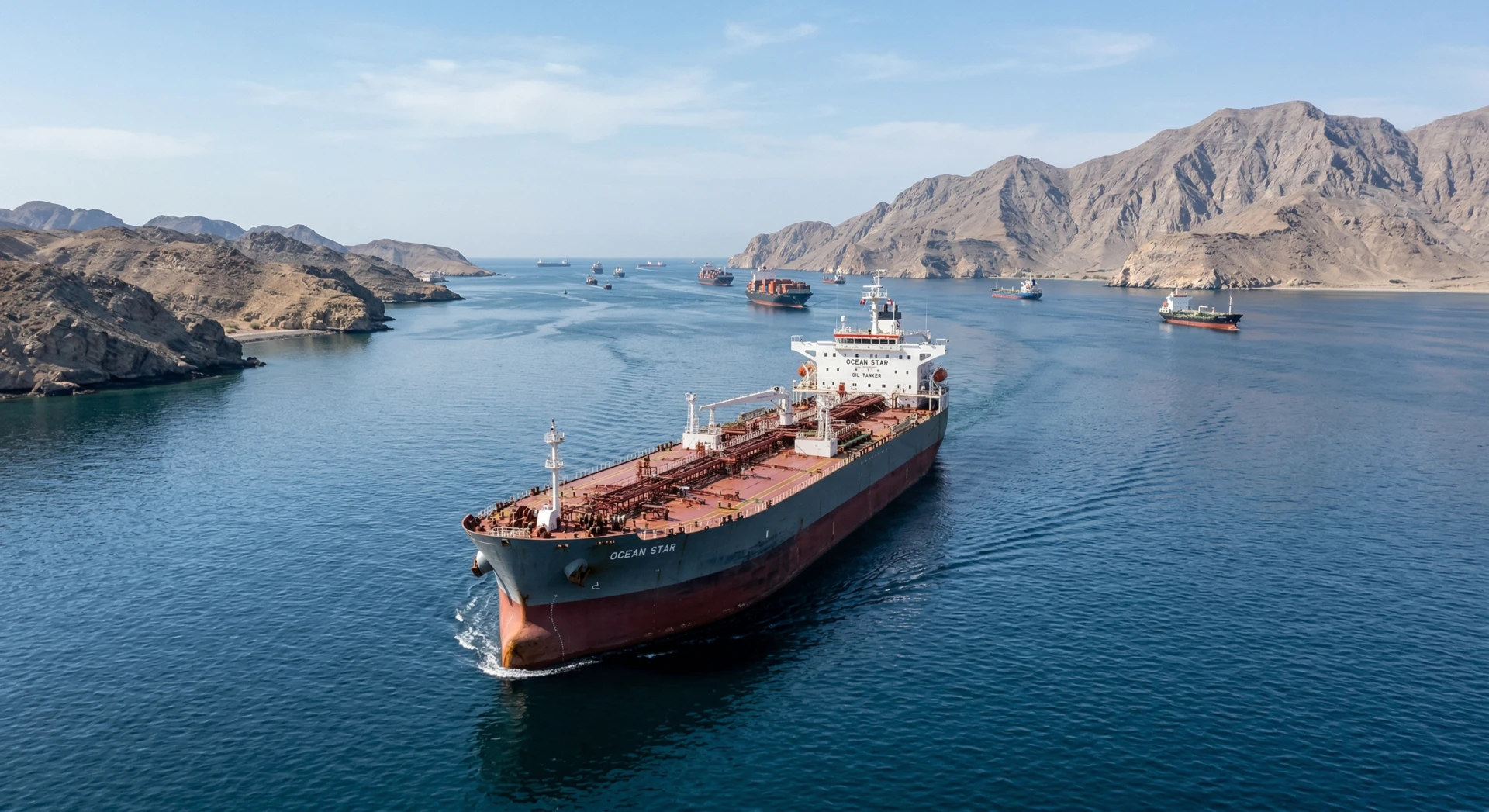
Freight dynamics compound the supply squeeze as fewer Pakistani importers compete for the same shipping slots from key supply origins. The Singapore-Karachi route, Pakistan's primary petroleum product import corridor, typically sees 8-12 MR tanker fixtures per month. When import financing constraints reduce this to 6-8 fixtures, vessel owners can demand higher charter rates while cargo owners lose scheduling flexibility. A mid-sized Pakistani importer chartering a 45,000-tonne MR tanker from Singapore now pays Worldscale 95 versus the Worldscale 82 baseline, adding approximately $195,000 to voyage costs equivalent to $4.30/MT additional freight burden. This freight inflation gets passed directly to domestic fuel prices, creating a feedback loop where entertainment sector rationing reflects broader affordability constraints. For larger players with long-term charter agreements or owned tonnage, the freight spike represents opportunity rather than cost. National Refinery Limited and Pakistan State Oil, with their integrated supply chains, can maintain margins while smaller importers get squeezed out of marginal transactions.
Relationship capital determines which Pakistani importers actually secure April volumes as Singapore suppliers prioritize established counterparties over spot buyers. In this constrained environment, a regional importer's ability to access a 25,000 tonne gasoil cargo depends less on price competitiveness and more on payment history and bilateral trust. Singapore traders report that Pakistani counterparties with 5+ years of trading history and clean LC performance get first allocation rights, even when newer buyers offer premiums of $2-3/MT. The relationship premium becomes quantifiable: established importers secure supply at flat pricing while spot buyers pay Singapore quotes plus $5-8/MT relationship surcharge, assuming they can access supply at all. Mid-tier operators like Byco Petroleum and Total Pakistan leverage their international parent company guarantees to maintain supplier confidence, while purely domestic players rely on local bank guarantees that Singapore traders increasingly scrutinize. This relationship hierarchy means that fuel shortages hit Pakistan's smallest distributors first, cascading through the retail network as independent petrol stations struggle to maintain inventory.
Two distinct operator scales face different procurement pressures as April fixtures tighten. Large integrated players Pakistan State Oil, Shell Pakistan, and Hascol utilize their derivatives access and established credit facilities to hedge currency risk while securing physical supply. A major importer hedging a $22 million April gasoil purchase can lock in PKR/USD exchange rate using forward contracts, insulating profit margins from rupee depreciation. These operators also maintain strategic storage capacity averaging 45 days of throughput, allowing them to bridge supply gaps without immediate margin compression. Smaller regional distributors, lacking derivatives access and operating on 7-10 day inventory cycles, face binary outcomes. A typical independent distributor importing 5,000 tonnes monthly cannot hedge currency risk or absorb delivery delays, making them price takers in an increasingly seller favorable market. The scale differential becomes stark, large players maintain 12-15% gross margins through sophisticated risk management, while smaller operators see margins compressed to 6-8% as they absorb higher procurement costs without hedging tools.
Forward market signals suggest Pakistani fuel import constraints will persist through Q2 2026, with Singapore diesel crack spreads the refining margin between crude oil and diesel widening to $28/barrel from the $22/barrel monthly average. This widening reflects regional refinery maintenance schedules reducing available supply just as Pakistani demand seasonally peaks ahead of summer driving season. Platts Dubai crude assessments show Pakistani importers paying premiums of $1.80/barrel above Singapore benchmarks, compared to typical discounts of $0.50/barrel, indicating supply tightness. Currency forwards pricing Pakistani rupee depreciation to PKR 295/USD by May 2026 from current PKR 284/USD levels, adding 4% to import costs for unhedged purchases. The combination of higher product prices, freight inflation, and currency weakness creates a triple squeeze on Pakistani importers. Entertainment sector rationing from closed door cricket matches to reduced public transport frequency represents demand destruction necessary to balance supply constraints with foreign exchange availability.
The procurement timeline compression forces Pakistani importers to make April purchasing decisions with incomplete market information, creating potential for both strategic gains and costly errors. Importers who successfully secured March cargos before the shortage became apparent now hold inventory purchased at lower prices, generating windfall margins as domestic prices rise. However, those same operators face pressure to release strategic stocks earlier than planned, potentially leaving them exposed if April procurement faces further delays. Singapore suppliers, recognizing Pakistani buyers' urgency, are reportedly offering take-or-pay contracts commitments to purchase minimum volumes regardless of domestic demand at premiums to current spot pricing. For sophisticated importers with demand forecasting capabilities, these contracts provide supply security at quantifiable cost. For smaller operators without robust demand planning, the same contracts become potential liabilities if domestic consumption falls below committed volumes. The forward signal indicates this supply-demand imbalance will persist until Pakistan's foreign exchange position stabilizes or alternative supply routes through Middle Eastern suppliers become economically viable, likely requiring 60-90 days based on historical precedent.
.jpg)
.jpg)
'%3e%3cg id='Final-Copy-2_2_' transform='translate(1275.000000, 200.000000)'%3e%3cpath class='st0' d='M7.4,12.8h6.8l3.1-11.6H7.4C4.2,1.2,1.6,3.8,1.6,7S4.2,12.8,7.4,12.8z'/%3e%3c/g%3e%3c/g%3e%3c/g%3e%3cg id='final---dec.11-2020'%3e%3cg id='_x30_208-our-toggle' transform='translate(-1275.000000, -200.000000)'%3e%3cg id='Final-Copy-2' transform='translate(1275.000000, 200.000000)'%3e%3cpath class='st1' d='M22.6,0H7.4c-3.9,0-7,3.1-7,7s3.1,7,7,7h15.2c3.9,0,7-3.1,7-7S26.4,0,22.6,0z M1.6,7c0-3.2,2.6-5.8,5.8-5.8 h9.9l-3.1,11.6H7.4C4.2,12.8,1.6,10.2,1.6,7z'/%3e%3cpath id='x' class='st2' d='M24.6,4c0.2,0.2,0.2,0.6,0,0.8l0,0L22.5,7l2.2,2.2c0.2,0.2,0.2,0.6,0,0.8c-0.2,0.2-0.6,0.2-0.8,0 l0,0l-2.2-2.2L19.5,10c-0.2,0.2-0.6,0.2-0.8,0c-0.2-0.2-0.2-0.6,0-0.8l0,0L20.8,7l-2.2-2.2c-0.2-0.2-0.2-0.6,0-0.8 c0.2-0.2,0.6-0.2,0.8,0l0,0l2.2,2.2L23.8,4C24,3.8,24.4,3.8,24.6,4z'/%3e%3cpath id='y' class='st3' d='M12.7,4.1c0.2,0.2,0.3,0.6,0.1,0.8l0,0L8.6,9.8C8.5,9.9,8.4,10,8.3,10c-0.2,0.1-0.5,0.1-0.7-0.1l0,0 L5.4,7.7c-0.2-0.2-0.2-0.6,0-0.8c0.2-0.2,0.6-0.2,0.8,0l0,0L8,8.6l3.8-4.5C12,3.9,12.4,3.9,12.7,4.1z'/%3e%3c/g%3e%3c/g%3e%3c/g%3e%3c/g%3e%3c/svg%3e) Privacy Choices
Privacy Choices