.avif)
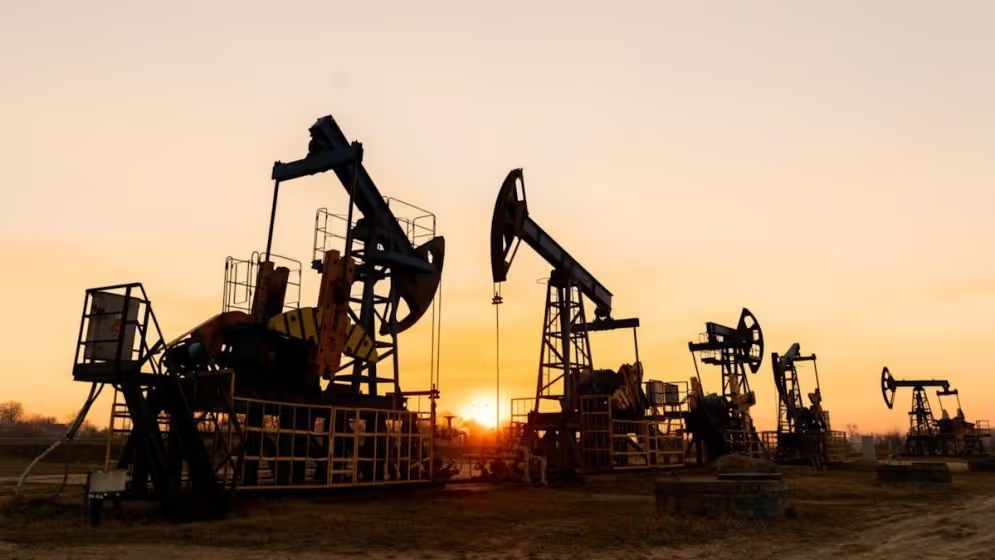
Russian oil traders saw export revenues nearly double to $19 billion in March from February's $9.75 billion, as a U.S. Treasury Department 30-day waiver for Russian crude oil and petroleum products loaded between March 12 and April 11 coincided with Brent crude oil prices reaching $99-$104 per barrel during the Strait of Hormuz crisis. Total exports hit 7.1 million barrels per day, up around 320,000 bpd from February, with crude revenues climbing to $11.45 billion (up $5.41 billion month-on-month) and petroleum product exports generating $7.59 billion (up $3.88 billion). The arithmetic is stark: at $77/barrel Russian Urals crude in February versus March pricing above $80, a 50,000-tonne cargo earned Russian exporters roughly $400,000 more — before factoring in the waiver's elimination of delivery restrictions that had been choking flows since January.
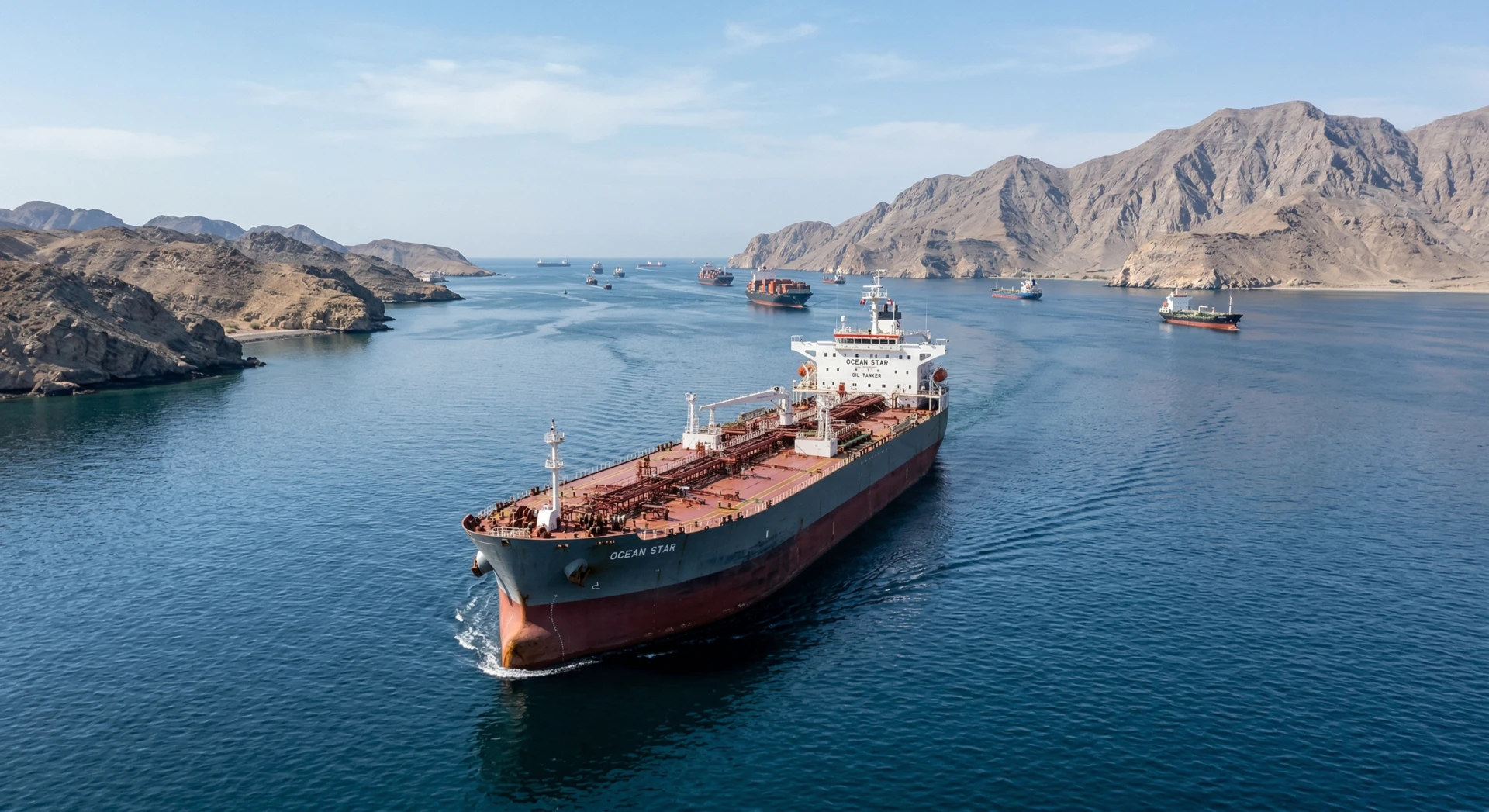
The revenue surge masks a structural shift in how Russian oil reaches global markets. Flows through the Druzhba pipeline to Hungary and Slovakia—transported via Ukrainian territory—remain suspended after damage sustained in late January, forcing Russia to rely more heavily on maritime shipments, particularly from ports in the Black Sea and Baltic regions. Consider the logistics: the 400,000 bpd Druzhba capacity requires seaborne replacement via Aframax tankers (700,000-barrel capacity) loading at Primorsk or Ust-Luga. Each additional voyage adds 7-14 days transit time versus pipeline delivery, plus freight costs of $8-12/MT for Baltic-to-European routes. Russian exporters absorbed these costs to maintain market share, but the March waiver let them pass freight premiums to buyers for the first time in months.
India's average daily imports of Russian oil jumped 82% in the first three weeks of March compared to February's average, demonstrating how quickly Asian refiners respond to regulatory clarity. Indian refineries processing Russian crude increased from seven in February to twelve in March, with total volumes around 2 million bpd versus China's 1.8 million bpd. For Indian refiners, the waiver eliminated the 60-90 day payment delays through Turkish and UAE banks that had characterized February transactions. Reliance's Jamnagar refinery, processing 1.4 million bpd, can now book Russian Urals at $8-12/barrel discount to Dubai crude versus $18-22 discounts required to compensate for sanctions risk. The margin improvement is immediate: on a 2 million barrel monthly purchase, the narrower discount saves $20-28 million in crude costs.
Brent crude futures traded near $96-102 per barrel throughout March as shipping traffic through the Strait of Hormuz has been largely blocked by Iran since February 28, 2026, triggering the largest oil supply disruption in history. The geopolitical premium embedded in crude prices effectively subsidized Russian revenues: while Moscow's Urals blend typically trades at $3-5/barrel discount to Brent, the discount compressed to $1-2/barrel during peak Hormuz fears. The outbreak of the US-Israeli conflict with Iran and the closure of the Strait of Hormuz drove a $40/bbl increase in Urals and ESPO prices by March 18. For Russian producers selling 4.6 million bpd of crude, each $1/barrel price improvement generates $1.67 billion in additional annual revenue. March's $40 premium translates to a potential $67 billion annual windfall if sustained.
On the sell side, Russian state-controlled producers Rosneft, Lukoil, and Gazprom Neft previously faced U.S. sanctions restricting their ability to contract directly with international buyers. In the first half of March, US-sanctioned producers Rosneft, Lukoil, Gazpromneft, and Surgutneftegaz recovered their share in crude exports to 18%, after it had fallen to just 5% in January–February 2026, while UAE-based intermediaries' combined share edged down to 34% from 39% in February. The waiver allowed direct contracting, eliminating intermediary fees of $2-4/MT that trading companies like Dubai's Redwood Global had been charging for sanctions navigation. For a 2 million barrel VLCC cargo, removing intermediary margins saves $600,000-1.2 million per shipment. Russian NOCs can now pocket these savings or pass them to buyers as competitive pricing.
For large integrated oil traders—Vitol, Trafigura, Glencore—the waiver created arbitrage opportunities previously blocked by compliance restrictions. These operators can now hedge Russian exposure through derivatives markets, purchasing physical Urals crude while selling Brent futures to lock in the spread. Average Urals FOB prices rose by ~$3/bbl month-on-month to ~$42.8/bbl in February, while ESPO FOB Kozmino gained ~$6/bbl to reach ~$54.1/bbl, before the March surge. Traders with storage capacity at Amsterdam-Rotterdam-Antwerp (ARA) or Singapore can now build contango positions, buying March-loaded cargoes for June-August delivery when sanctions may tighten again. The play requires $200-400 million working capital per cargo but offers 8-15% annualized returns if spreads hold.
Smaller regional operators face different constraints but gained clearer operational pathways. European refiners like Germany's PCK Schwedt, previously dependent on Druzhba pipeline crude, can now source replacement barrels from Russia's Baltic ports under the waiver framework. However, the EU's ban on imports of oil products made from Russian crude came into effect on January 21, 2026, meaning these refiners must demonstrate crude origin for every cargo to avoid sanctions. The compliance cost adds $50,000-100,000 per shipment in legal and documentation fees, but remains viable given crude savings of $2-5/barrel versus Brent-equivalent grades.
On April 11, the general license allowing Russia to sell oil loaded onto tankers as of March 12 is set to expire, with the March 2026 Russia general license effectively superseding the price cap, easing both restrictions on Russian oil majors and the price cap itself. The expiry creates a binary outcome for May revenues: either Washington extends the waiver amid continued Hormuz disruptions, or Russian exporters revert to sanctions-compliant structures that reduce margins by $3-8/barrel. It remains unclear whether the United States will renew the sanctions waiver, though U.S. President Donald Trump and Treasury Secretary Scott Bessent were reported to agree that extending the waiver would be a "good idea". The uncertainty has already triggered forward booking: Chinese refiners secured 40-50% of their May-June Russian crude requirements in late March, fearing supply disruption.
According to KSE Institute estimates, the Middle East conflict has fundamentally reshaped the outlook for Russia's oil revenues, with the base case—current price caps, sanctions status quo, and a conflict lasting up to three months—potentially surging revenues from $158 billion in 2025 to $229 billion in 2026. The revenue projections assume Brent averaging $95-105/barrel through Q2-Q3 2026, versus $70-75/barrel in the pre-crisis baseline. For crude oil traders, the key signal is the Brent-Urals spread: compression below $5/barrel indicates Russian crude commanding geopolitical premiums, while spreads above $12/barrel signal renewed sanctions pressure overwhelming supply fundamentals.
Observers should monitor three specific indicators through April 30, 2026: first, whether U.S. Treasury extends the general license beyond April 11; second, whether Trump's announced US Navy blockade of the Strait of Hormuz from April 13 reduces Iranian oil exports sufficiently to maintain $90+ Brent pricing; and third, whether Chinese crude import data shows Russian market share above 18% in April—indicating Beijing's strategic support for Moscow despite Washington's blockade actions. These three factors will determine whether March's $19 billion revenue surge represents a temporary sanctions holiday or a structural shift in Russian energy trade dynamics.

.jpg)

'%3e%3cg id='Final-Copy-2_2_' transform='translate(1275.000000, 200.000000)'%3e%3cpath class='st0' d='M7.4,12.8h6.8l3.1-11.6H7.4C4.2,1.2,1.6,3.8,1.6,7S4.2,12.8,7.4,12.8z'/%3e%3c/g%3e%3c/g%3e%3c/g%3e%3cg id='final---dec.11-2020'%3e%3cg id='_x30_208-our-toggle' transform='translate(-1275.000000, -200.000000)'%3e%3cg id='Final-Copy-2' transform='translate(1275.000000, 200.000000)'%3e%3cpath class='st1' d='M22.6,0H7.4c-3.9,0-7,3.1-7,7s3.1,7,7,7h15.2c3.9,0,7-3.1,7-7S26.4,0,22.6,0z M1.6,7c0-3.2,2.6-5.8,5.8-5.8 h9.9l-3.1,11.6H7.4C4.2,12.8,1.6,10.2,1.6,7z'/%3e%3cpath id='x' class='st2' d='M24.6,4c0.2,0.2,0.2,0.6,0,0.8l0,0L22.5,7l2.2,2.2c0.2,0.2,0.2,0.6,0,0.8c-0.2,0.2-0.6,0.2-0.8,0 l0,0l-2.2-2.2L19.5,10c-0.2,0.2-0.6,0.2-0.8,0c-0.2-0.2-0.2-0.6,0-0.8l0,0L20.8,7l-2.2-2.2c-0.2-0.2-0.2-0.6,0-0.8 c0.2-0.2,0.6-0.2,0.8,0l0,0l2.2,2.2L23.8,4C24,3.8,24.4,3.8,24.6,4z'/%3e%3cpath id='y' class='st3' d='M12.7,4.1c0.2,0.2,0.3,0.6,0.1,0.8l0,0L8.6,9.8C8.5,9.9,8.4,10,8.3,10c-0.2,0.1-0.5,0.1-0.7-0.1l0,0 L5.4,7.7c-0.2-0.2-0.2-0.6,0-0.8c0.2-0.2,0.6-0.2,0.8,0l0,0L8,8.6l3.8-4.5C12,3.9,12.4,3.9,12.7,4.1z'/%3e%3c/g%3e%3c/g%3e%3c/g%3e%3c/g%3e%3c/svg%3e) Privacy Choices
Privacy Choices