.avif)

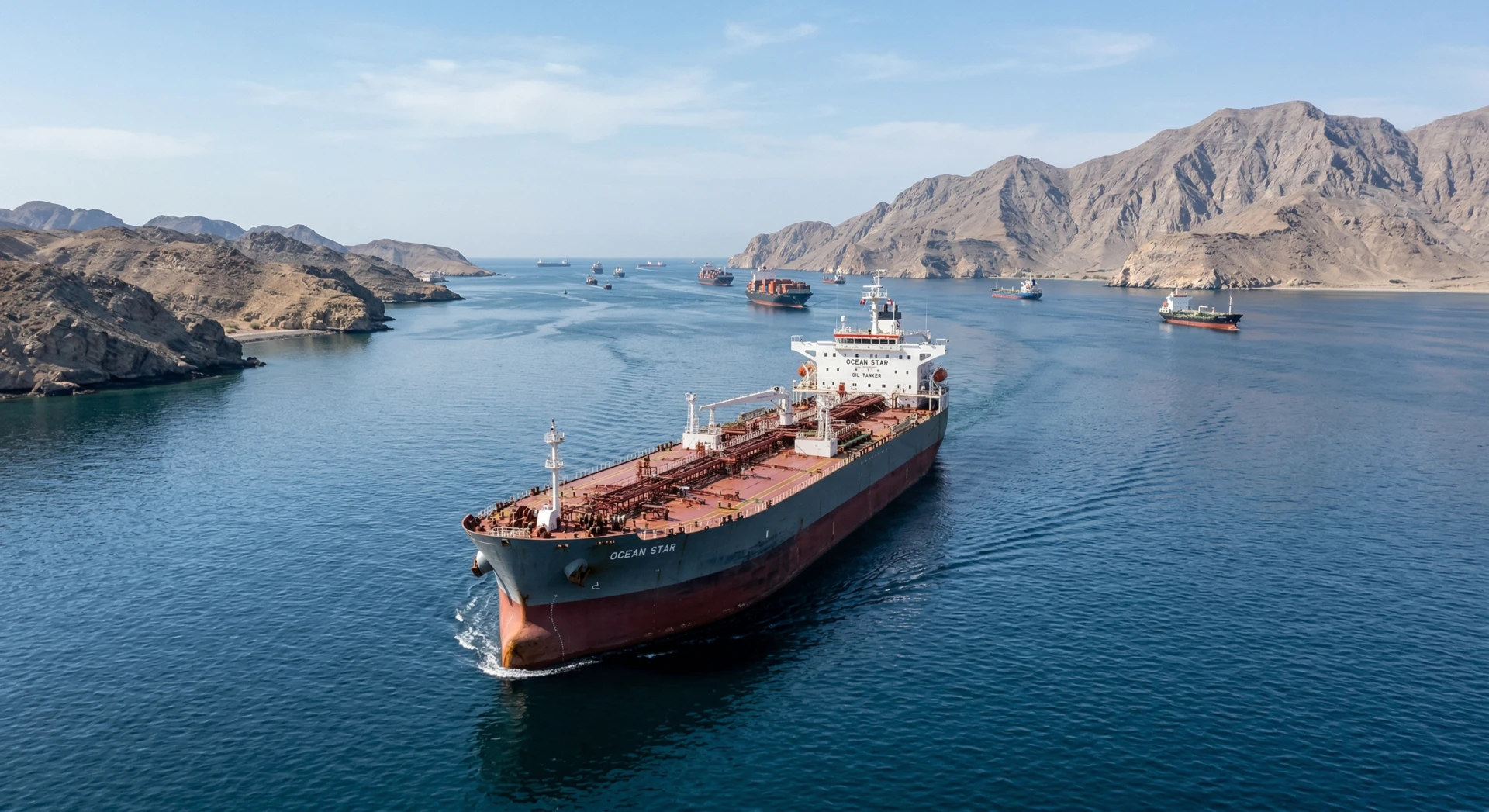
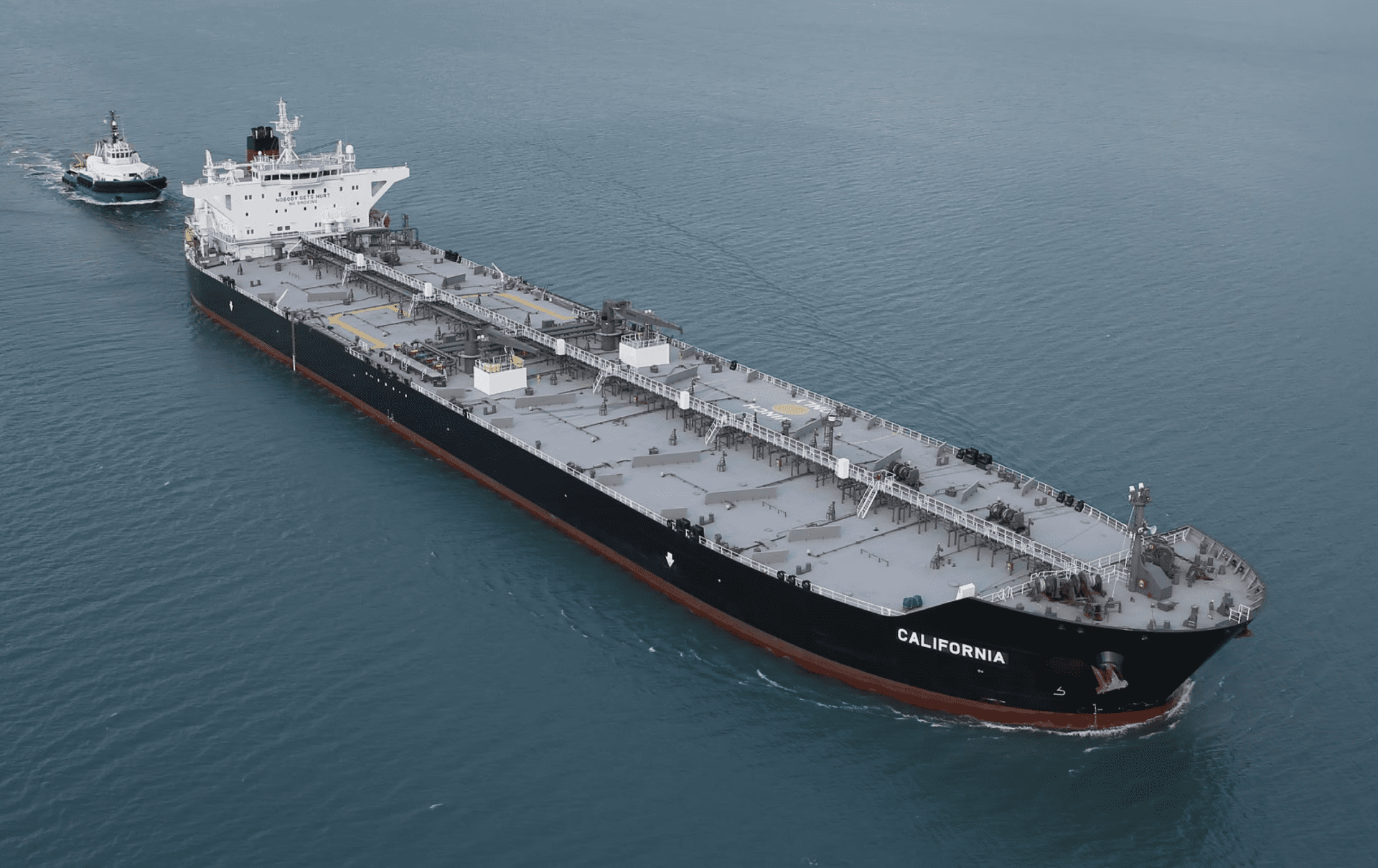
Crude oil tanker owners face operational whiplash as President Trump claims US military forces have begun "clearing out" the Strait of Hormuz while Iran threatens to attack any unauthorized US vessel within 30 minutes. The contradiction is immediate and commercial: if Iranian naval capabilities are "wiped out" as Trump asserts, why did the USS Michael Murphy reportedly turn back after receiving Iranian warnings? For vessel operators, this disconnect between political rhetoric and operational reality determines whether a $200 million VLCC (Very Large Crude Carrier — a supertanker capable of carrying 2 million barrels) can transit safely or faces potential military confrontation.
The Strait of Hormuz — a 33-kilometre waterway through which roughly 25% of seaborne oil trade normally passes — remains effectively closed despite the April 8 ceasefire between the US and Iran. Freight rates for VLCCs hit an all-time high of $423,736 per day in March, compared to typical rates of $30,000-50,000 per day before the crisis. A single voyage from the Middle East to Asia that previously earned $6-8 million now commands $25-30 million — if operators can secure war risk insurance at all. War risk premiums have surged from 0.15% of hull value to around 5% — meaning a $100 million tanker faces $5 million in insurance costs per transit, often exceeding the cargo value margin.
For large integrated traders with derivatives access — Vitol, Trafigura, national oil company trading arms — the current environment creates both hedge and arbitrage opportunities. The Brent-WTI spread has widened to $11 per barrel average in March, peaking at $25, allowing US crude producers to capture significant geographical premiums. These operators can hedge physical exposure through paper markets while positioning for Strait reopening scenarios. However, even major players face financing constraints: letters of credit (LCs) — bank guarantees that payment will be made once shipping documents are presented — are being repriced with geopolitical risk clauses that can add $2-5 per barrel to transaction costs.
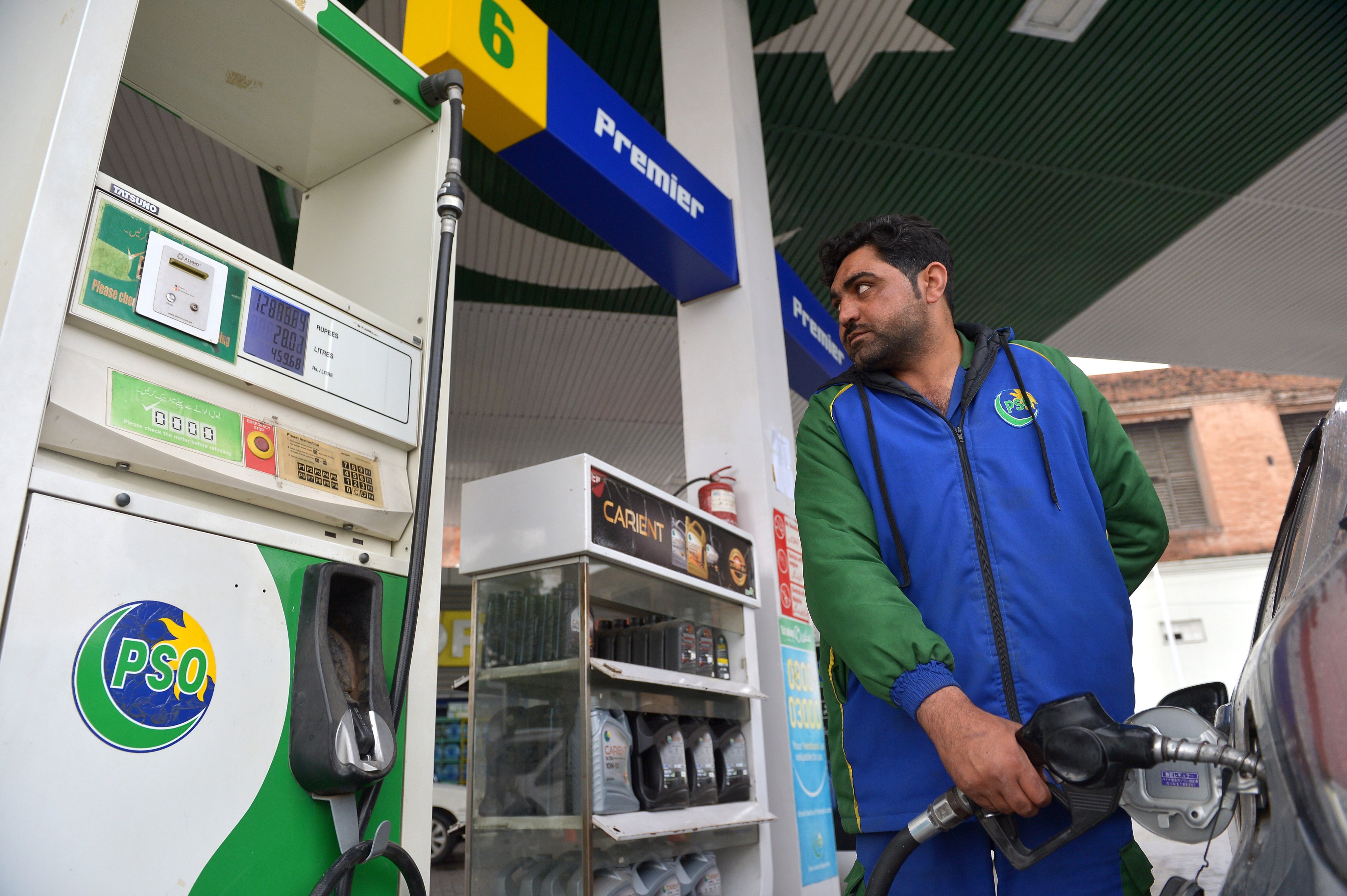
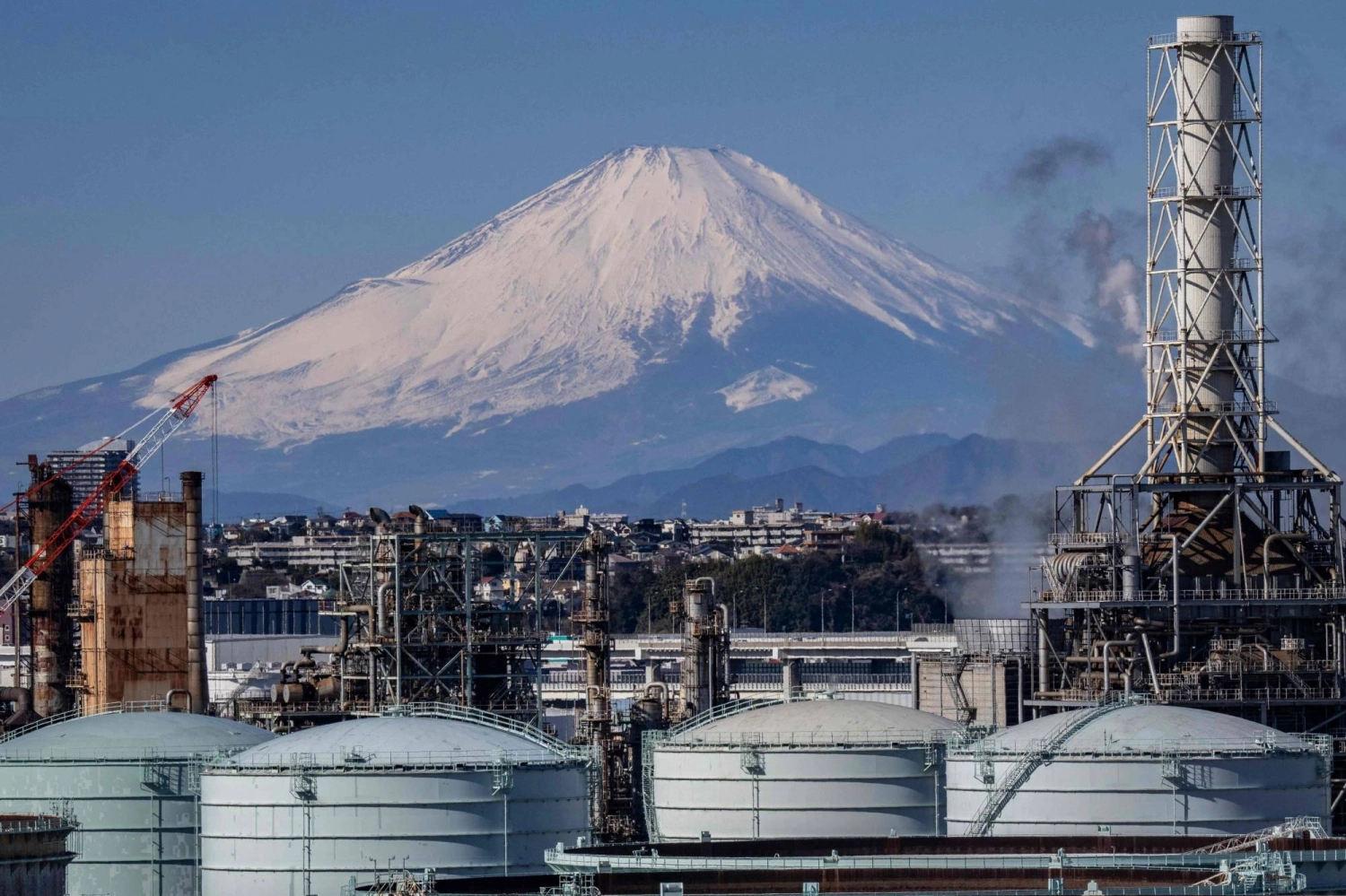
On the buy side, Asian refiners are paying the steepest premiums in decades. Dubai physical crude traded at $126 per barrel on March 27, reflecting severe supply tightness as Middle East producers cannot deliver to their largest market. Japanese and South Korean refiners — typically receiving 70% of their crude via Hormuz — are drawing down strategic reserves and activating long-term contracts with US and Brazilian suppliers. Each additional day of disruption forces these buyers to pay spot premiums that can exceed $15-20 per barrel above normal contract prices.
On the sell side, Middle East producers face a devastating margin compression despite headline oil price strength. Saudi Aramco, Abu Dhabi's ADNOC, and Kuwaiti producers are essentially trapped behind Iranian naval control, with Saudi Arabia's East-West Pipeline operating at only 5 million barrels per day against its 7 million barrel capacity. These producers are receiving Brent prices for their crude but cannot deliver to Asian buyers willing to pay Dubai premiums. The result: a geographical arbitrage they cannot capture, worth potentially $10-15 per barrel per cargo.
For smaller regional operators — independent fuel importers, mid-sized trading houses, regional cooperatives — the situation approaches existential. These operators lack the balance sheet strength to absorb $5 million war risk premiums or the derivatives access to hedge geographical exposure. Instead, they are pursuing practical alternatives: bilateral contracts with non-Middle East suppliers, inventory pre-positioning at Singapore and Fujairah storage terminals, and co-investment in charter arrangements to spread insurance costs across multiple cargoes. A mid-sized Asian fuel importer previously relying on three monthly VLCC deliveries from Saudi Arabia has shifted to six smaller Aframax cargoes (carrying 750,000 barrels each) from US Gulf Coast suppliers, absorbing an additional $8-12 per barrel in freight and financing costs.
The freight dimension reveals where margin concentrates in this disrupted trade. VLCC day rates of $423,736 represent pure vessel owner profit — the incremental cost difference versus normal operations accrues entirely to shipowners, not cargo owners or charterers. A VLCC voyage from the Middle East to Asia typically takes 25-30 days. At current rates, the vessel operator earns approximately $10-12 million per voyage versus $1.5-2 million under normal conditions. However, over 150 vessels remain trapped or idling outside the Strait, removing approximately 300 million barrels of floating capacity from global markets. This capacity withdrawal amplifies rates on alternative routes — West Africa to Asia, US Gulf to Europe — as available tonnage becomes scarce.
The financing structure of Hormuz-related trades has fundamentally shifted toward Iranian control mechanisms. Iran is charging vessels up to $2 million for transit under the ceasefire arrangement, with fees based on ship type and cargo. This creates a bifurcated market: vessels willing to pay Iranian transit fees and accept Tehran's operational control versus those seeking alternative routes at significantly higher transportation costs. Capital Economics estimates these fees add roughly $1 per barrel to shipped oil costs — manageable for large-volume trades but problematic for marginal transactions. The legal framework remains contested, as UNCLOS prohibits charging vessels for simple transit, limiting permitted fees to specific services like pilotage.
Trump's assertion that "Iran is losing big, with US and Israeli strikes having decimated much of Iran's military, navy, and air force capabilities" conflicts sharply with operational evidence. If Iranian naval capabilities were truly "wiped out," Iran could not credibly threaten US vessels or control commercial transit through the Strait. Yet US Central Command confirmed two destroyers transited the Strait for mine-clearing operations while Iranian media reported US vessels turning back after warnings — suggesting Iranian operational control persists despite claimed military degradation. For commercial operators, this credibility gap matters: vessel owners need reliable intelligence about actual threat levels, not political messaging.
The negotiations in Islamabad between US Vice President JD Vance and Iranian Parliamentary Speaker Mohammad Bagher Ghalibaf represent the highest-level US-Iran talks since 1979. However, Iran's Tasnim news agency reports the Strait remains a point of "serious disagreement" in talks, with the disruption already feeding global inflation and economic slowdown expected to persist for months. The commercial implication: even successful negotiations may not restore normal transit immediately, as Iran appears committed to asserting permanent operational control over the waterway.
Container shipping faces parallel disruption. Major carriers including Maersk, MSC, and Hapag-Lloyd have suspended Hormuz transits, forcing cargo to reroute via Cape of Good Hope — adding 14-21 days to Asia-Europe trade lanes. Emergency surcharges of $1,500-3,000 per TEU (Twenty-foot Equivalent Unit) have been implemented within hours of the disruptions. For logistics-dependent industries — automotive, electronics, pharmaceuticals — these delays compound existing supply chain pressures from previous Red Sea disruptions.
The structural precedent being established through Iranian toll collection threatens global maritime norms. A Hormuz toll mechanism would be unprecedented and risk creating precedent for similar approaches elsewhere, including Bab el Mandeb. If coercive transit fees become accepted practice, other chokepoint states — controlling Panama Canal, Bosphorus, Malacca Strait — could implement similar revenue schemes. This would fundamentally alter the economics of international trade, adding permanent costs to transcontinental commerce.
Investors and commodity funds are positioning for prolonged disruption scenarios. Goldman Sachs maintains its 2026 Brent average forecast of $85 per barrel, but acknowledges the $71 Q4 base case depends on war premium evaporation. If Iranian control over Hormuz becomes permanent — whether through negotiated toll agreements or continued military standoff — oil markets may need to price a structural risk premium of $10-15 per barrel. This would represent a permanent shift in global energy costs, affecting everything from transportation fuel to petrochemical feedstocks.
For observers seeking specific, time-bound signals of resolution, monitor the Baltic Dirty Tanker Index (BDTI) — the benchmark for VLCC freight rates — over the next 14 days. The current two-week ceasefire expires around April 22. If BDTI rates decline below $200,000 per day by April 20, it suggests genuine progress toward Strait reopening. Conversely, rates maintaining above $300,000 per day indicate continued operational disruption regardless of political agreements. Additionally, track AIS (Automatic Identification System) data for VLCC transits: successful resolution requires at least 15-20 laden VLCCs transiting eastbound through Hormuz weekly, compared to pre-crisis levels of 40-50 vessels. Without this physical throughput recovery, political declarations of Strait clearing remain operationally meaningless.
.jpg)
'%3e%3cg id='Final-Copy-2_2_' transform='translate(1275.000000, 200.000000)'%3e%3cpath class='st0' d='M7.4,12.8h6.8l3.1-11.6H7.4C4.2,1.2,1.6,3.8,1.6,7S4.2,12.8,7.4,12.8z'/%3e%3c/g%3e%3c/g%3e%3c/g%3e%3cg id='final---dec.11-2020'%3e%3cg id='_x30_208-our-toggle' transform='translate(-1275.000000, -200.000000)'%3e%3cg id='Final-Copy-2' transform='translate(1275.000000, 200.000000)'%3e%3cpath class='st1' d='M22.6,0H7.4c-3.9,0-7,3.1-7,7s3.1,7,7,7h15.2c3.9,0,7-3.1,7-7S26.4,0,22.6,0z M1.6,7c0-3.2,2.6-5.8,5.8-5.8 h9.9l-3.1,11.6H7.4C4.2,12.8,1.6,10.2,1.6,7z'/%3e%3cpath id='x' class='st2' d='M24.6,4c0.2,0.2,0.2,0.6,0,0.8l0,0L22.5,7l2.2,2.2c0.2,0.2,0.2,0.6,0,0.8c-0.2,0.2-0.6,0.2-0.8,0 l0,0l-2.2-2.2L19.5,10c-0.2,0.2-0.6,0.2-0.8,0c-0.2-0.2-0.2-0.6,0-0.8l0,0L20.8,7l-2.2-2.2c-0.2-0.2-0.2-0.6,0-0.8 c0.2-0.2,0.6-0.2,0.8,0l0,0l2.2,2.2L23.8,4C24,3.8,24.4,3.8,24.6,4z'/%3e%3cpath id='y' class='st3' d='M12.7,4.1c0.2,0.2,0.3,0.6,0.1,0.8l0,0L8.6,9.8C8.5,9.9,8.4,10,8.3,10c-0.2,0.1-0.5,0.1-0.7-0.1l0,0 L5.4,7.7c-0.2-0.2-0.2-0.6,0-0.8c0.2-0.2,0.6-0.2,0.8,0l0,0L8,8.6l3.8-4.5C12,3.9,12.4,3.9,12.7,4.1z'/%3e%3c/g%3e%3c/g%3e%3c/g%3e%3c/g%3e%3c/svg%3e) Privacy Choices
Privacy Choices