.avif)
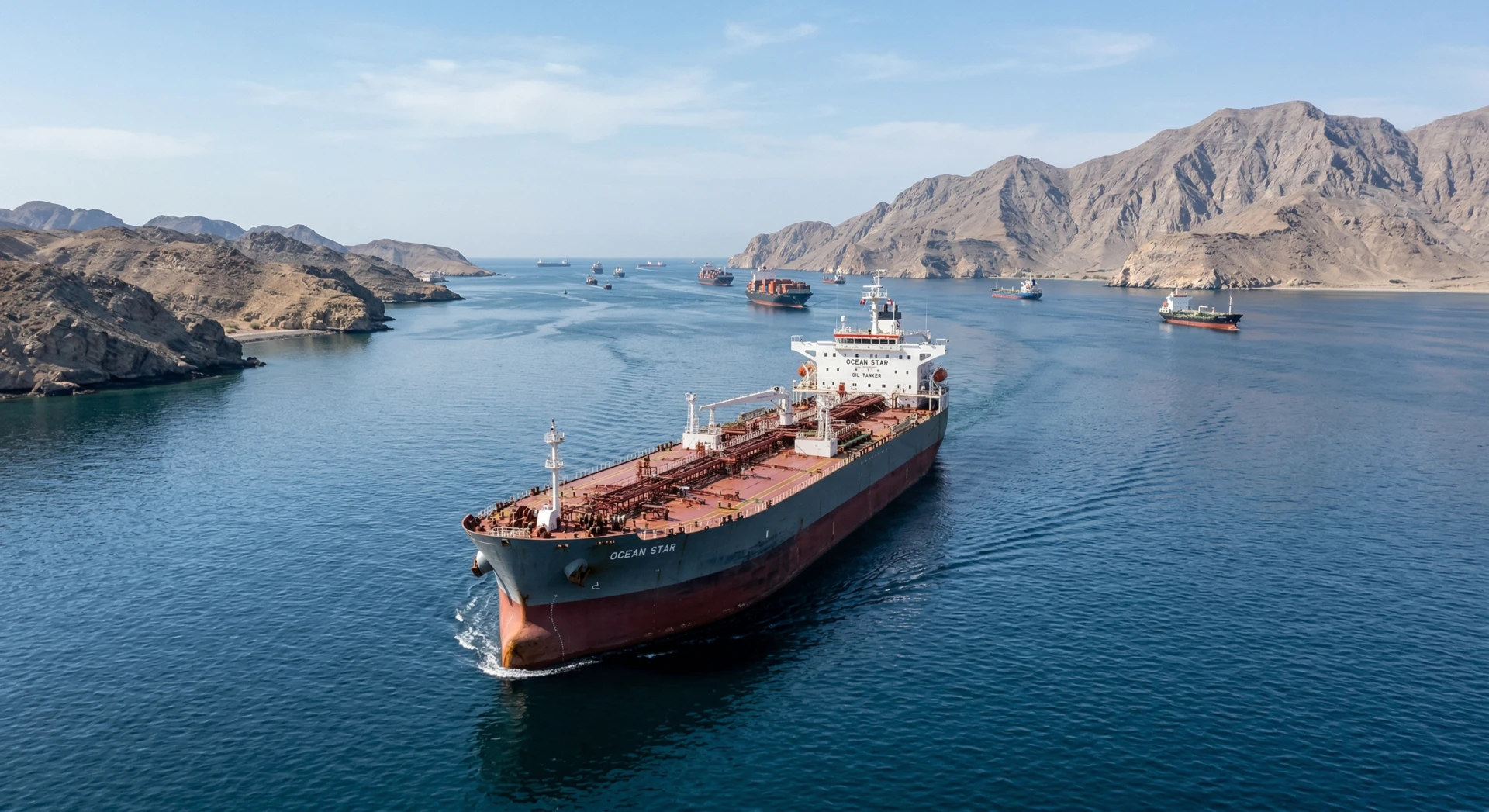
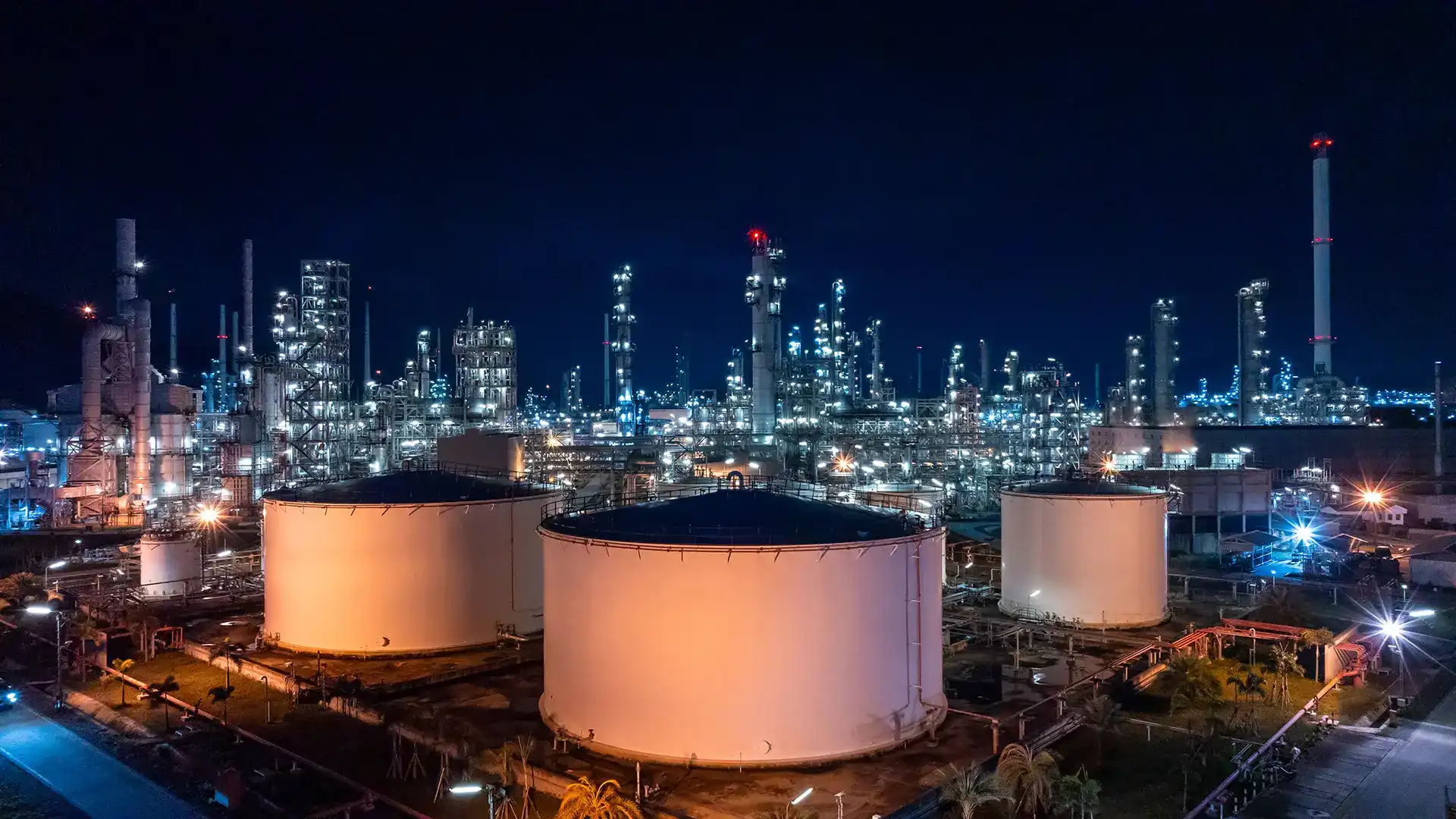
UAE crude exporters face immediate margin compression as attacks on Dubai infrastructure and Abu Dhabi's Habshan gas facility trigger insurance market repricing across Gulf energy operations. A typical Dubai crude cargo to Asia — previously carrying insurance costs of $0.50-1.00/barrel — now faces potential war risk premiums of $2-5/barrel as Lloyd's of London syndicates and other marine insurers reassess exposure. For a 2-million-barrel VLCC cargo like the damaged Al Salmi tanker, this translates to an additional $4-10 million in coverage costs that crude sellers must absorb or pass to buyers. The Habshan facility, processing roughly 1.2 billion cubic feet per day of sour gas — equivalent to about 15% of UAE total gas production — creates supply tightness that ripples through the entire Gulf energy complex. Sellers of Dubai crude and Murban are discovering that what appeared to be a localized security incident has fundamentally altered their cost structure within 48 hours.
The margin anatomy reveals how security premiums concentrate in specific operational layers rather than spreading evenly across the value chain. For integrated oil companies (IOCs) like ADNOC selling Dubai crude, the immediate hit comes through force majeure insurance — specialized coverage that protects against political violence and infrastructure damage. Before this incident, such coverage typically cost $15-25 million annually for a major UAE crude operation; insurers are now demanding $40-60 million, with some refusing renewal entirely. The gas processing disruption at Habshan creates a secondary squeeze: reduced gas availability forces crude operations to import more expensive liquefied petroleum gas (LPG) for enhanced oil recovery, adding $3-4/barrel to lifting costs. Meanwhile, smaller independent crude marketers without long-term insurance contracts face immediate lockout from coverage, forcing them to either suspend operations or pay spot war risk premiums that can reach $8-12/barrel for high-risk transits.
On the buy side, Asian refiners are recalibrating their crude procurement strategies as UAE supply reliability comes into question. Sinopec and PetroChina, which typically lift 300,000-400,000 barrels per day of UAE crude, are activating alternative supply agreements with Iraq's Basra and Saudi Arabia's Ras Tanura to maintain throughput. These buyers face a dilemma: lock in UAE crude at current prices plus security premiums, or pivot to alternative grades at $2-3/barrel premium but with more stable logistics. On the sell side, UAE National Oil Company (UAE NOC) subsidiaries must decide whether to absorb increased insurance costs to maintain market share or pass them through official selling prices (OSPs). Early indications suggest Dubai crude OSPs may rise by $1.50-2.50/barrel in May loading programs, with Murban following similar adjustments. For intermediaries, the margin opportunity lies in securing alternative crude sources — Omani and Iranian grades — that suddenly trade at discounts to UAE crude despite similar quality profiles.
Large integrated traders with sophisticated hedging capabilities are responding differently than regional operators constrained by bilateral arrangements. Shell and Vitol, with access to derivatives markets, are using Brent-Dubai exchange for swaps (EFS) to hedge their UAE crude exposure while simultaneously buying Oman crude futures as a substitute. These players can maintain profitable arbitrage because they lock in margins through financial instruments, allowing them to navigate the 15-20 day shipping time from Gulf to Asia without exposure to further premium expansion. Conversely, mid-tier traders like Gunvor or regional players such as Gulf Petrochem face immediate margin compression because they typically fix crude purchase prices 30-45 days before vessel loading. Without derivatives access, these operators cannot hedge the security premium that emerged after their purchase commitments were made. The result: a $3-5/barrel margin squeeze on cargoes already contracted but not yet lifted.
The physical supply chain disruption extends beyond insurance into vessel availability and routing optimization, creating operational bottlenecks that compound margin pressure. Tanker owners are demanding premium rates for UAE loadings — adding $100,000-150,000 to typical VLCC charter costs — while simultaneously implementing enhanced security protocols that extend loading times by 12-24 hours. The Al Salmi incident, involving a Kuwaiti tanker carrying 2 million barrels from both Kuwait and Saudi Arabia to China, illustrates the concentration risk: a single vessel damage affects supply chains across multiple producing countries. Port authorities at Jebel Ali and Fujairah are implementing mandatory security escorts that add $50,000-75,000 per cargo, while extended inspection procedures increase demurrage risk for charterers. These operational changes force crude sellers to build 48-72 hours of additional scheduling buffer into their loading programs, reducing overall system throughput and creating artificial supply tightness even when production continues normally.
Counterparty concentration risk intensifies as the incident exposes how few meaningful alternatives exist for UAE energy infrastructure processing and export capacity. The Habshan facility processes gas from multiple offshore fields including Shah, Bab, and Asab — representing approximately 40% of UAE's total gas processing capacity through a single chokepoint. If operations remain impaired for more than two weeks, upstream gas production must be curtailed, forcing crude operations to compete for limited imported gas supplies at premium prices. Similarly, crude export infrastructure concentration becomes apparent: roughly 70% of UAE crude exports flow through three major terminals — Das Island, Ruwais, and Fujairah — creating systemic vulnerability that insurers now price accordingly. For crude buyers, this concentration means alternative sourcing becomes critical; Saudi Arabia's Ras Tanura and Iraq's Basra terminals gain strategic premium as the only Gulf alternatives with comparable loading capacity and grade flexibility.
Forward market signals indicate this security premium will persist beyond the immediate incident, fundamentally altering Gulf crude pricing structure for the remainder of 2026. Dubai crude futures for June and July delivery are trading $2.80-3.20/barrel above May, indicating market expectations that current premiums will not quickly normalize. The critical timing mismatch emerges: while insurance markets reprice risk within 24-48 hours, establishing alternative supply relationships requires 60-90 days for credit arrangements, quality approvals, and logistics coordination. Smaller crude marketers without established alternative sourcing face the harshest squeeze — they cannot quickly pivot away from UAE crude but must absorb security premiums that exceed their typical operating margins of $1-2/barrel. The second-order effect becomes apparent in regional crude quality arbitrage: Omani crude, typically trading at $0.50-1.00/barrel discount to Dubai, may flip to premium as buyers seek UAE alternatives. This creates opportunity for Oman crude sellers but further pressures UAE producers who lose both volume and price realization as their crude becomes less attractive despite unchanged quality specifications.
.jpg)
.jpg)
'%3e%3cg id='Final-Copy-2_2_' transform='translate(1275.000000, 200.000000)'%3e%3cpath class='st0' d='M7.4,12.8h6.8l3.1-11.6H7.4C4.2,1.2,1.6,3.8,1.6,7S4.2,12.8,7.4,12.8z'/%3e%3c/g%3e%3c/g%3e%3c/g%3e%3cg id='final---dec.11-2020'%3e%3cg id='_x30_208-our-toggle' transform='translate(-1275.000000, -200.000000)'%3e%3cg id='Final-Copy-2' transform='translate(1275.000000, 200.000000)'%3e%3cpath class='st1' d='M22.6,0H7.4c-3.9,0-7,3.1-7,7s3.1,7,7,7h15.2c3.9,0,7-3.1,7-7S26.4,0,22.6,0z M1.6,7c0-3.2,2.6-5.8,5.8-5.8 h9.9l-3.1,11.6H7.4C4.2,12.8,1.6,10.2,1.6,7z'/%3e%3cpath id='x' class='st2' d='M24.6,4c0.2,0.2,0.2,0.6,0,0.8l0,0L22.5,7l2.2,2.2c0.2,0.2,0.2,0.6,0,0.8c-0.2,0.2-0.6,0.2-0.8,0 l0,0l-2.2-2.2L19.5,10c-0.2,0.2-0.6,0.2-0.8,0c-0.2-0.2-0.2-0.6,0-0.8l0,0L20.8,7l-2.2-2.2c-0.2-0.2-0.2-0.6,0-0.8 c0.2-0.2,0.6-0.2,0.8,0l0,0l2.2,2.2L23.8,4C24,3.8,24.4,3.8,24.6,4z'/%3e%3cpath id='y' class='st3' d='M12.7,4.1c0.2,0.2,0.3,0.6,0.1,0.8l0,0L8.6,9.8C8.5,9.9,8.4,10,8.3,10c-0.2,0.1-0.5,0.1-0.7-0.1l0,0 L5.4,7.7c-0.2-0.2-0.2-0.6,0-0.8c0.2-0.2,0.6-0.2,0.8,0l0,0L8,8.6l3.8-4.5C12,3.9,12.4,3.9,12.7,4.1z'/%3e%3c/g%3e%3c/g%3e%3c/g%3e%3c/g%3e%3c/svg%3e) Privacy Choices
Privacy Choices